
I took my first trip with Ace Camps in October 2021, just as the world was beginning to emerge from the pandemic. Having traveled solo many times before, I decided to try something different by signing up for a group trip. But not a generic, hit-all-the-highlights kind of tour. Given my love of craft and design, Ace Camps caught my attention for its blend of hands-on creative workshops and cultural immersion.
This most recent trip, taken in October 2023, was my third creative retreat with Ace Camps and a perfect excuse to return to Italy – this time to the beautiful, lesser-known Puglia, a region I’d long dreamed of visiting. It offered the chance to learn from an artist I’d admired from afar, dive into a craft I’d never attempted before, and plan a road trip to explore more of this beautiful region. In this post, I’ll take you inside the experience and share what it’s really like to travel with Ace Camps, from the crafts and instructors to the food, people, and moments that made this trip memorable.
- What Is Ace Camps About?
- Where Is the Ace Camps Retreat in Italy Held?
- What Is the Accommodation Like?
- Do You Share a Room at Ace Camps?
- What is the Itinerary Like?
- How Is The Food?
- What Crafts Do You Learn at the Retreat?
- Who Are The Instructors?
- What Other Activities Are Included in an Ace Camps Trip?
- Who Will You Be Traveling With?
- Can You Bring A Spouse or Travel Partner?
- Is Ace Camps Good for Beginner Crafters?
- What’s Included in the Trip Cost?
- When and How You Should Book Your Ace Camps Trip
- How Do You Get to the Retreat and Meet the Group?
- What You Should Pack for an Ace Camps Trip
- Would I Take Another Ace Camps Trip?
- Are Ace Camps Trips Worth It?
What Is Ace Camps About?
The ACE in Ace Camps Travel stands for Arts, Culture, and Education. Each trip centers around a creative learning experience, whether that’s weaving, natural dyeing, fiber arts, or even regional cooking traditions. The trips are about making things with your hands and connecting with a place through its creative traditions, either with local teachers and / or artists well-versed in the chosen craft.
Ace Camps trips are great for solo travelers or friends looking for a unique way to experience a destination while picking up a new creative skill (or deepening an existing one) along the way.
Where Is the Ace Camps Retreat in Italy Held?
This trip took place in Muro Leccese, a small Italian town in southern Puglia about 30 minutes from Lecce, and 20 minutes from Otranto. Muro Leccese may not be a destination in and of itself, but it offered the peace and quiet we needed to focus on our crafting.
There wasn’t much to do in town, which may have been by design. We were always well-fed at our villa. In the hour or so before dinner, we’d stretch our legs by walking to one of the few alimentari to pick up wine or snacks, passing through Piazza del Popolo, the town square. We shopped there often enough that one of the owners even gave us free t-shirts!
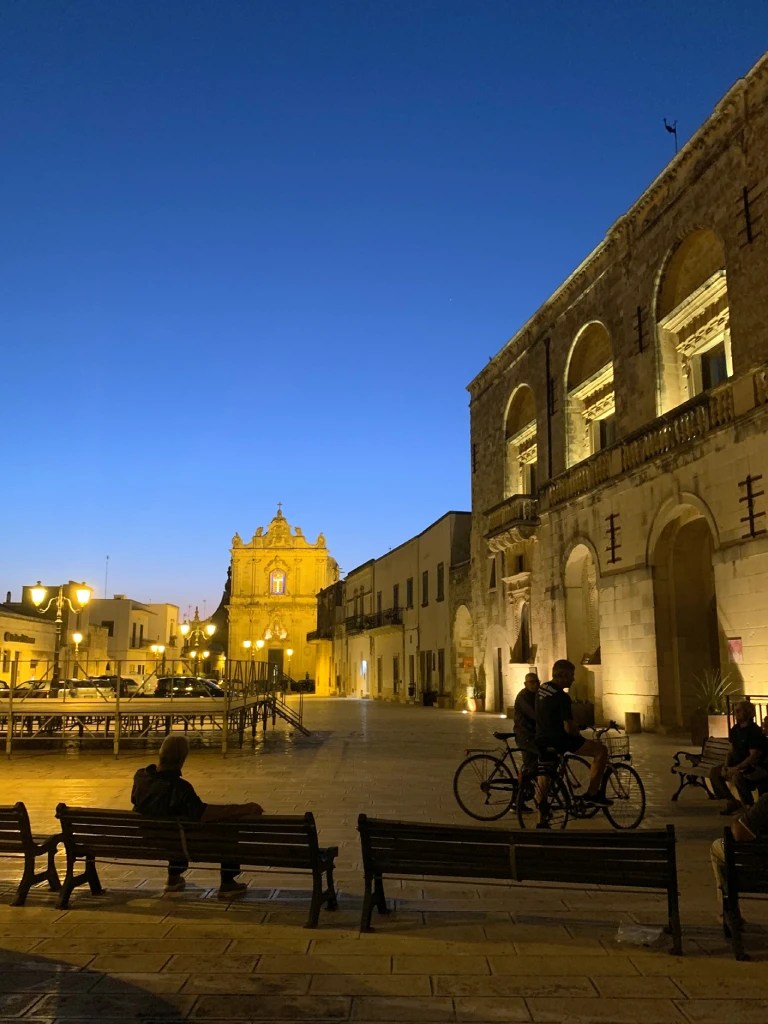
In the evenings, the scene was always the same: older Italian men sitting and chatting while young boys played soccer (not football) or rode their bikes in the piazza. It was peaceful, if not particularly eventful.
Included in our trip was a day trip to both Otranto and Lecce. I had visited Lecce just before the retreat, though I was happy to revisit its stunning Baroque architecture (and to direct our group to our favorite shop in town).
Tacking on a road trip before the retreat gave us time to explore the variety of Puglia – its charming hill towns, seaside vistas, and archaeological sites – before setting into one place for the creative retreat.
What Is the Accommodation Like?
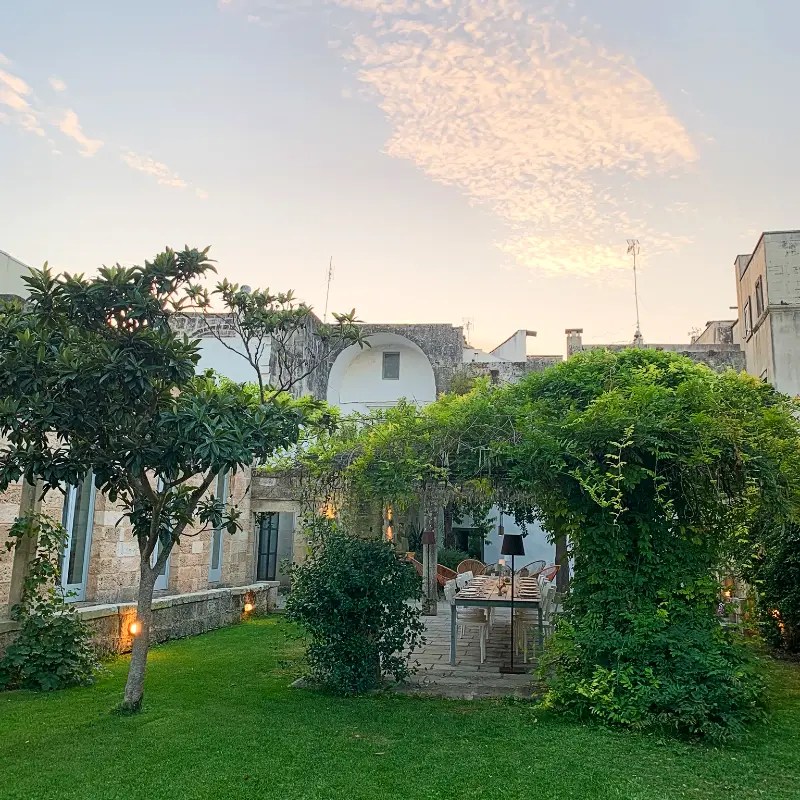
Our home base for the retreat was Benesse Home, a beautifully restored villa in Muro Leccese. The space was elegant yet inviting, and filled with natural light. Our host, Priscilla, was warm and attentive, making sure we felt welcome (and well-fed) throughout the week.

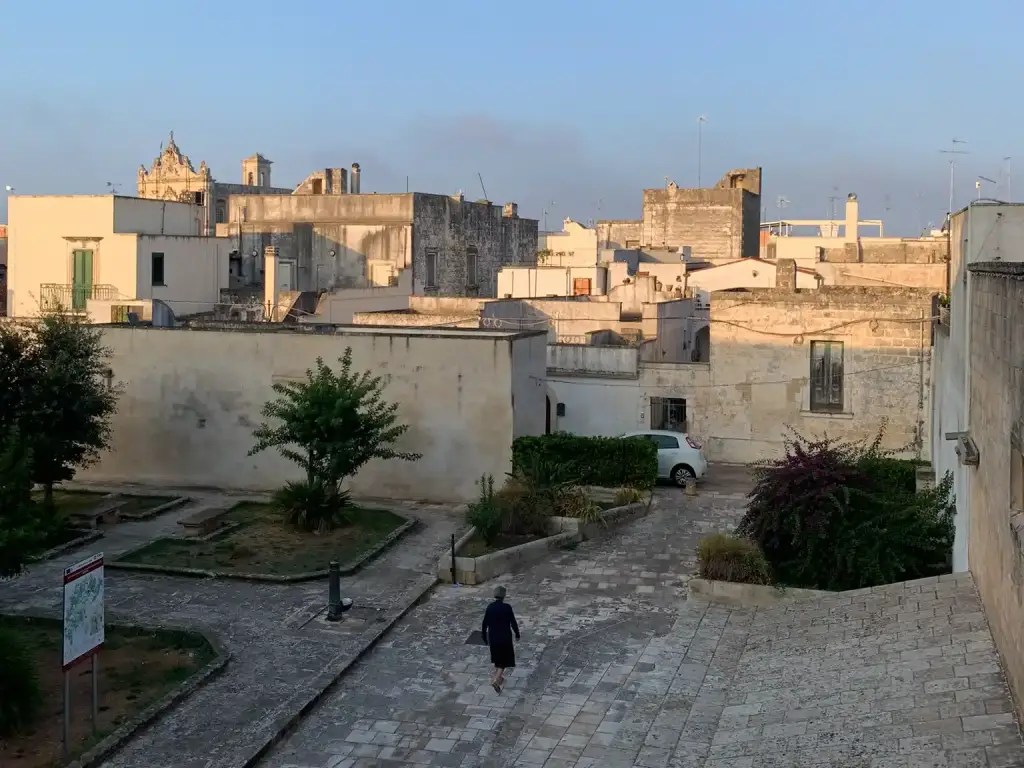
My friend Leah and I were assigned to a triple room, though there were ultimately just us two. We even had a small balcony that overlooked the rooftops of town. Our bathroom had dual terracotta vanities and a full bathtub. Some guests needed to pass through our room to access a laundry area and one of the other bedrooms, but we didn’t mind. It didn’t detract from the overall comfort of our stay.
As with most villas, sound carried between rooms, but was never disruptive. Most guests turned in after dinner (and copious glasses of inexpensive rosé), or stayed up quietly continuing their craft projects.
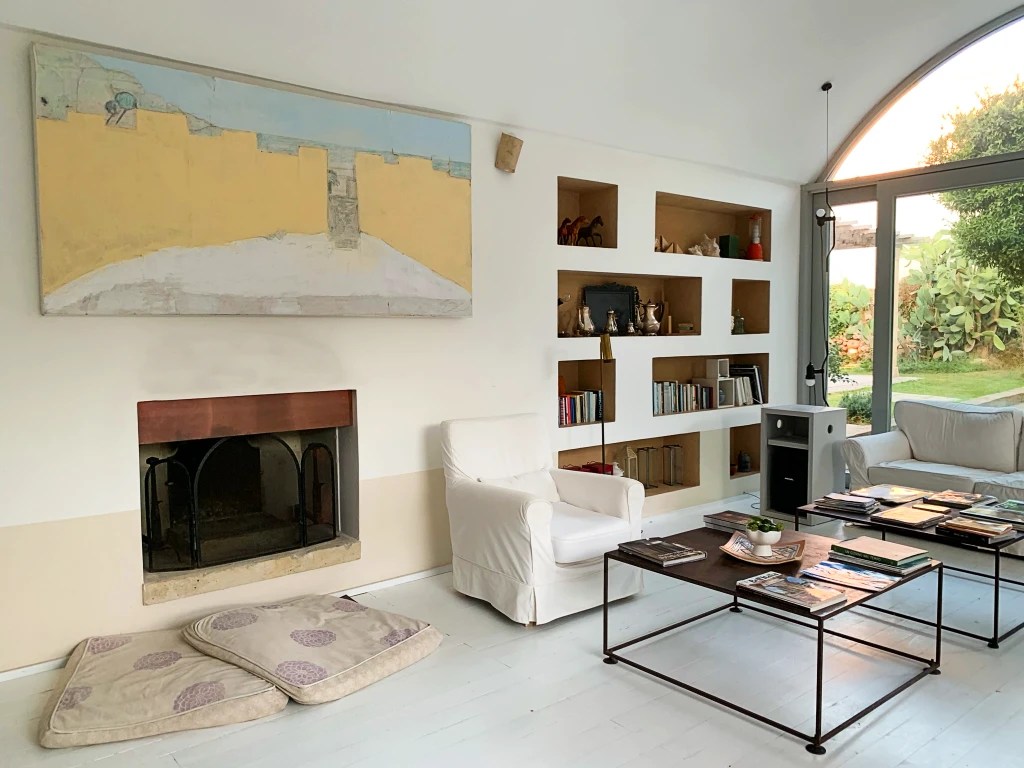
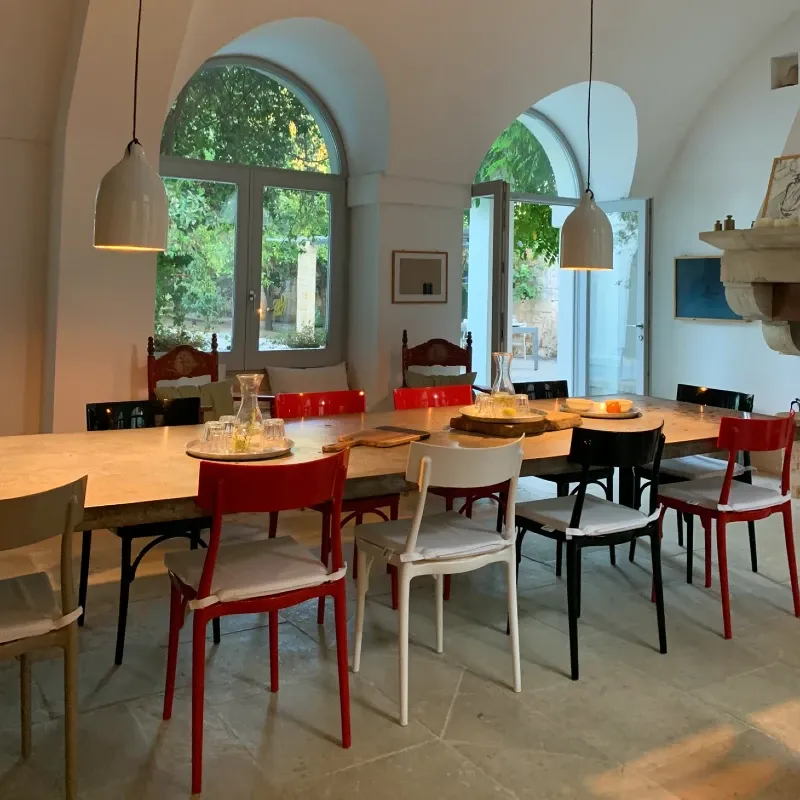
There were a few spacious common areas. There was a large living room where our group self-organized morning yoga before breakfast. We gathered in the dining room with its long communal table to weave with palm. An instant espresso machine and a tray of small treats were always accessible for a mid-day pick-me-up.
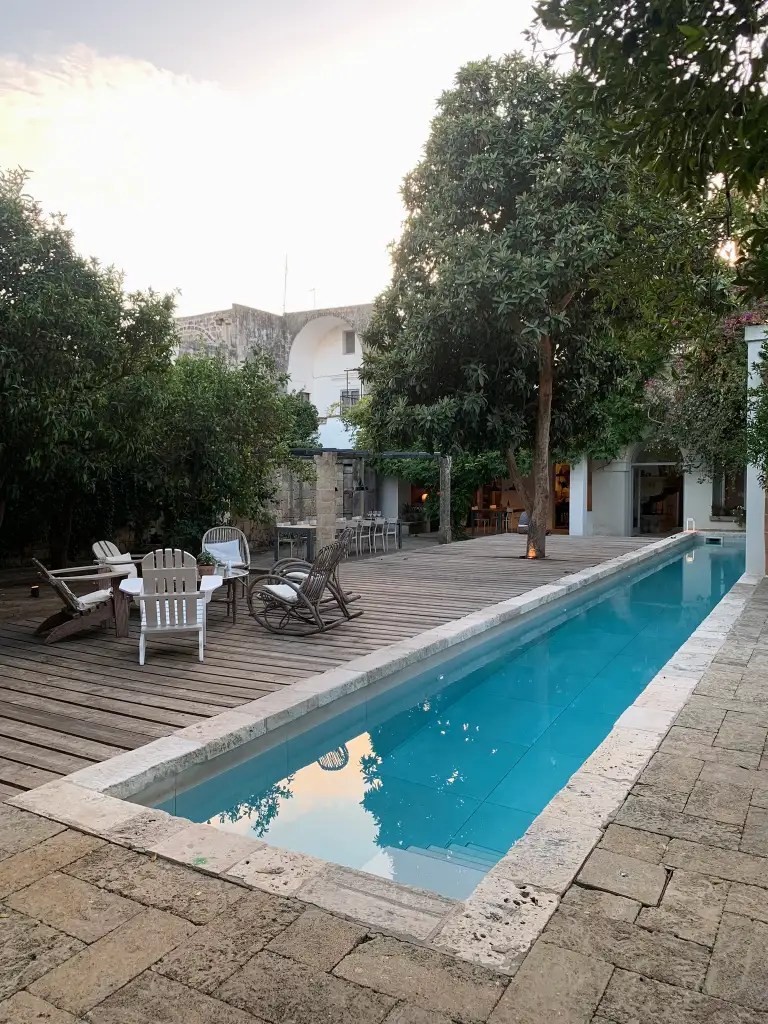
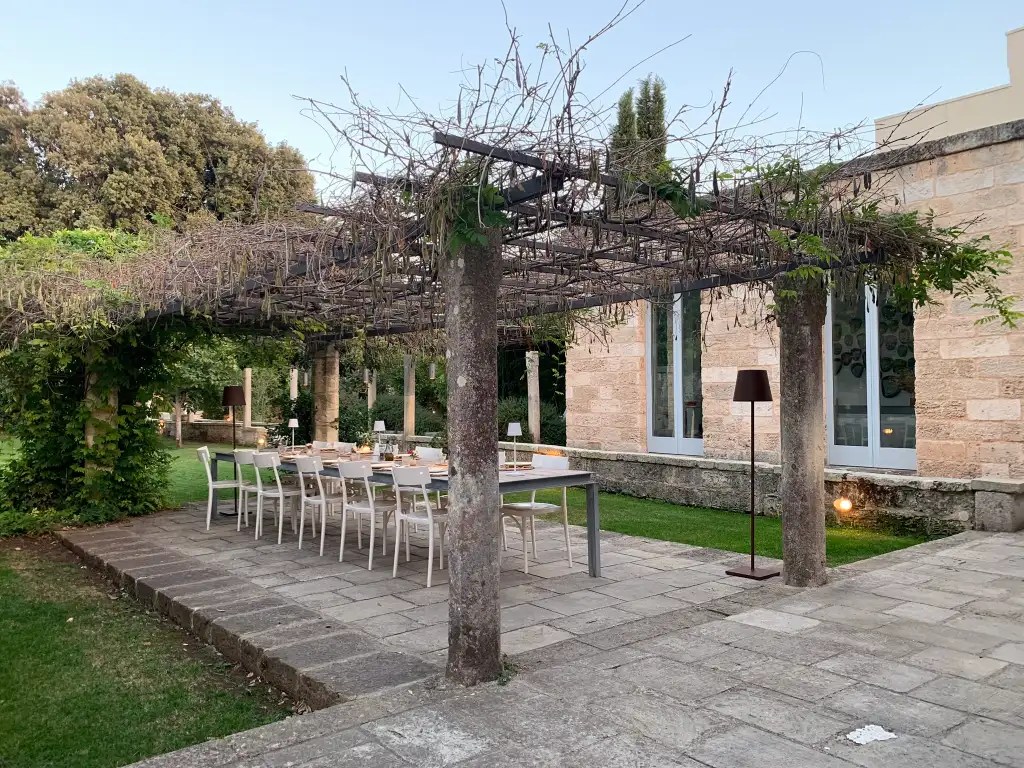
There was a slender outdoor swimming pool for taking quick dips in the afternoons, as well as a smaller pool on the upper level of the property. Most of our workshop took place under the pergola in the inner courtyard, or in the shade of the fig tree.
Do You Share a Room at Ace Camps?
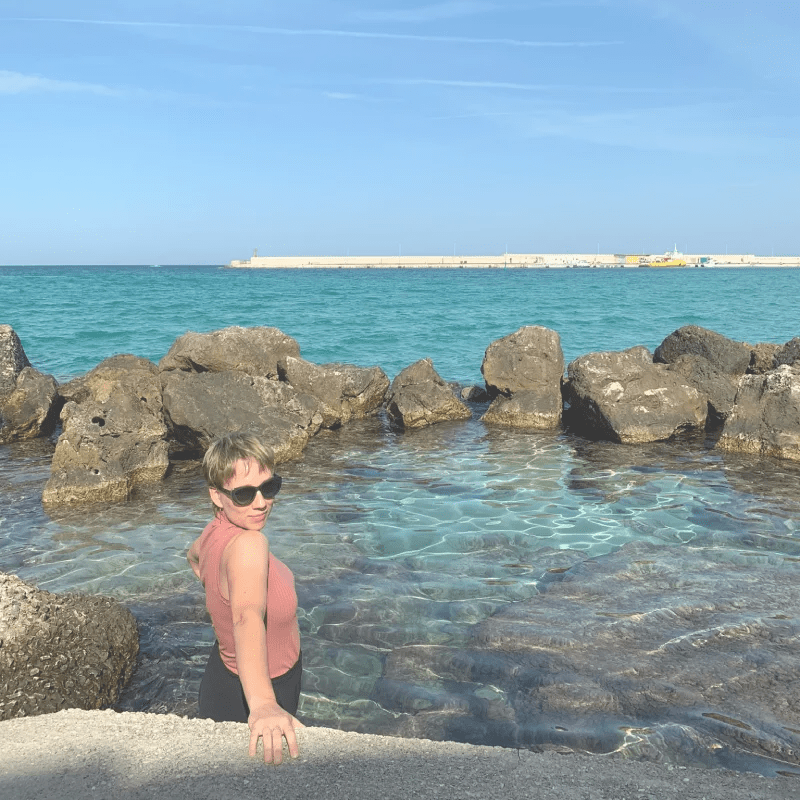
Leah and I requested each other as roommates for this trip. We’d first been paired together by chance on our very first Ace Camps trip to Oaxaca in 2021. In retrospect, the match made sense: we were the closest in age of in the group. We got along swimmingly, and the rest is history (we’ve since taken 3 Ace Camps trips, and two other vacations together).
On most Ace Camps trips, you can choose between a shared room with twin beds and assigned a roommate at random, or book a private room for an additional fee. While sharing a room with a stranger requires a certain amount of trust and touch of adventurousness, in my experience, the kind of traveler drawn to Ace Camps is mature, respectful, and open-minded. Given the price point and the demographic it tends to attract, you’re unlikely to be paired with someone unruly… knock on wood.
What is the Itinerary Like?
The schedule varies by trip, but Ace Camps sends your detailed itinerary about a month before departure so you’ll know what to expect (noting that the schedule may be subject to moderate changes due to circumstances like weather). On the Puglia trip, the first few days were dedicated to arrival, settling in, and learning from our first instructor, while the final two days were spent with our second instructor for the retreat.
All workshops took place at our villa, though that’s not always the case with Ace Camps trips (other Ace Camps I’ve attended held classes in craft studios or similar community spaces).
Midweek, we took a break from crafting for a full-day excursion to Otranto and Lecce, exploring more of Southern Puglia. Across all three Ace Camps I’ve joined, the rhythm was similar: breakfast at our lodging, lunch while crafting, and group dinners either on-site or out at local restaurants. These shared mealtimes offered time to connect, share stories, and build friendships beyond the craft table.
How Is The Food?
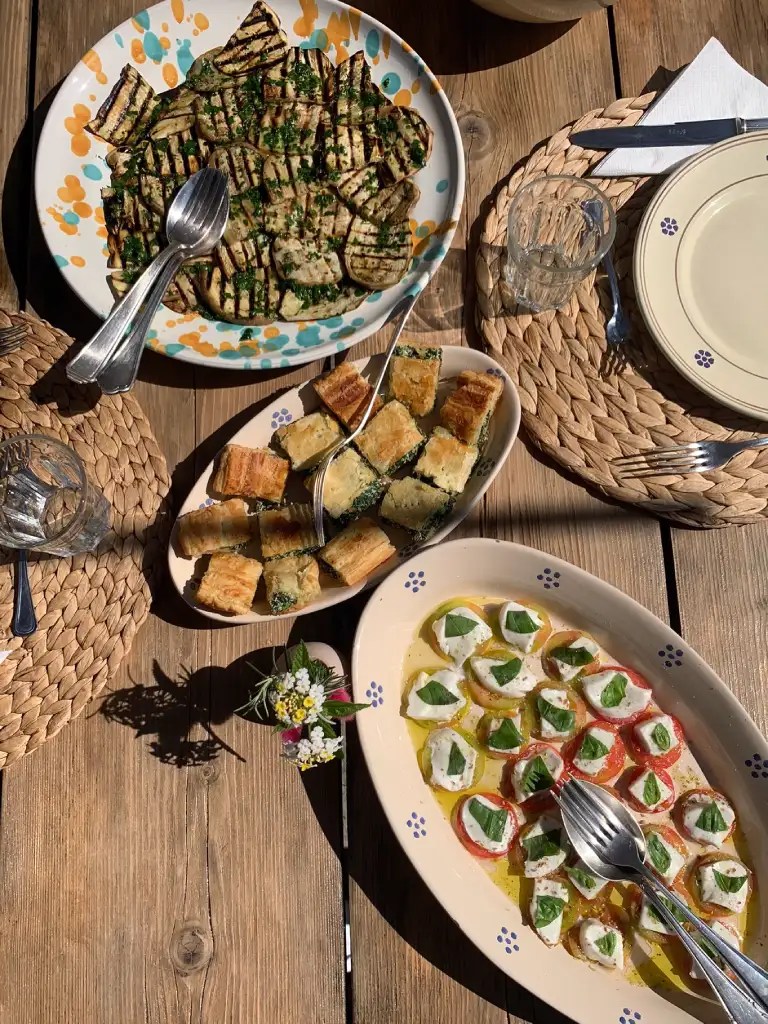
The food throughout the retreat was exceptional – colorful and rooted in Puglian tradition, featuring local ingredients. Meals were prepared by a local catering team and served family-style, often outdoors in the villa courtyard.

Although we’d just missed the height of fig season, we were lucky enough to sample a few of the last white figs ripening off the tree. Also memorable were the persimmons, unlike any I’d had before. The ones I’d eaten before this trip were firm and tomato-like. These were soft and ripe – you could scoop the pudding-like flesh out with a spoon. Priscilla also made sure to include local pastries like mini Pasticciotto into our breakfast spread.
Lunches typically included dishes like grilled vegetables, eggplant lasagna, and bright seasonal salads. There was always something sweet to end the meal, like a slice of homemade cake or fruit tart.
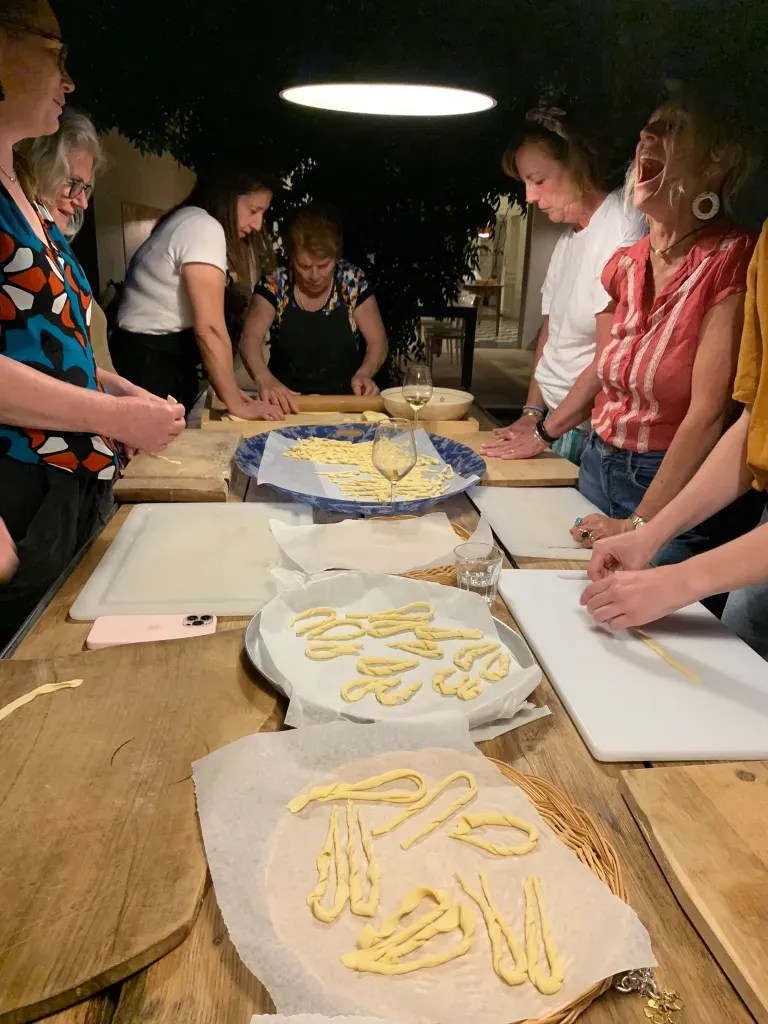
One evening, a local nonna joined us to teach a pasta-making class (included in the cost of the trip). We learned to hand roll and shape ncannulate, a twisted, ribbon-like pasta from the Salento region of Puglia.
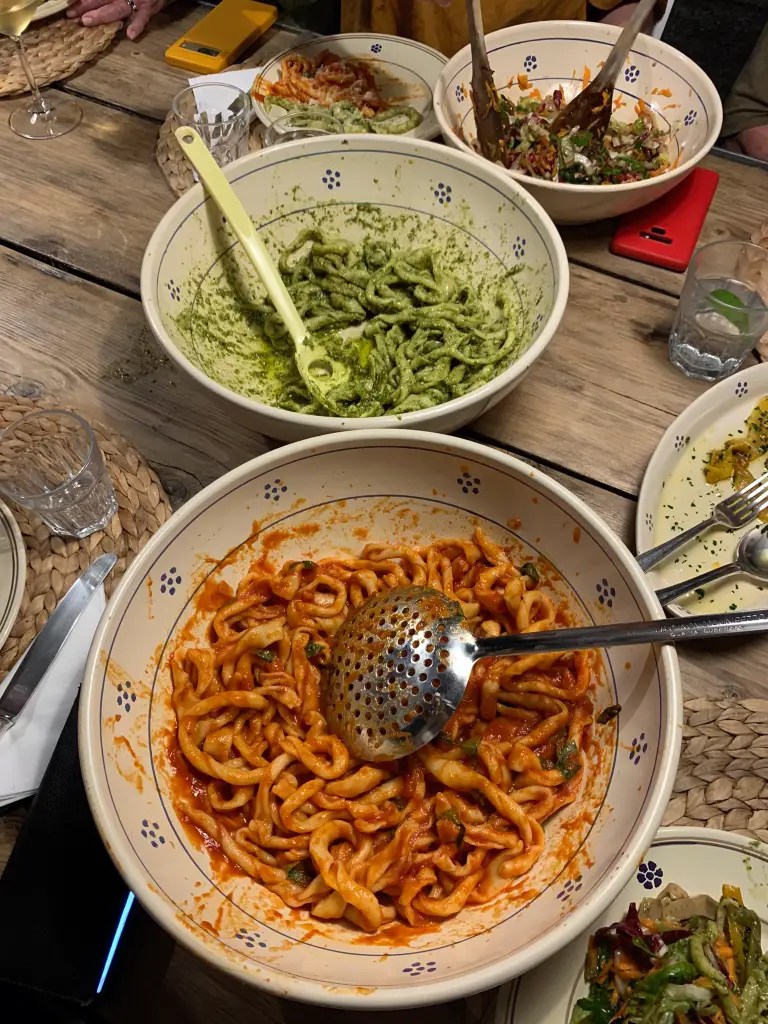
While we didn’t cook the pasta ourselves, our handiwork disappeared into the kitchen and magically reappeared at dinner, dressed in a rich red sauce. That night’s meal also included rigatoni with pesto, providing a nice flavor contrast.
Many of our meals were served on Schizzato dishware, the signature splatter-patterned ceramics seen all over Puglia. As a parting gift, we each received a small Schizzato condiment cup from Priscilla – an incredibly thoughtful gesture.
What Crafts Do You Learn at the Retreat?
Over the course of this particular retreat, we explored four different weaving techniques. Each had its own level of difficulty. Some were more meditative… and others, much more physical!
Project / Technique #1: Fishtrap Lampshade (Paired Twining)
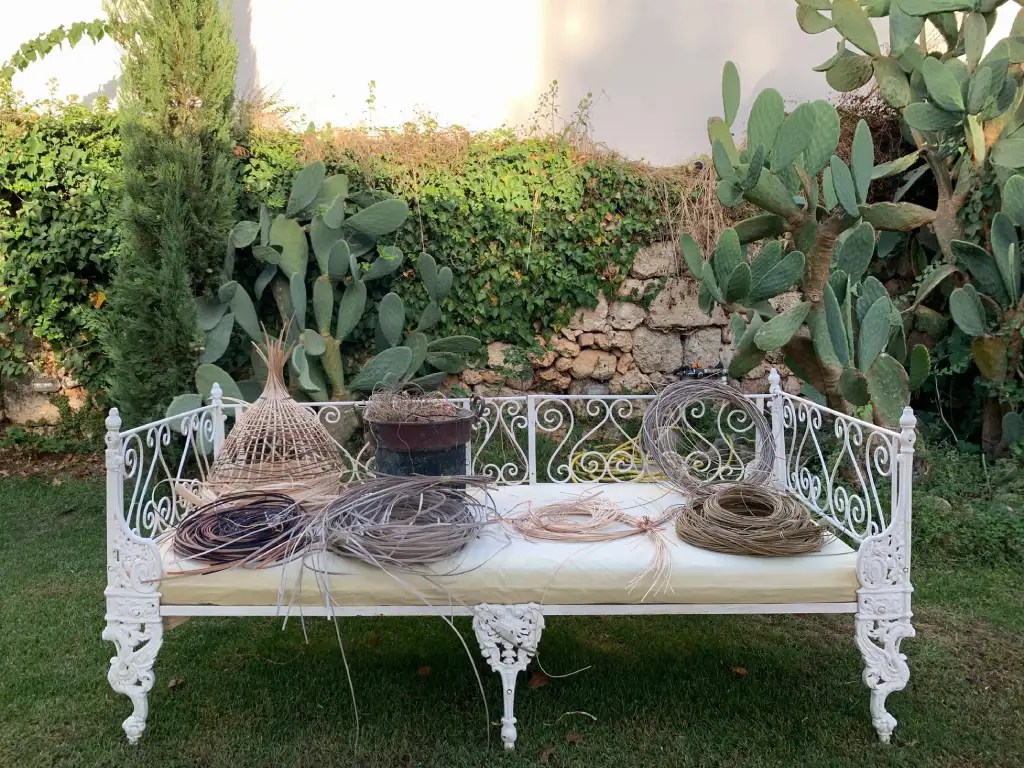
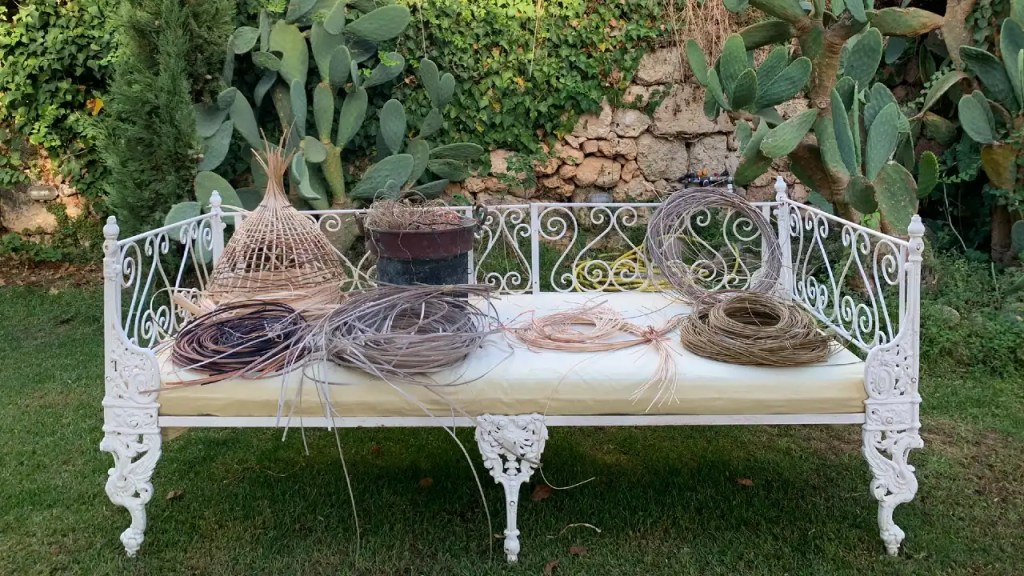
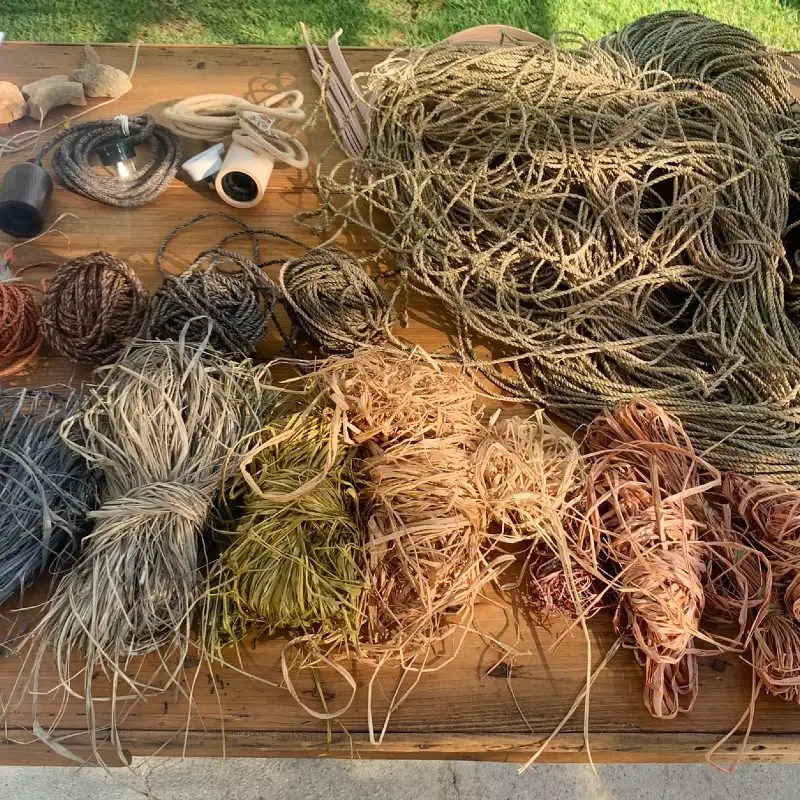
Our first workshop began the morning after our welcome dinner. We gathered in the sun-dappled courtyard of the villa after a big breakfast, surrounded by fig trees and prickly pear cacti. Coils of twine and raffia dyed in various shades were artfully laid out on a beautiful iron bench on the property, inviting us to touch.
We started by learning how to make cordage with raffia, which we used to secure the top of the frame. It was a prelude to learning paired twining, the technique we’d use to weave the body of the lampshade.
Once I had a handle on the frame, it took a few rounds of paired twining for me to establish a steady twisting rhythm. Then the lampshade started to take shape. I stuck with a simple form just to get the hang of the technique and to make some visible progress. More advanced participants manipulated tension to narrowed their lampshades toward the base, or to create undulating shapes.
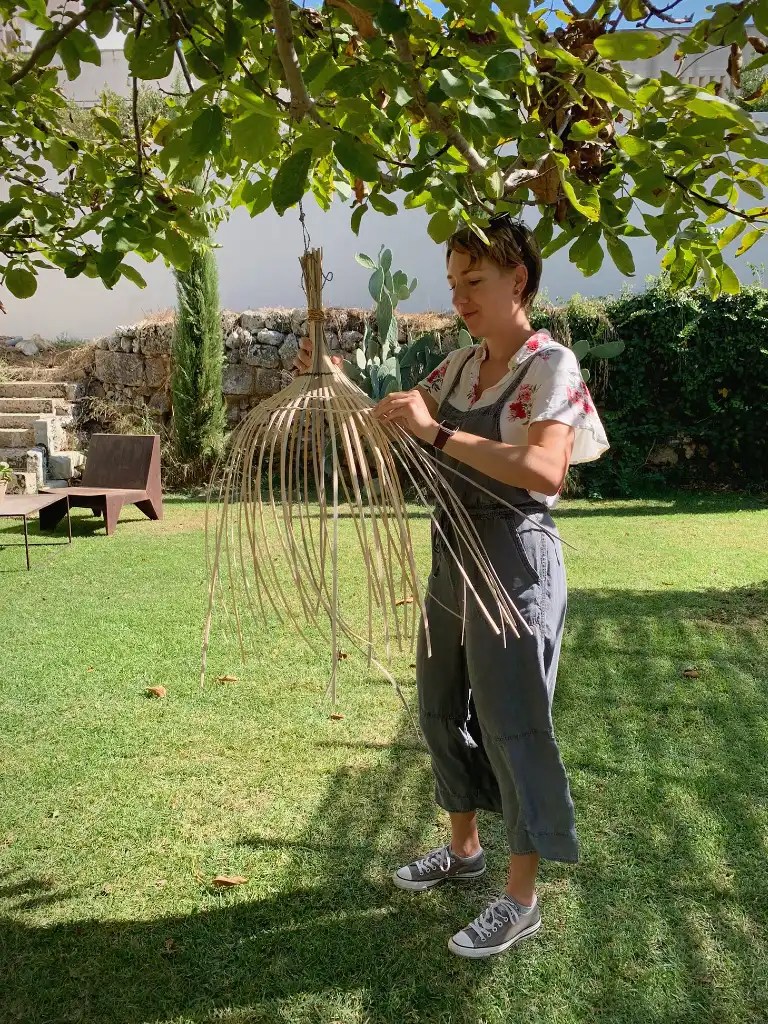
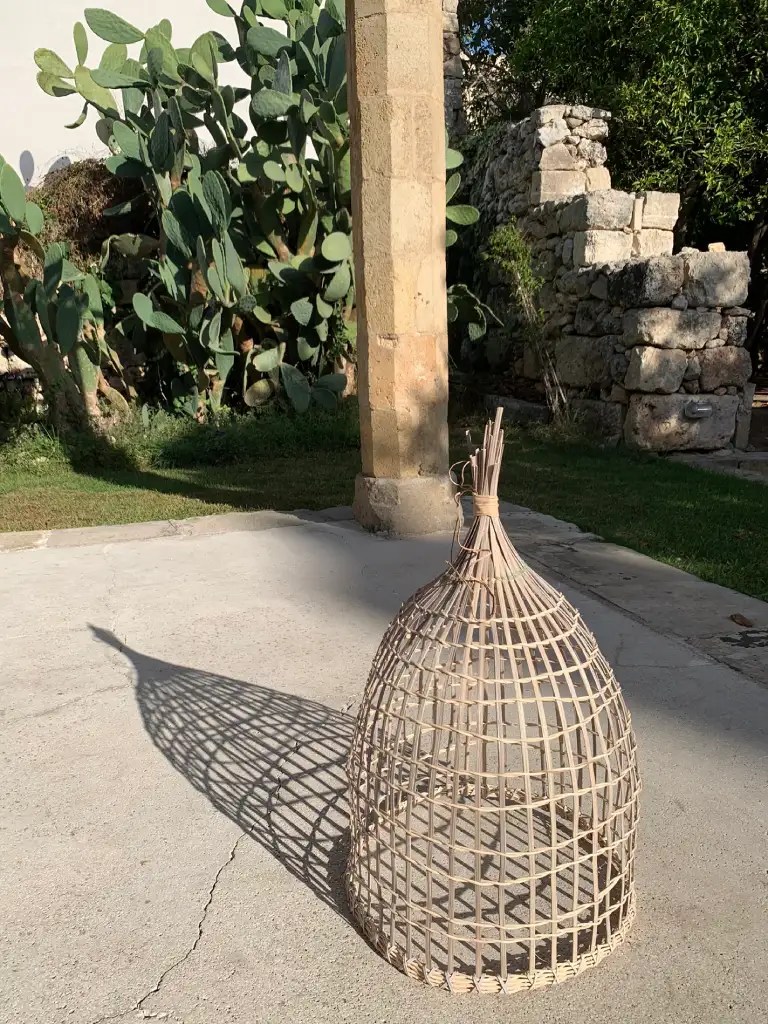
We spent two days working on the lampshade. Once they grew in size and more sturdy, we hung our works in progress from the fig tree and continued weaving. Most of us completed the project within the two days.

Harriet brought some electrical cords with bulbs on hand and strung a few up to demonstrate how they’d look finished. We were told we’d get a cord and bulb for hanging, but ultimately didn’t. This was a bit of let down, as I was looking forward to using the lamp upon returning home.

The only downside was the challenge of getting the lampshades home. Though the frame was pliable, it was still an awkward carry-on (I stuffed my duffel bag into the lampshade before loading it into the overhead bin). A heads-up about this in advance or a project of appropriate size would have been helpful.
Technique #2 : Looping – Wax Cotton Thread-Wrapped Stones and Twine Bucket Bag
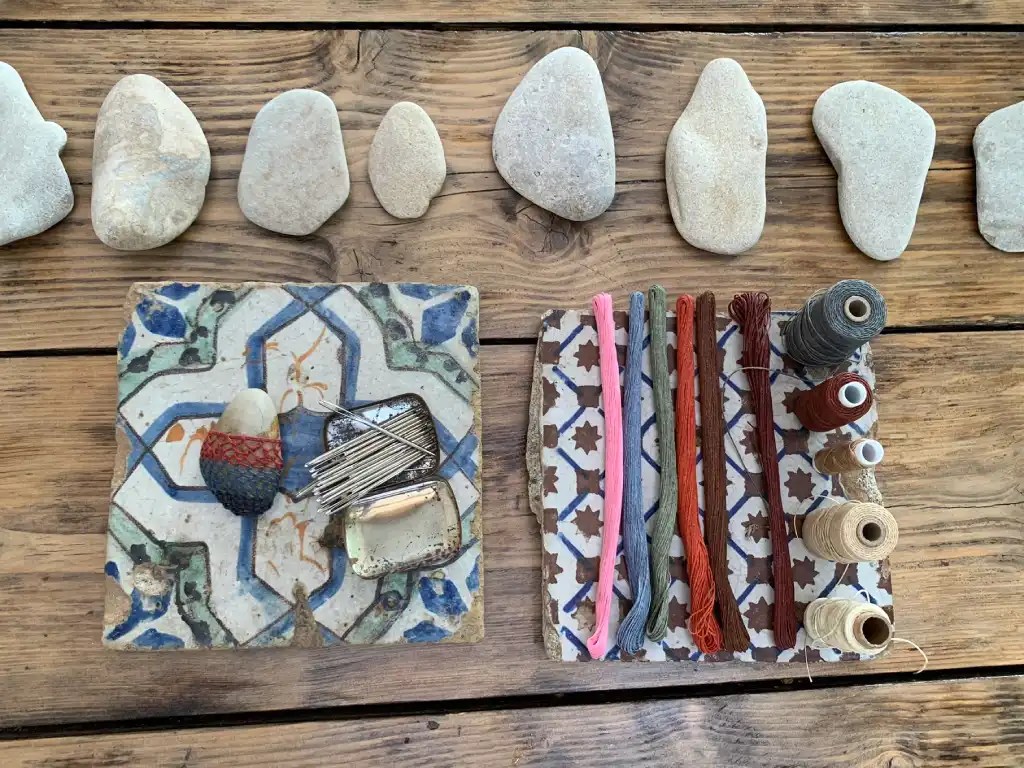
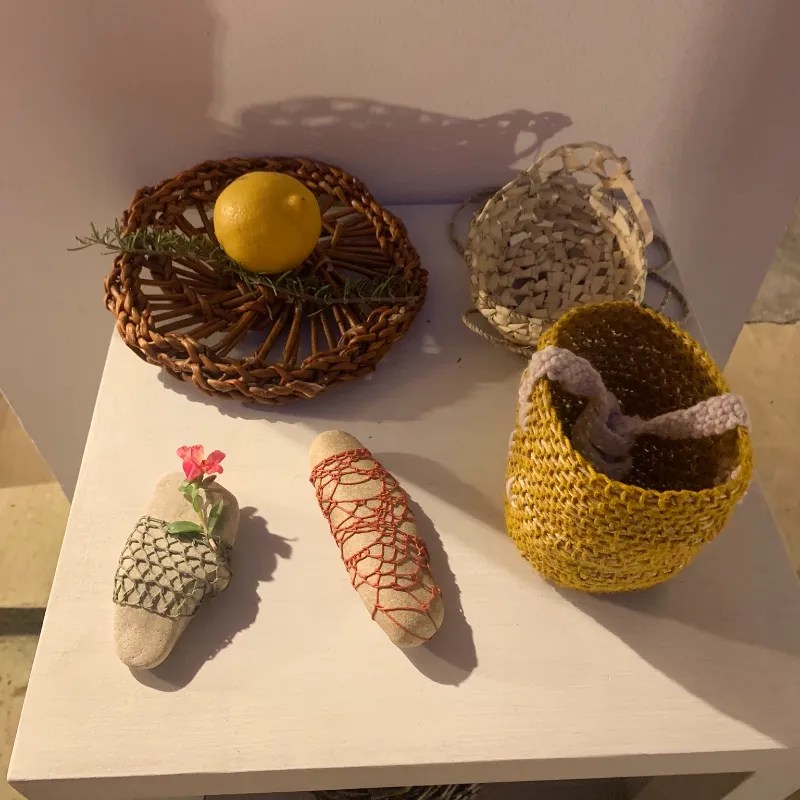
We returned from lunch to an assortment of softly curved stones found along the property laid out on a table with an array of waxed cotton threads. The first project using the looping technique involved weaving waxed cotton thread with a needle around found stones.
The second project where we implemented looping was a twine bag with a leather strap. Looping twine seemed easy enough at first, very repetitive. However, the texture of the twine and pulling long strands of it through the loops made it a little rough on the hands. Many of us worked on these bags in transit, along shuttle rides to Otranto and Lecce, or during the free moments before or after meals.
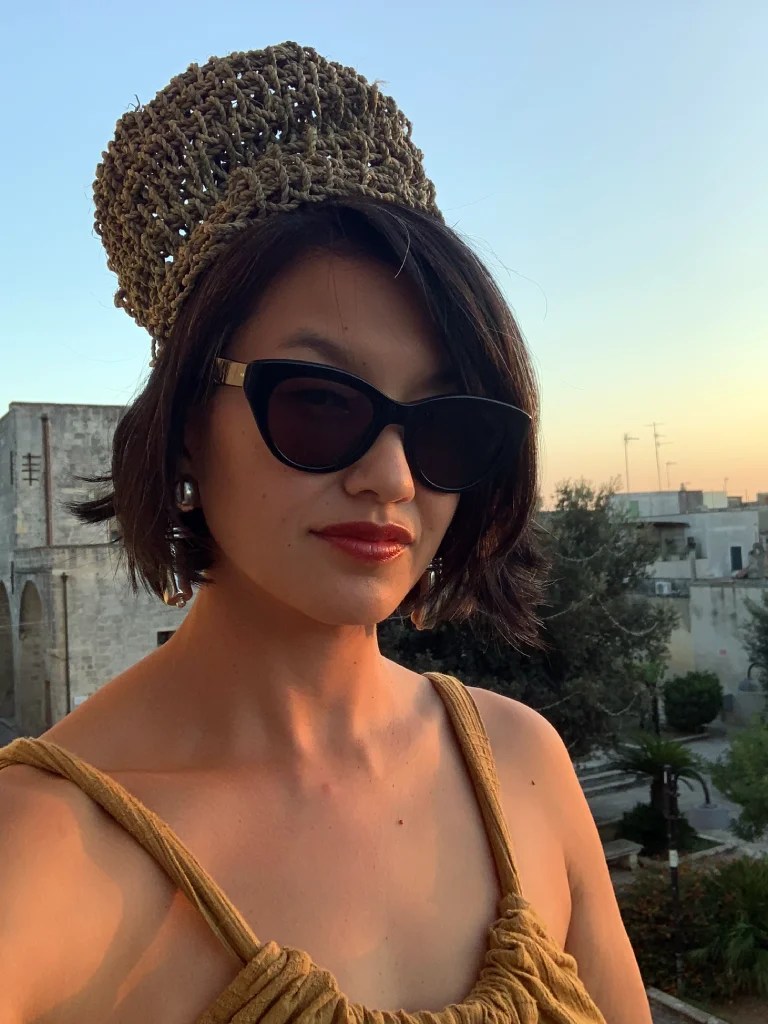
I did not get to attach the leather strap during the workshop. Although it was technically designated a purse project, I’ve decided to line mine with linen and use it as a basket or catchall at home. The twine felt, to me, a little too coarse to wear against the body… but I did wear it on my head to our last dinner, just for fun.
Technique #3: Italian Crino Baskets – Neolithic Braiding
They saved the hardest for last. Neolithic braiding was the most physically demanding and technically challenging of the crafts, taught by the most patient and gentle soul, a an Italian man named Andrea from Bologna. We were told to purchase knives ahead of this workshop, which came in handy.
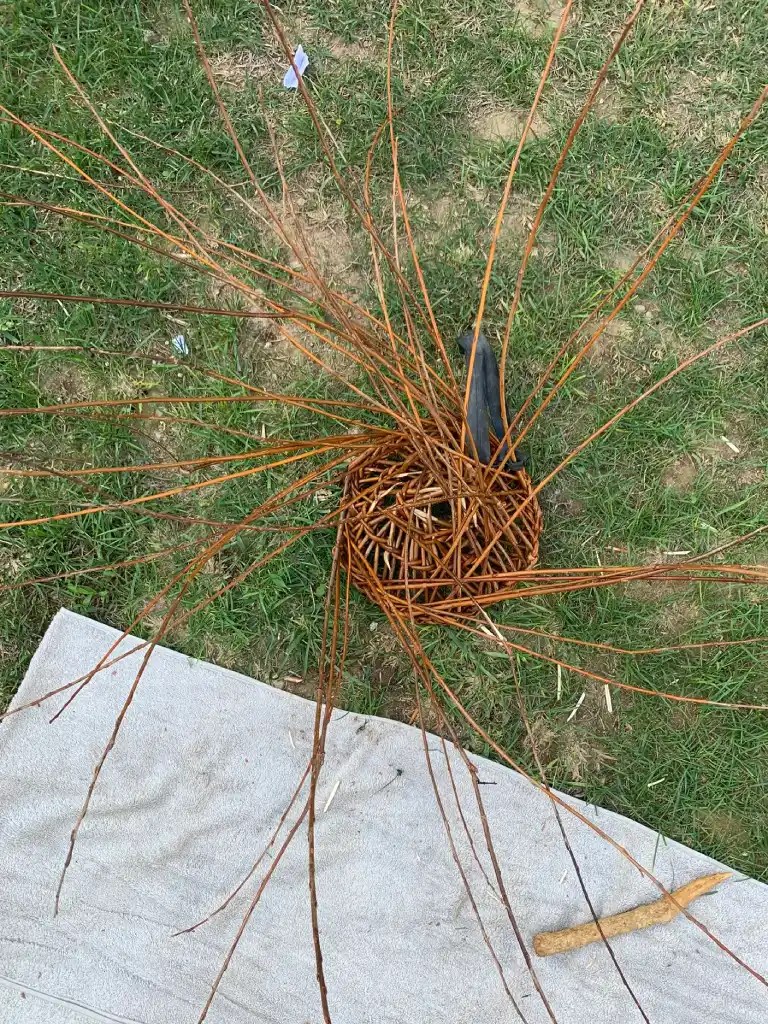
Thankfully, the willow branches were hand-harvested for us in advance. Andrea showed us how to sort them by size and pare the edges of each branch down with our knives, then organize them in a spiral pattern to form the basket’s base.
Beginning the spiral was the hardest part. We all worked seated on the ground, either on the grass or on towels and blankets, branches flying. We used our knees to hold the base in place as we bent and twisted the branches into shape.
Neolithic braiding was not for the faint of heart, or hand. Some in our group abandoned the willow branches altogether to braid softer, more forgiving materials, like raffia. Others began to build some height with the branches. No one from the workshop left with a finished basket – we would have needed much more time for that.
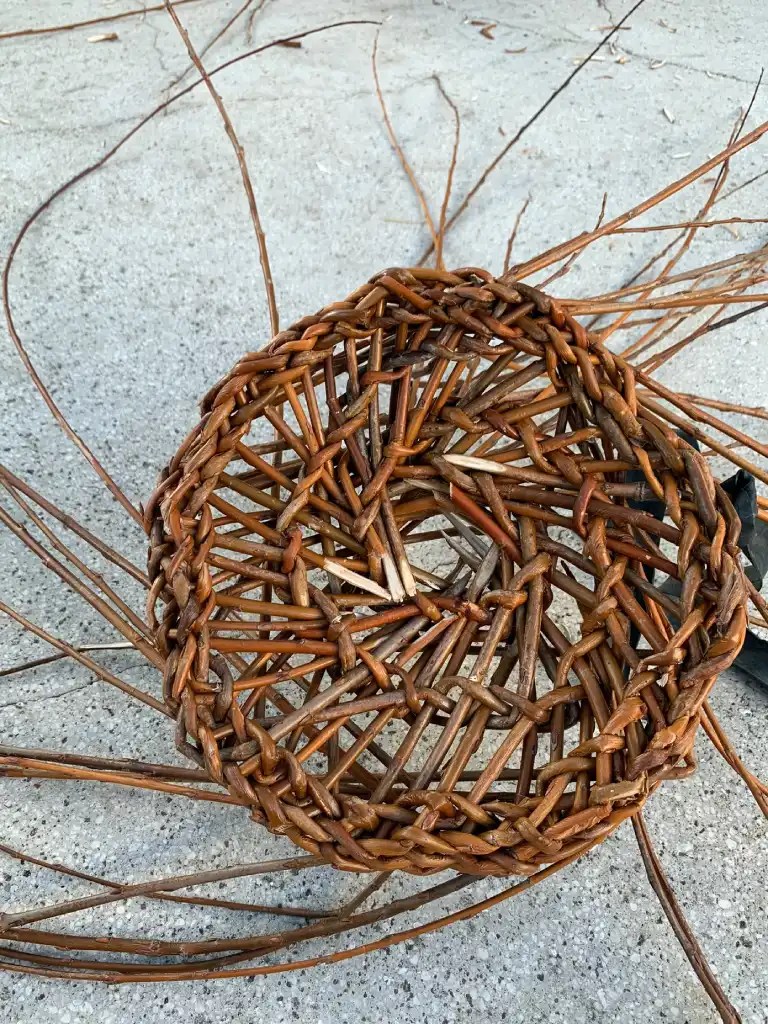
I ended up with a spiral form resembling something like a bundle of stick pretzels, which I now use as a wall hanging. While I didn’t make a finished basket, I went to bed sore but proud.
Note: This portion of the workshop was not beginner-friendly, and while it eventually clicked, I think the group would have benefited from a more accessible option.
Technique #4: Palm Weaving

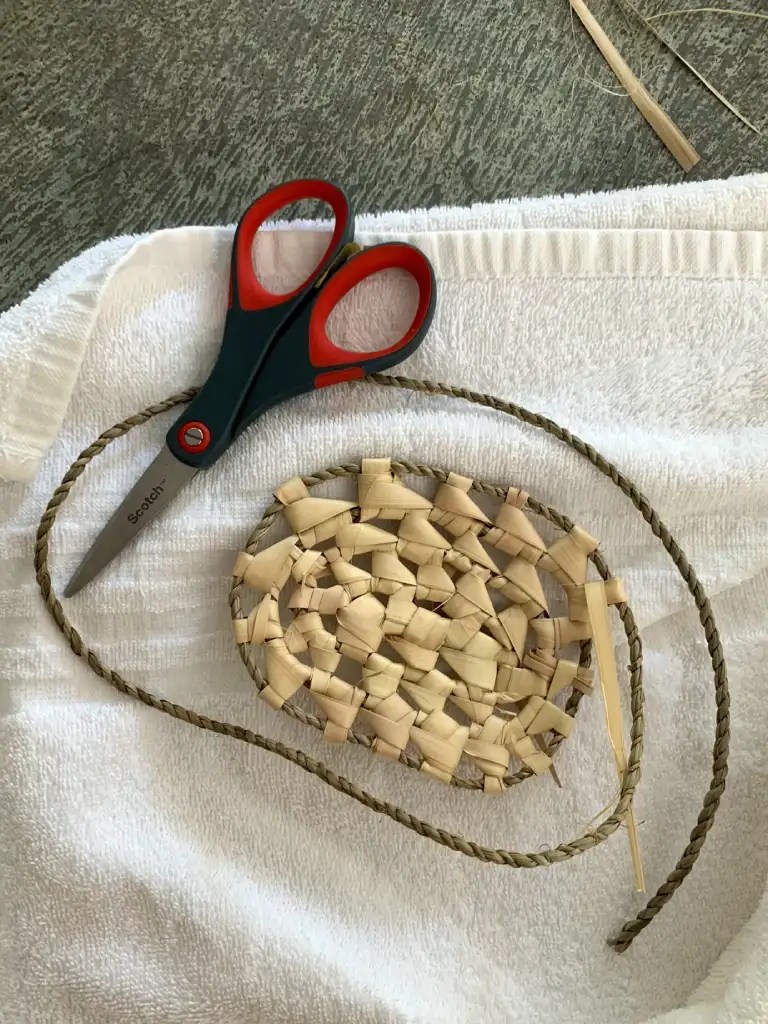
A lovely, meditative craft using a soft, natural material (Mediterranean palm, or “coffa”) which made me nostalgic for Palm Sundays as a kid at church. Under Andrea’s tutelage, I made a small tray that now holds my waxed cotton looped stone by folding the palm into knots that resemble “little shoes”. We worked together at a long table, sipping tea, espresso, and munching on taralli – a complete 180-degree turn from wrestling with willow the afternoon prior.
Who Are The Instructors?
We were fortunate to learn from two talented artists / artisans during our week in Puglia: Australian fiber artist Harriet Goodall and Andrea, an Italian basketmaker who traveled from Bologna for the workshop.
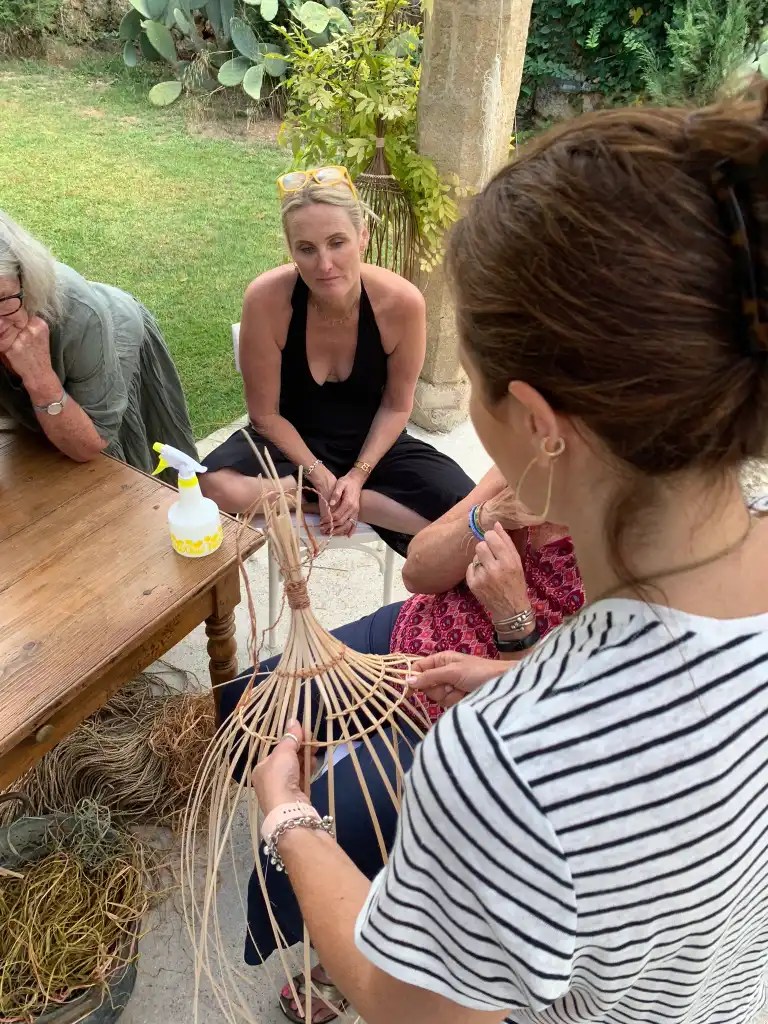
I had already been following Harriet on social media, so it was a treat to learn from someone whose work I’d admired from afar.
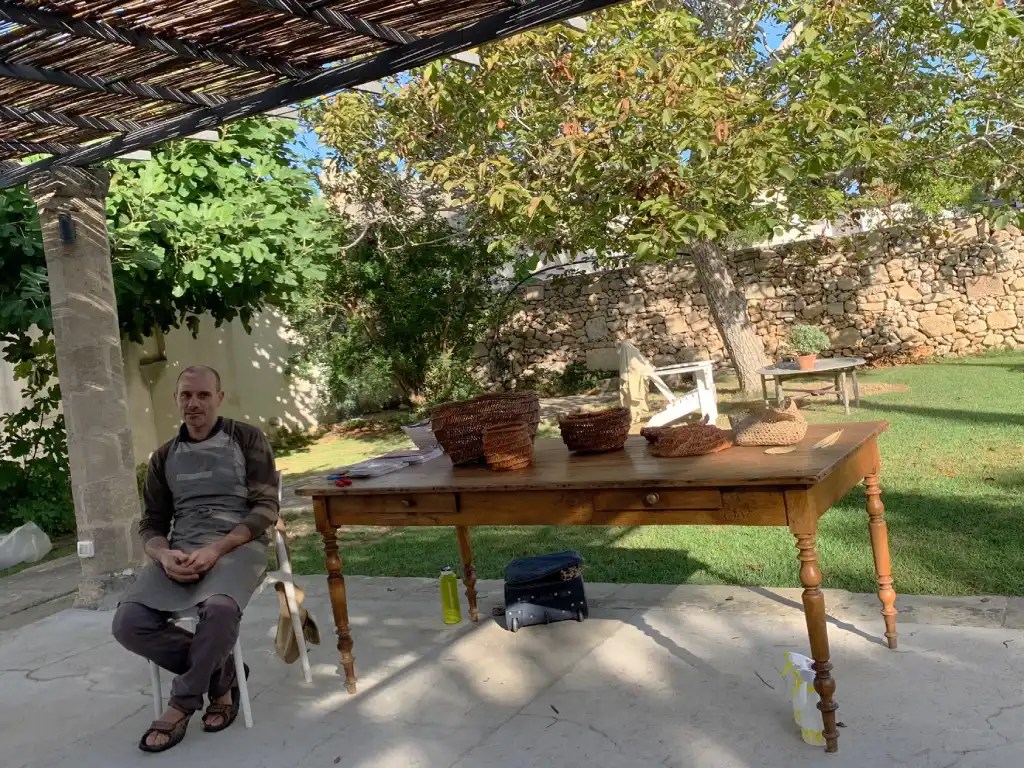
There was something special about learning from Andrea, whose technique and training was rooted in Italian tradition. I learned that in Italy, about half of all basketmakers are men, and that these techniques are often passed down from generation to generation.
Despite being tasked with teaching us the most challenging technique during the retreat, he remained calm and patient. His energy was steady and zen-like, which helped make a steep learning curve and physically challenging process eventually feel less daunting, and more rewarding.
Note: Of the 3 Ace Camps trips I’ve taken, this one was the first with an instructor who’d flown in from elsewhere. The other ones I’d been on focused mainly on local crafts and learning from artisans specific to the region. In Oaxaca, that meant folk embroidery and backstrap weaving, and in Eswatini, batik and loom weaving.
Overall, I found that the most fulfilling experiences didn’t always involve projects completed to perfection, rather than those that taught me to relish the process of making. (It’s worth noting that I had no experience in basket weaving before the retreat.)
What Other Activities Are Included in an Ace Camps Trip?
While the focus of the retreat was hands-on craft, we also had the chance to explore the region through cultural visits and excursions that added depth to the workshop.
Visit to a Traditional Basketmaker
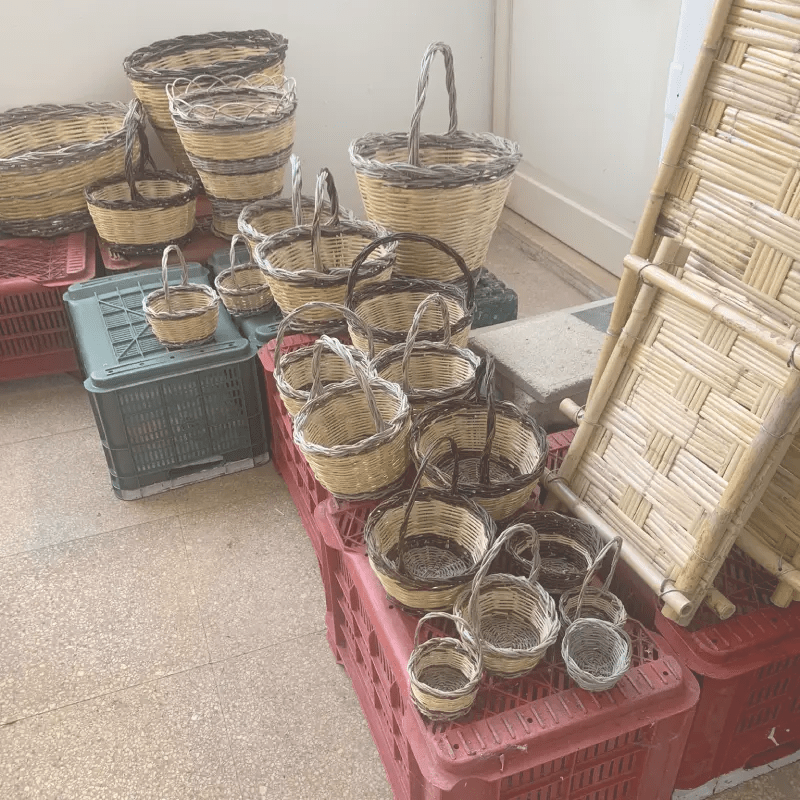
While this activity was craft-related, it was not a hands-on workshop. We visited the home of a traditional basketmaker in a nearby village. Upon entry, we spotted his immaculate, tightly woven baskets, stacked in neat piles in an open-air courtyard. His work was exquisite: bold stripes made from blonde and ash-colored branches, each basket a example of meticulous perfection honed over years of practice and a dedication to the craft.

Our group huddled around this man in his garage for a basket weaving demo. He spoke only Italian, but no translation was needed – the attention he paid to the form spoke volumes. His family stood nearby, watching us watching him as if he were a rock star. They seemed proud and a little amused that a dozen or so women had gathered like groupies to watch him work.
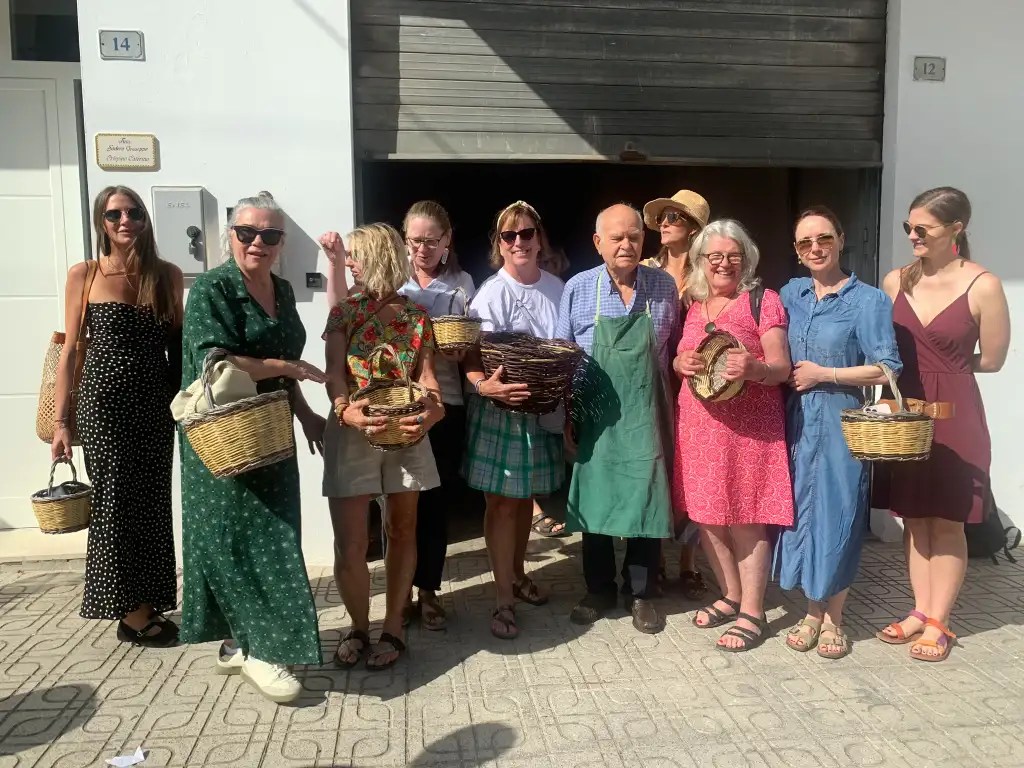
With some prior weaving experience under my belt by then, I found it easier to follow along as he demonstrated how to construct a frame and weave the branches into place. He was moved to tears as we purchased armloads of his baskets as souvenirs.
Visit to Otranto
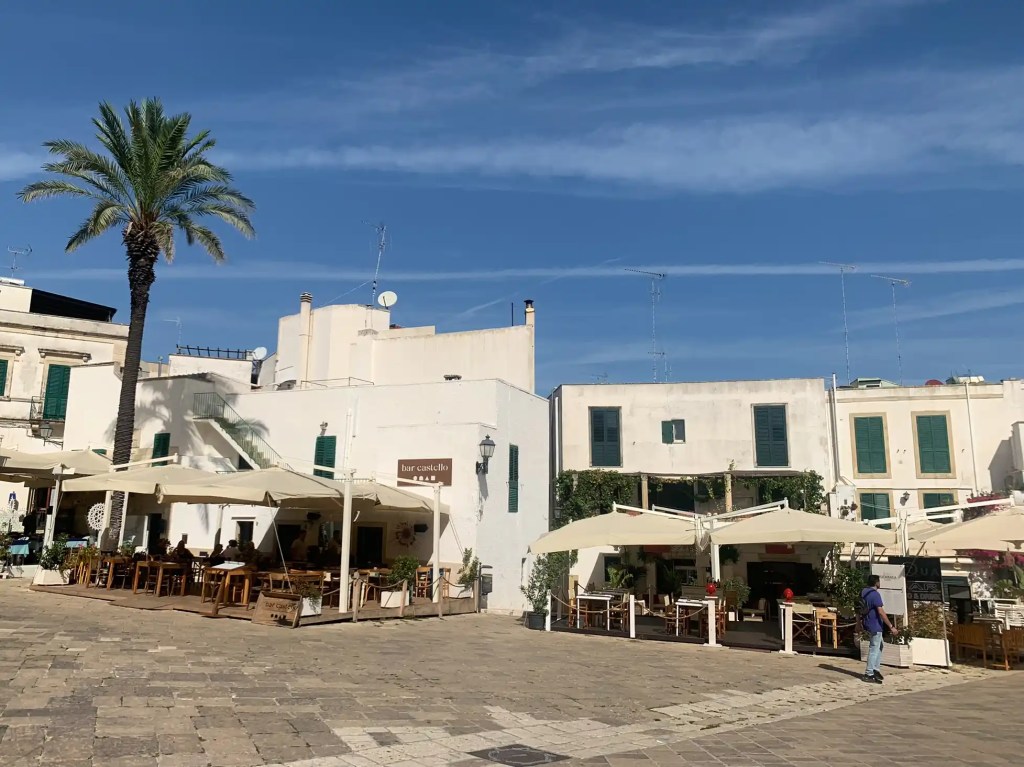
Following the visit to the basketmaker, we ventured out to Otranto, a charming seaside town along the Adriatic.
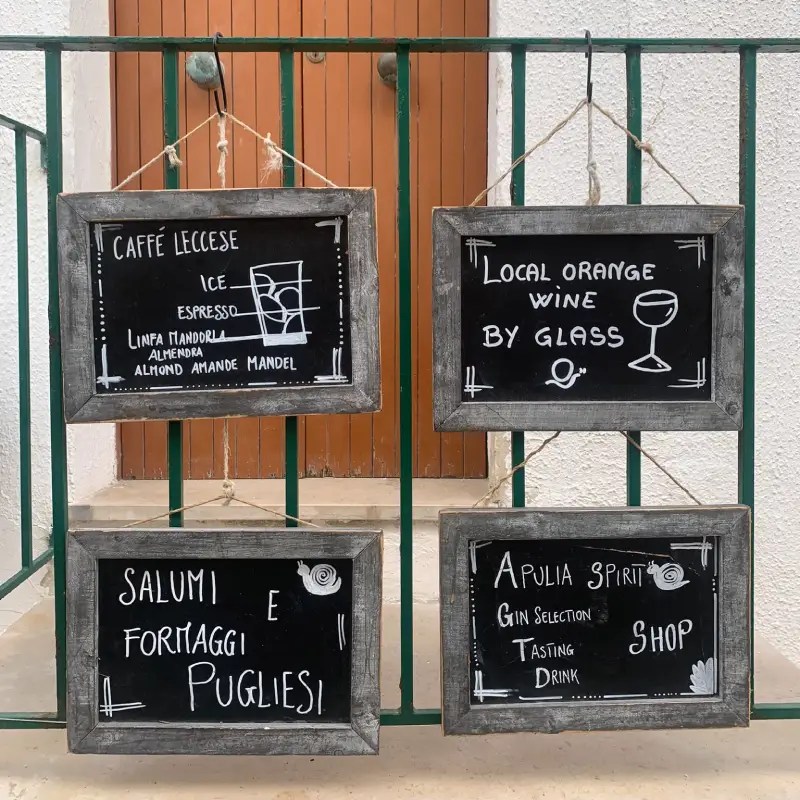
We shared a long, leisurely lunch that included plates of charcuterie, fresh local produce, and burratina.
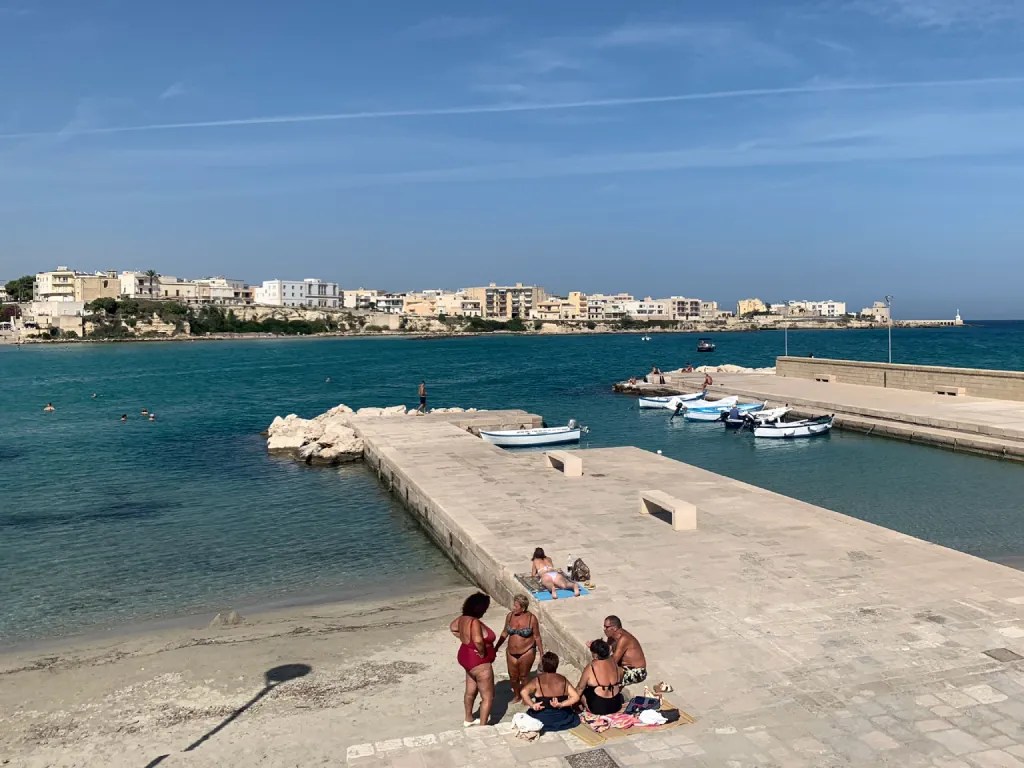
A few in our group laid out along the rocks to sunbathe and admire the view while others shopped around town.
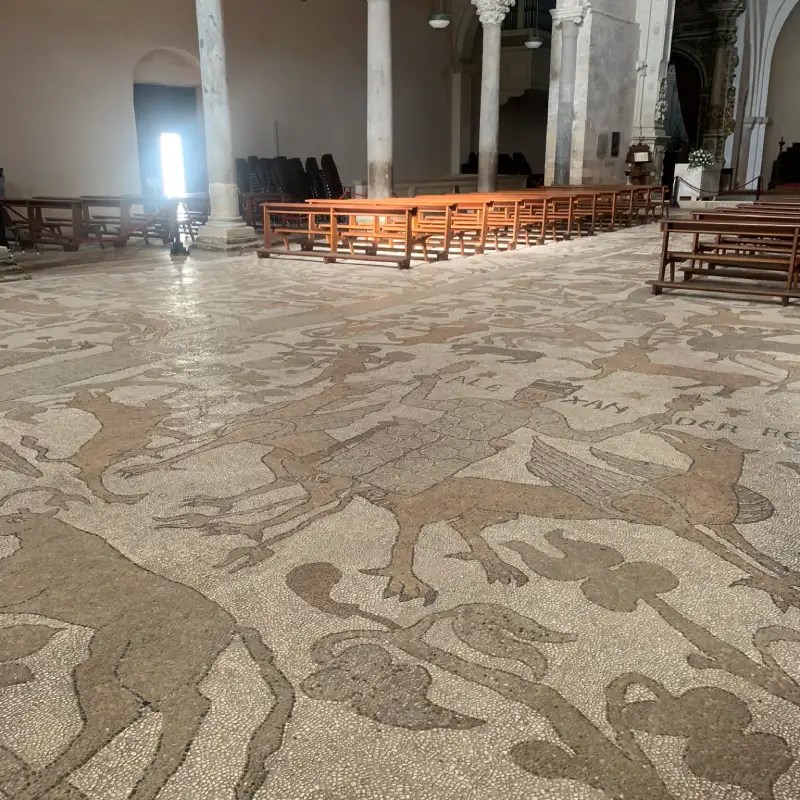
We also visited the Otranto Cathedral. The floor of the Cathedral bears a large tiled mosaic of the Tree of Life.
Walking Tour of Muro Leccese
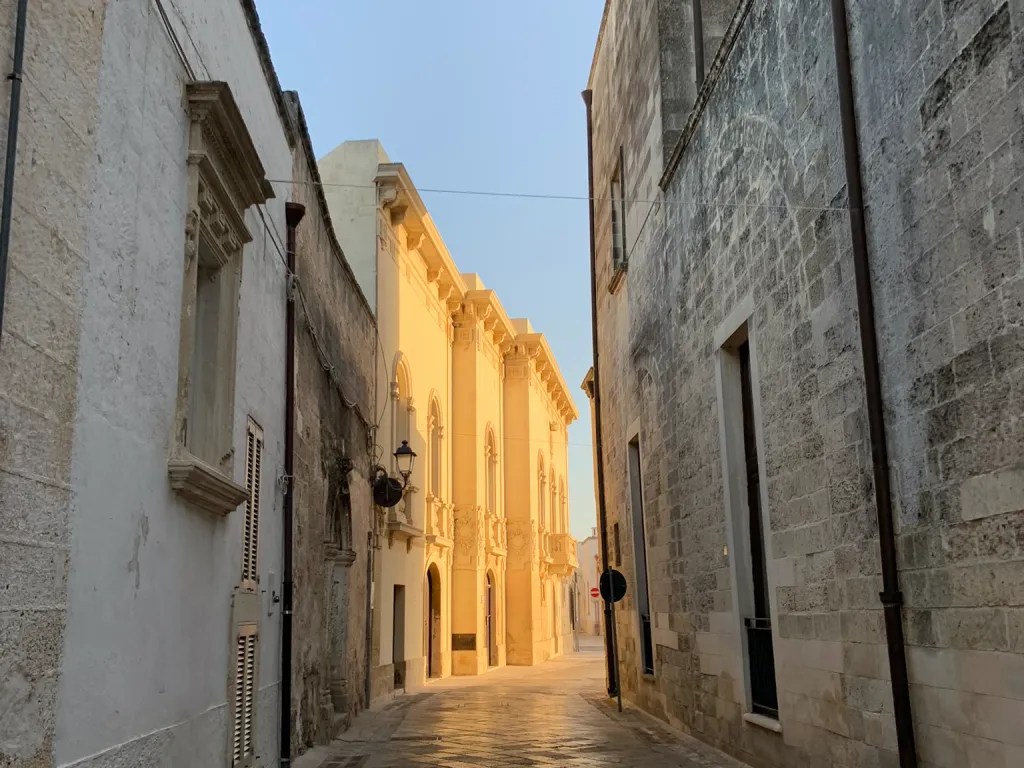

Closer to our home base, we took a walking tour around Muro Leccese, where we mostly admired ancient architectural details, illuminated by golden hour.

The tour included a visit to a local olive oil press. It was a casual outing that reminded us how central olive oil is to the region’s identity.
Excursion to Lecce
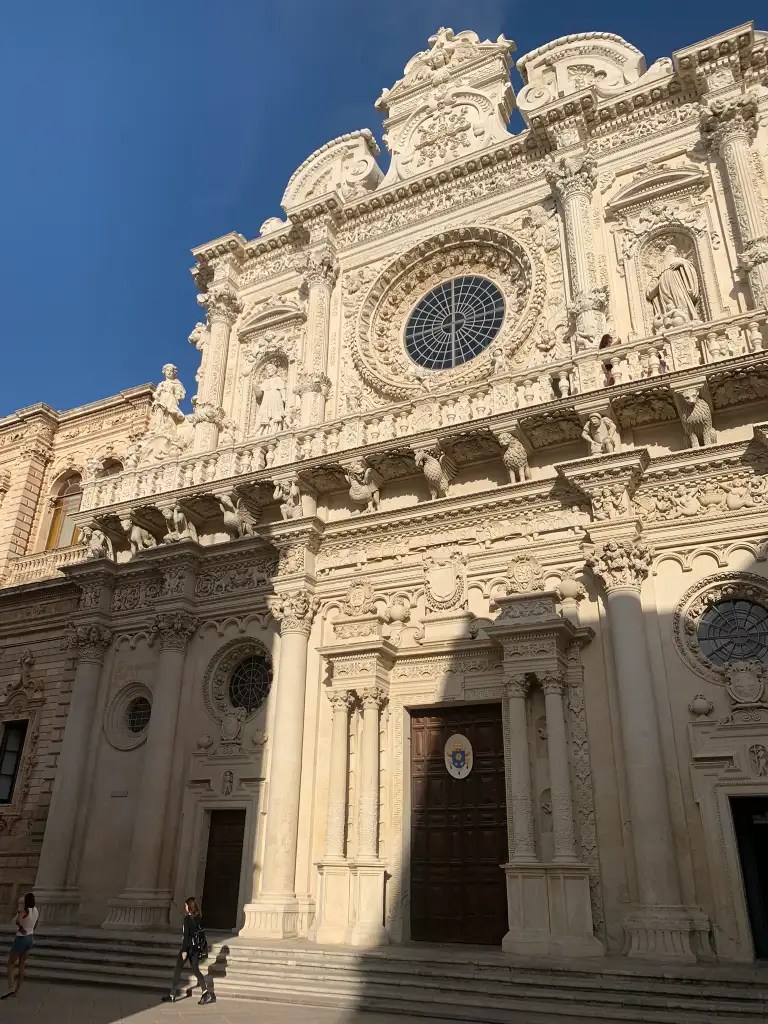
Leah and I had already spent a day in Lecce prior to the retreat, so we used our free time there to revisit a few favorite spots. We returned to Vico dei Bolognesi, a stylish-boutique-meets-natural-wine-bar. I had hoped to stop by a jewelry shop I’d scouted earlier, but it was closed, as was often the case in southern Italy’s slower afternoon hours.
Tip: If shopping for souvenirs, I’d recommend brightly colored ceramic olive oil cruets, Schizzato ceramics, and wooden pasta rollers and cutters.
Who Will You Be Traveling With?
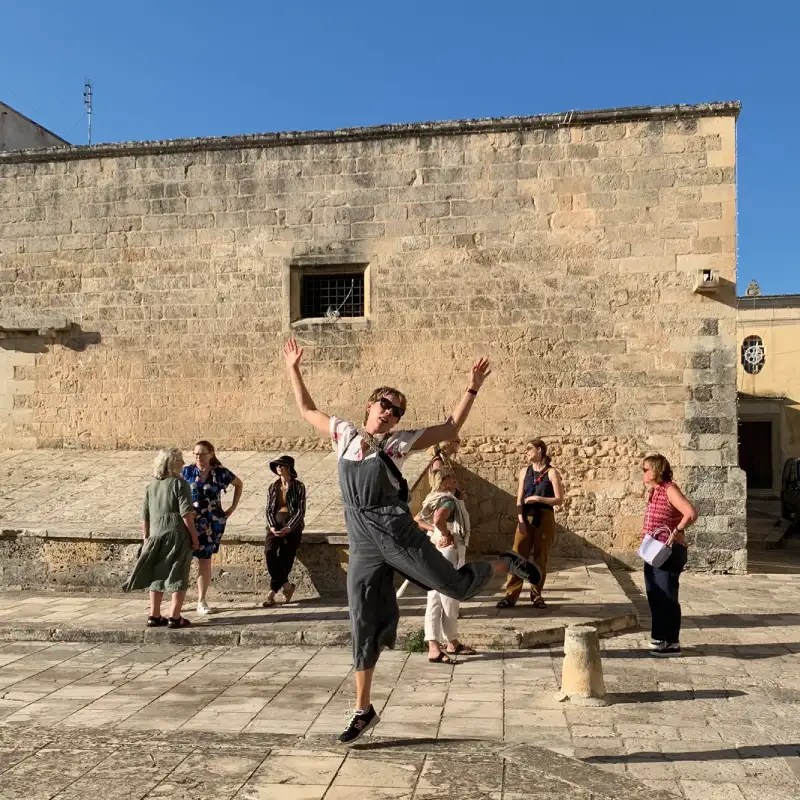
Before my first Ace Camps trip in Oaxaca, I assumed I’d be surrounded by women like me – creative, curious, women in their 30s. In reality, I ended up being one of the youngest participants. On both trips I’ve taken, guests were predominantly women, the majority of whom were older by one or two decades. In Italy, half our group hailed from from Australia / New Zealand (where Harriet Goodall is based) and others came from U.S. cities like Boston and Salt Lake City.
The demographic may partly reflect the cost. These retreats aren’t inexpensive, which naturally filters for a certain type of traveler. But if you’re concerned about fitting in based on age or life stage, don’t be. Regardless of age, many participants (mostly/all women) are lively and full of personality, and willing to be social.
Many of the women I’ve met through these retreats (of all ages) have become real-life friends. We’ve kept in touch, visited each other in our respective cities, and even gone on other creative retreats together. They’re generally smart, vivacious ladies with an eye for design (we’re/they’re crafters after all) and open minds.
That said, I’m eager to explore creative retreats run by other operators, to see if and how the group demographics / dynamics may vary. Different price points, destinations, programming, and marketing/branding naturally attract different types of people.
If you’re on the fence about joining a group trip like this solo, don’t be. They tend to bring kindred creative spirits together. I enjoy the opportunities to meet people from outside my usual circles (family, established friends, colleagues), from other walks of life, and to develop inter-generational friendships.
Can You Bring A Spouse or Travel Partner?
I’ve attended Ace Camps where participants have brought along a spouse or partner who didn’t participate in the craft portions of the trip. The pricing and logistics may vary. For example, there may be a room supplement or adjusted rate if you’re sharing accommodations. It’s best to reach out to Ace Camps directly to confirm the details.
In my experience, most travelers attend solo or with friends… including married women whose partners stayed behind. If your guest is tagging along as a non-participant, just keep in mind that group activities (like transfers or excursions) may be arranged on a case-by-case basis.
Is Ace Camps Good for Beginner Crafters?

You don’t need to be an experienced crafter to join an Ace Camps trip. There’s no pressure to finish any project. Sometimes you don’t know whether you’ll love (or hate) something until you try it.
Having some crafting experience can be helpful. If you’re naturally good with your hands, certain techniques can come more easily. But more than skill, it’s your willingness to try that matters most. I personally believe doing new (and sometimes hard) things can be fun. Maybe not right away… but I usually get there in the end.
One of the best parts of joining a creative retreat is gifting yourself the time, space, and conditions to focus: inspiring surroundings, having all supplies at your disposal (no need to shop or prep), generous teachers, and the company of fellow creative enthusiasts.
For this particular workshop (basket weaving), my prior exposure to fiber arts like knitting, crochet, and weaving definitely helped, but wasn’t required. We had a mix of experience levels in our group, and even the seasoned weavers among us learned new techniques and were just as humbled by the tricky ones as the rest of us.
What’s Included in the Trip Cost?
One of the best things about an Ace Camps trip is how much is already taken care of for you. The trip fee helps minimize out-of-pocket expenses once you arrive, so you can focus on being present, rather than on planning. (I’m usually the designated trip planner and it’s a blessing to not have to use my brain at Ace Camps.) With most logistics covered, all you really have to do is show up for a meal, workshop, or the shuttle towards whichever excursion’s up next.
What’s included:
- Lodging. Comfortable accommodations, typically hotels or locally-owned stays, are arranged for you. No research or booking needed.
- Most meals. Breakfast is usually provided at the hotel, and most lunches and dinners are included. You’ll get a few open meals too, so you can venture out on your own.
- Group transfers. Airport pick-up and drop-off from the designated meeting point are included, along with transportation between activities during the trip. You won’t need to worry about how to get from place to place.
- Craft instruction + supplies. Your workshop is led by an experienced instructor, and all necessary materials are provided, no shopping or prep needed (in the case of this trip, we were recommended to buy a knife, which cost $15-20 USD. However, knives were provided for those who were not able to purchase or bring one).
- A dedicated guide. A coordinator travels with the group to make sure everything runs smoothly and to answer any questions along the way.
- Some excursions, noted in the trip itinerary.
What’s not included:
- Airfare. It’s your responsibility to get to the meeting spot/city and to get yourself back home, though Ace Camps will provide a transfer to the airport / designated point of departure.
- Some meals. A handful of meals are left open intentionally, giving you space to explore local restaurants or enjoy solo downtime.
- Alcohol. Cocktails, wine, and beer are on your own tab.
- Gratuities for drivers and tour guides. These are appreciated but not included. Bring or reserve a little extra cash for tips.
- Travel insurance. Required for all participants. Ace Camps recommends World Nomads, which I’ve found to offer great coverage at a reasonable price (I’ve even purchased their insurance for personal travel.)
- Health requirements. Some destinations may require or recommend vaccinations. In some cases, you might be asked to show proof of a negative COVID test, especially if you’re sharing a room. Ace Camps doesn’t provide COVID tests, so it’s smart to pack a few just in case.
When and How You Should Book Your Ace Camps Trip
You can find a complete list of upcoming trips, as well as those that are full or waitlisted, on the Ace Camps Travel website. In my experience, the most popular trips book up fast, sometimes within minutes of going live. Your best bet is to sign up for their mailing list, so you’re among the first to learn about new workshops and when registration opens for each.
Even as an email subscriber, I’ve found myself on the wait list despite logging in right when registration opens. (Re: Puglia, I was pulled off the list a few weeks later. If there’s a trip you’re excited about, it’s absolutely worth getting on the list.)
Once your registration is confirmed, you’ll need to pay a deposit to hold your spot in the workshop.
How Do You Get to the Retreat and Meet the Group?
The established meeting point for this trip was Brindisi (in Southern Puglia). After taking our own five-day road trip through Puglia from North to South (beginning in Bari), we dropped off our rental car at Brindisi Airport and met the group at the designated hotel.
My friend Leah arrived from Austin, TX, and I from NYC. We both flew from the U.S. to Rome first, spending one afternoon and night in Rome before connecting onward to Bari via Italo, the high-speed rail line.
Note: Ace Camps still offers trips to Puglia, but recent itineraries suggest flying directly into Bari instead of Brindisi (there are likely more flights to Bari than Brindisi).
What You Should Pack for an Ace Camps Trip
(*specifically one where you’ll be basket weaving in Italy in October.) For the workshop portion, we were advised to bring a small knife to work with willow branches (be sure to pack it in your checked luggage if you’re flying)! Aside from the knife, all weaving materials were provided at no additional cost: raffia, twine, etc.
As for clothing, it was surprisingly warm during our October trip, especially in the sun. Lightweight, summer-appropriate clothes like cottons, linens, and breathable dresses were perfect.
Would I Take Another Ace Camps Trip?
With three Ace Camps under my belt, I’m curious to try creative retreats from other operators (like Thread Caravan) to see if different operators attract travelers of different demographics or offer more depth in certain areas. Still, I’d never say never. If the right instructor, destination, or medium aligned, I’d absolutely consider Ace Camps again.
That said, if you’re hoping to go deeper into a single craft, you might consider a more structured craft school experience instead, especially if your goal is to focus on a single craft over a full weekend, week, or even two-week period.
Are Ace Camps Trips Worth It?
Having been on three different Ace Camps (to Oaxaca, Eswatini (Swaziland), and Puglia), I can say that at the time of booking, each felt worth it to me.
My Ace Camps Puglia trip (taken in 2023) cost $3695 USD for a shared room for 8 days / 7 nights, which breaks down to about $527 USD per day (using 7 days as the denominator, since arrival and departure days are typically light on activity). That rate included most meals, daily craft instruction, lodging, local excursions, and airport transfers, and the opportunity to spend a week with a group of creative, like-minded women.
In 2025, the price for the creative retreat to Puglia has increased by about $900 (a 25% jump in two years). The base price for a shared room on a current Ace Camps trip to Puglia now sits at $4,595. Increasing prices will cause me to be more discerning about signing up for future trips.
How to Determine Whether an Ace Camps Trip is Right For You
Here are some things to consider / questions to ask yourself:
- Are you excited about the craft you’ll learn, or who you’ll be learning it from? Ace Camps often features popular artists / crafters with strong social followings (like Arounna Khounnoraj or Maryanne Moodie). If there’s someone you’ve been dying to learn from whose work you admire, this is a great opportunity to meet your crafting heroines (and heroes)!
- Are you invested in returning home with a finished craft? If you’re looking to go deep on a skill or come home with a finished piece, consider how advanced the instruction will be. I consider myself an intermediate-to-experienced crafter, and while this basket weaving trip was largely beginner-friendly, some elements, like Neolithic braiding, were physically demanding and challenging to master. I personally believe its best to keep expectations for perfection and project mastery low, and willingness to learn (and make mistakes) high. Bear in mind, there’s also only so much you can achieve in a few days, too.
- Is the workshop being offered in a dream destination? Combining a bucket list place with a native or high-barrier-to-start craft makes the trip feel worthwhile. In Eswatini, we did batik, a beautiful but messy process (using hot wax and large dye vats) I’d be much less likely attempt at home. In Oaxaca, we learned backstrap weaving from local abuelas. And a highlight of Puglia included learning how to weave from a traditional Italian basketmaker.
Ace Camps Travel offers a thoughtfully run experience for travelers who want to immerse themselves in a craft while still enjoying the pleasures of vacation. Their trips blend hands-on creative workshops with cultural excursions and the chance to connect with like-minded people (mostly women) who share a love of making.
It’s not a budget option, and prices have risen in recent years. The opportunity to learn from renowned artists and artisans in a distinctive setting, however, can seem well worth it.
If you do choose one of their trips to Puglia and have the luxury of extra time, I recommend planning a longer itinerary around the workshop for sightseeing. The workshop days are centered at the villa, and while the day trips are enjoyable, they offer only a glimpse of the region. Lecce is beautiful, but just one facet of Puglia’s varied landscape. Each of Puglia’s cities and towns have their own unique in character and deserve more than a passing visit.
Ace Camps’ trip calendar includes destinations and disciplines to suit a range of interests. It’s worth exploring their upcoming offerings to see what sparks your creativity and curiosity.

Leave a comment