

I first learned about craft schools from fellow students while taking continuing education jewelry and metalsmithing classes at New York’s 92nd Street Y. Until then, I had no idea places like this existed. Their immersive programs offer the focus and rigor of an art studio practice with the adventure of a new destination, as well as the chance to connect with creative adults from all over the country.
If you’re looking for a creative retreat with more structure than a group tour, and more camaraderie than a solo trip, a craft school may be worth exploring.
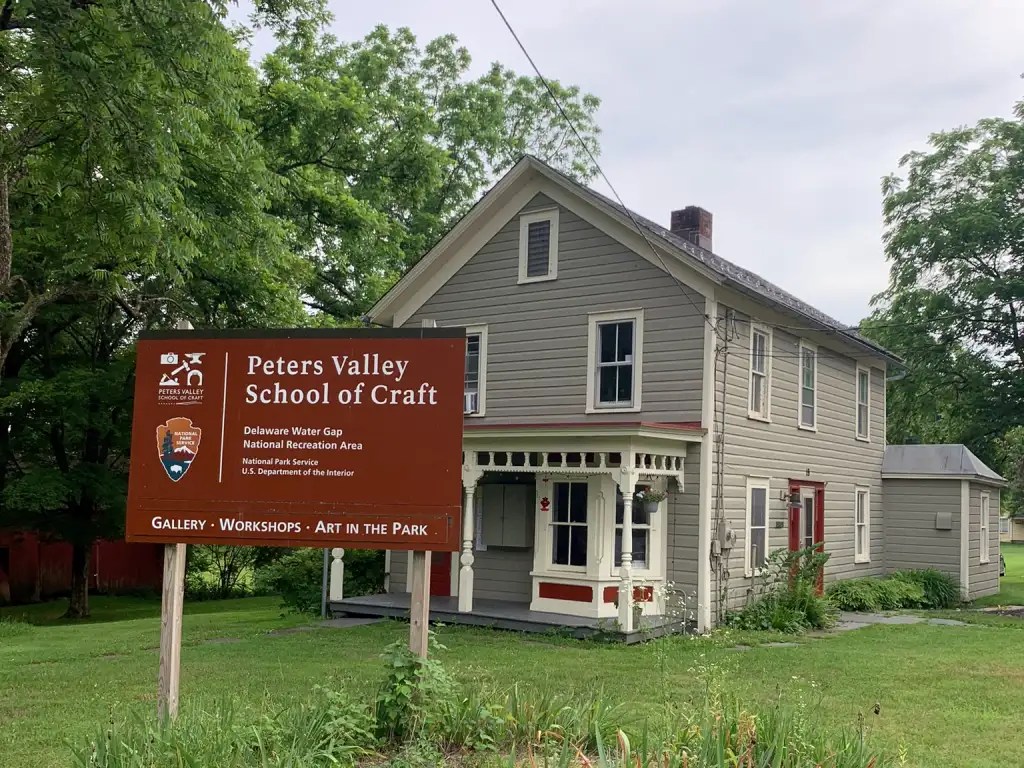
Peters Valley is one such place, tucked inside the Delaware Water Gap National Recreation Area on the New Jersey-Pennsylvania border. This was the second of four craft school experiences I’ve had thus far. In this post I’ll share what it’s like to take a course here: from what I made, to how the days are structured, to who would enjoy this type of creative retreat.
- What is Peters Valley?
- Where Is Peters Valley?
- How Many Studios Are There?
- Where Do You Stay? How is the On-Campus Housing?
- Who Will I Be Rooming With?
- How Is The Food?
- What Crafts Did I Learn During My Workshop?
- Who Are The Instructors?
- How Long Is a Peters Valley Workshop?
- What’s the Daily Schedule Like?
- Navigating the Learning Curve in the Wood Studio
- After the Workshop: Continuing The Weaving
- What Else Can You Do Outside of Class? Is There Free Time?
- Who is Peters Valley For?
- What’s Included in the Workshop Cost?
- How Do I Secure My Spot in a Peters Valley Workshop?
- What Should I Pack for the Workshop?
- Is a Workshop at Peters Valley Worth It?
What is Peters Valley?
Peters Valley School of Craft is a nonprofit educational center dedicated to fostering creativity through immersive, hands-on workshops in crafts. Founded in 1970, the school offers instruction in disciplines from blacksmithing and woodworking to ceramics, fiber arts, and jewelry. Classes are taught by nationally and internationally recognized artists, and the campus features specialized studios, galleries, and on-site accommodations.
Where Is Peters Valley?
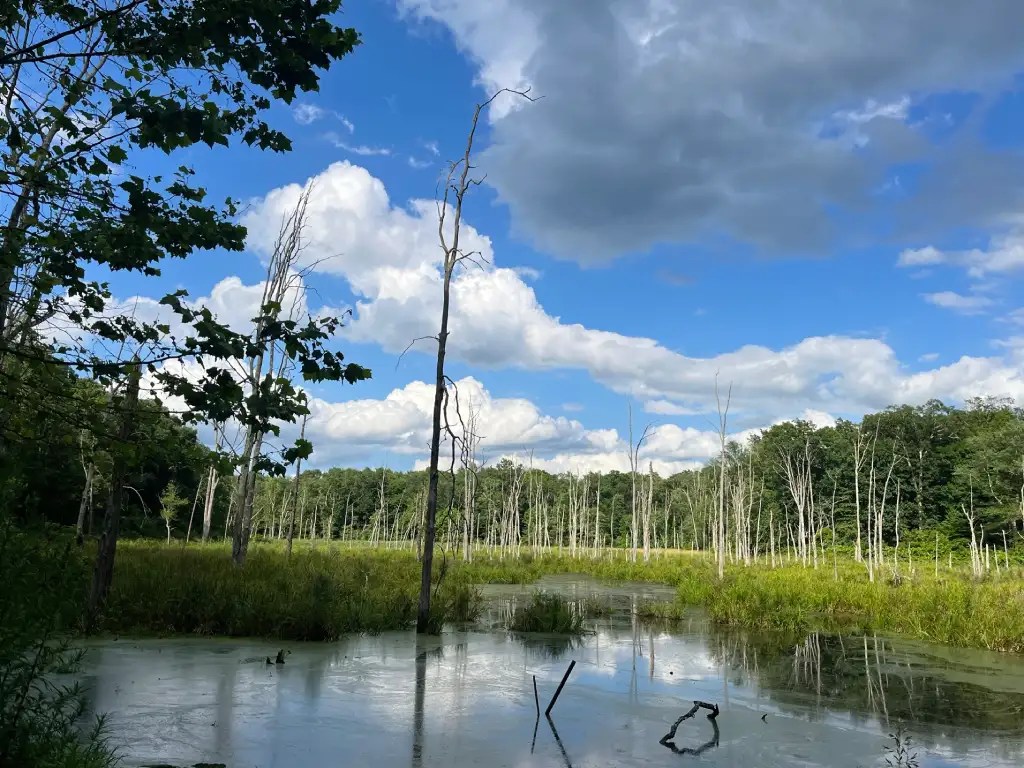
Peters Valley sits in a pocket of rural New Jersey, close to the New York–New Jersey border. Its relative proximity to New York City makes it an appealing and practical choice for city dwellers: close enough for a weekend or week-long getaway, yet distant enough to feel worlds away.
Located within the Delaware Water Gap National Recreation Area, the campus is surrounded by lush greenery in summer. When I visited in early July, the drive from our dorm to the studios took us past marshlands shimmering in the sun. One night, after a heavy downpour, I stepped out of the wood shop into a chorus of frogs, which made me smile – it was nothing like I’d ever heard before.
How Many Studios Are There?
Peters Valley has seven dedicated studios across different disciplines: Blacksmithing, Fiber & Textiles, Photography, Woodworking, Ceramics, Metals, and Printmaking. The dorms, dining hall, office, gallery, blacksmithing, ceramics, printmaking, and photography studios are within walking distance in a part of campus referred to as Valley Central.
Fibers, metals, and special topics (glass & mixed media) are located in a different cluster of studios at Thunder Mountain, a short 2-mile drive from Valley Central.
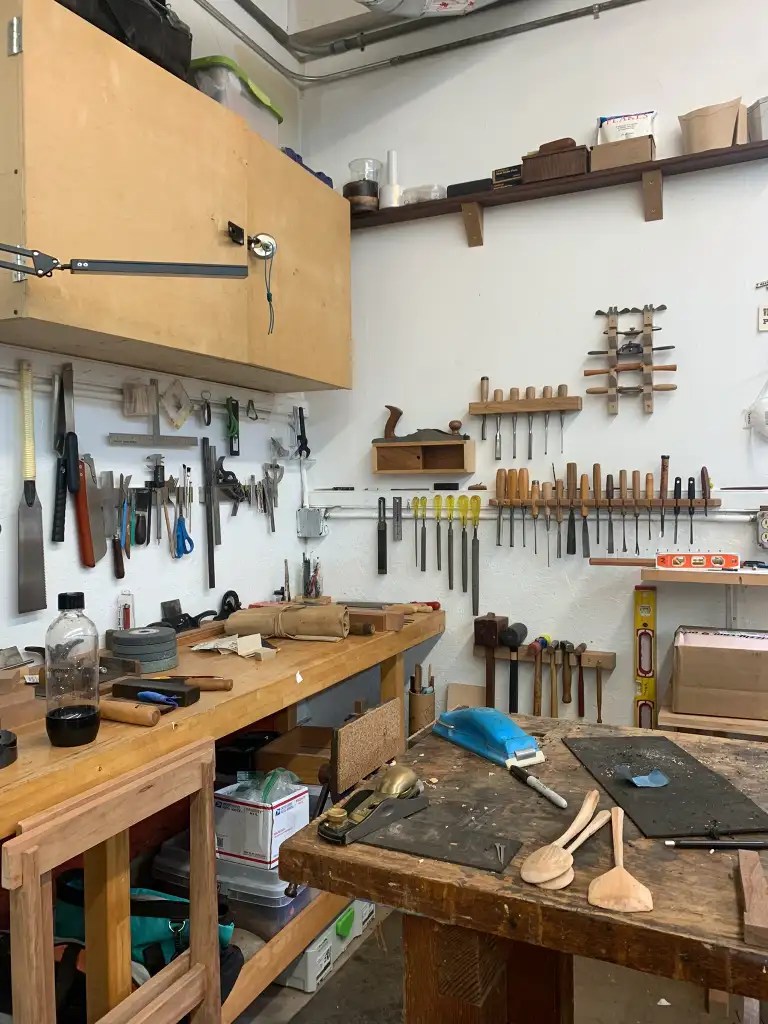
At Thunder Mountain, I was able to glimpse into the fiber studio, where a course of weaving baskets from natural materials was taking place. The metals studio, which was bright and full of tiny tools and torches. The wood shop itself was also well equipped.
The Peters Valley Gallery and Gift Shop, curated with work from current and past instructors, visiting artists, and studio assistants, is also worth a browse. I picked up a beautiful ceramic wine chiller from a local potter and a pair of earrings from Morgan Hill, who makes whimsical wooden earrings carved into the shape of cigarettes and shrimp cocktail (among others).
Where Do You Stay? How is the On-Campus Housing?
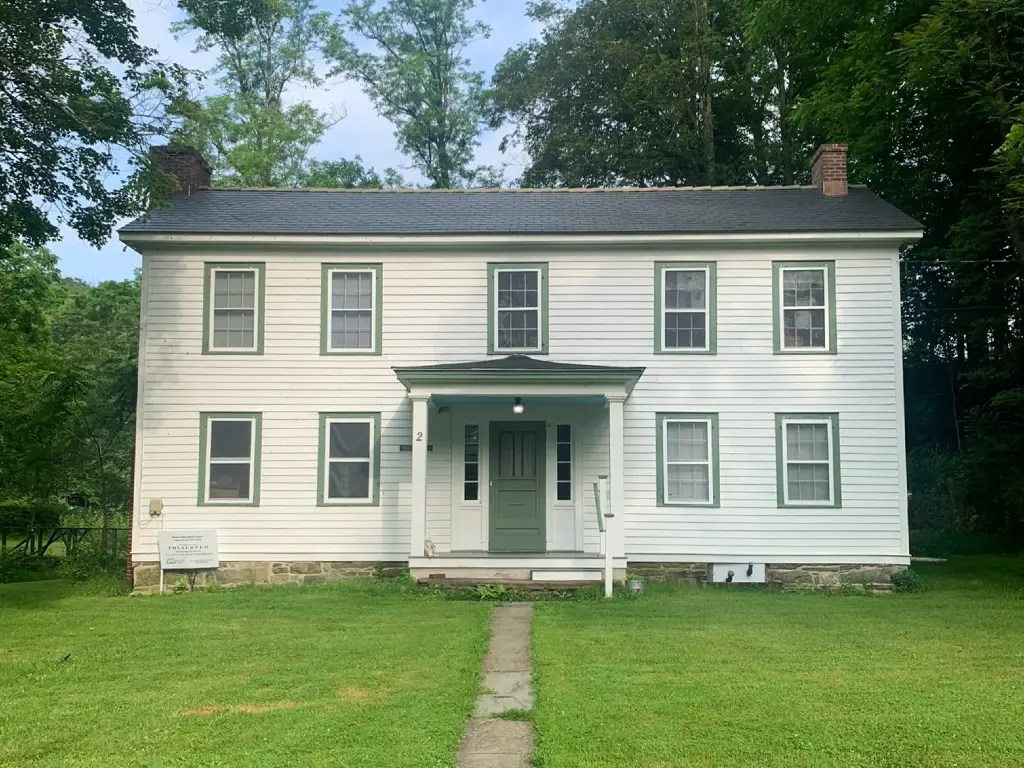
I stayed in Valleybrook, one of the on-campus houses, which was simply furnished but adequate. Our bright and airy double was on the second floor of the house just up one flight of stairs. In the mornings before class, my roommate and I would enjoy a slow morning having tea and yogurt, chatting, and taking it easy, while others went to breakfast at the dining hall.
We didn’t have any issues keeping the room cool at night, however, a major storm on the final night of our session knocked out power and water. It’s a rural campus, and something to be aware of (we had one night of candlelight before they got a generator going).
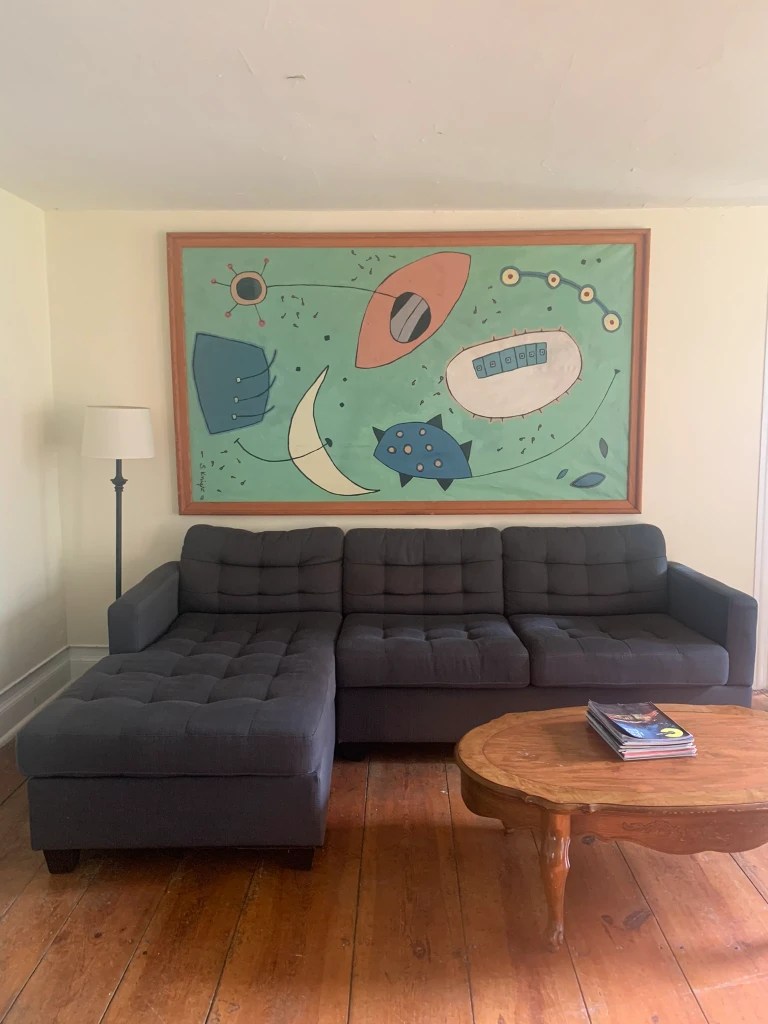
Each house includes a shared living area and full-sized kitchen. There were no TVs in the house, but most people were back in the studios after dinner, working well into the evening hours. There were a couple shared bathrooms in the house, and I don’t recall ever having to wait long to take a shower or to brush my teeth.
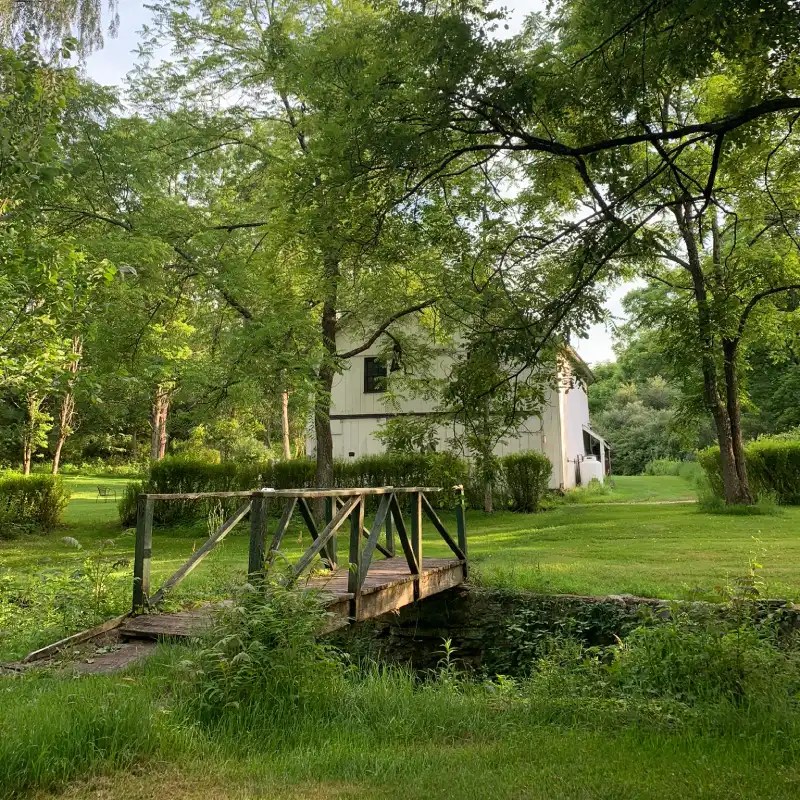
Instead of opting into the campus breakfast and dinner meal plan, my roommate and I brought our own food for dinner (pre-made vegetable lasagna and ingredients for tuna Niçoise). Each day after classes ended, enjoy a drink before dinner outside before prepping dinner and returning to the studio.
Who Will I Be Rooming With?
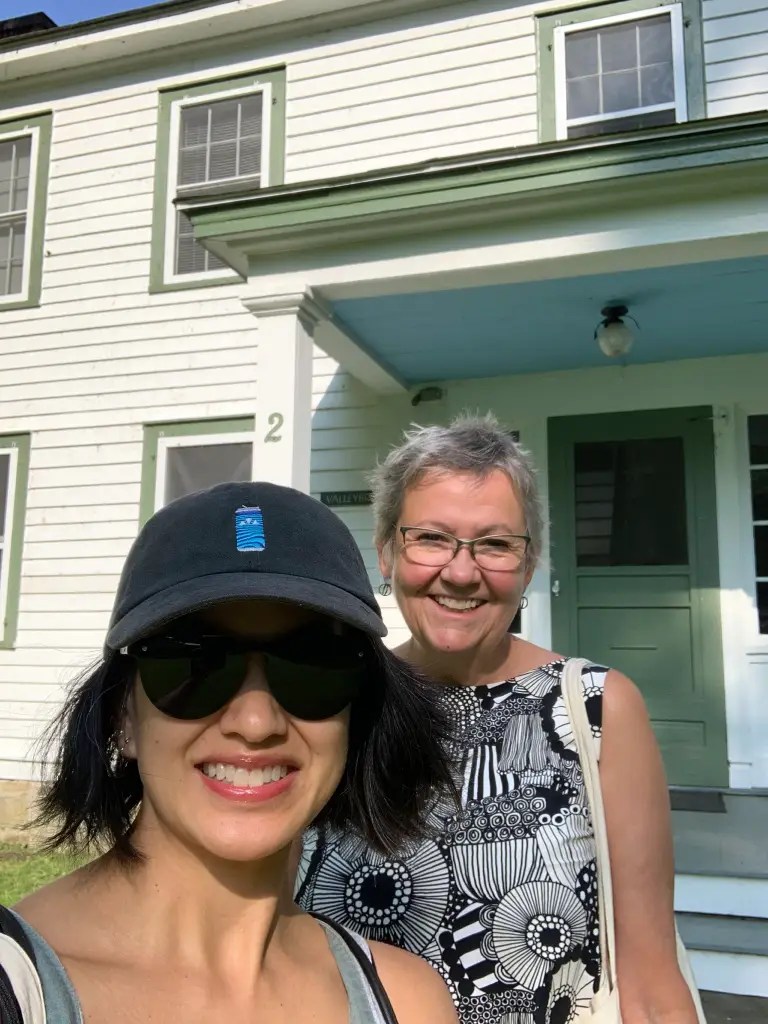
You have the opportunity to request a roommate when registering for a course, and I shared a room with Lucy, a friend I’d met on an Ace Camps retreat.
That being said, I’ve done shared housing at other craft schools with random roommate assignments and fortunately have never had a bad experience. At Penland School of Craft, I was supposed to be placed in a triple. Though I ended up rooming with only one other person, we got along quite well. At night after studio, she’d share some of her whiskey with me (in a ceramic mug she’d made, naturally).
It’s clear that the housing coordinators at these schools strive to make thoughtful pairings, and they seem to taking age and life stage into account when assigning roommates. I’ve always felt like I ended up with an another open-minded, kindred spirit.
If sharing a room is not your thing, you also have the option of requesting a private room upon registration.
How Is The Food?
Meals at Peters Valley were modest and utilitarian, with lunch served in a cafeteria-style mess hall. Typically, this meant a standard salad bar – nothing fancy – and a hot main dish. It was enough to fuel us through the afternoon studio sessions. It wasn’t bad, just don’t expect gourmet cuisine.
Lunch is included in the standard room and board plan, while a meal plan that includes breakfast and dinner meal plan is available an additional fee.
If you have a car, I recommend bringing your own breakfast and dinner supplies so you’re not reliant on the mess hall. Having your own meals prepped (especially for a short stay of a weekend or up to four or five days) can be a nice way to maintain comfort and variety – and to give yourself a break from having to socialize around the clock.
What Crafts Did I Learn During My Workshop?
Woodworking
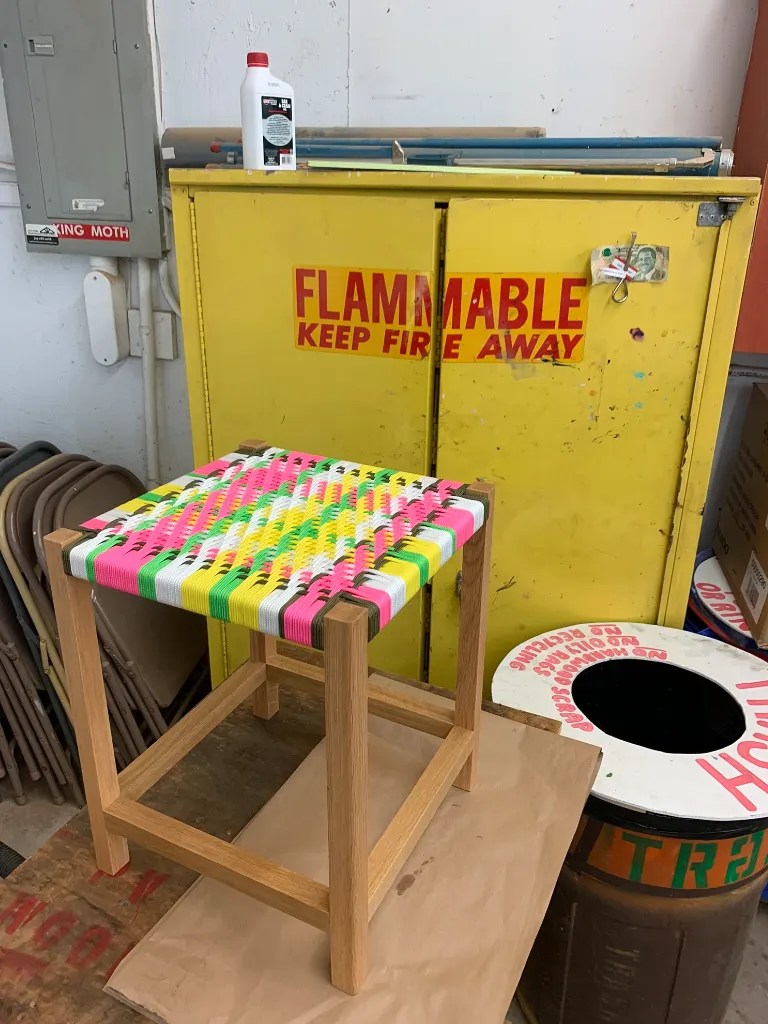
When I registered for my course, titled Woven Seats, I focused on the weaving component. The photos of the colorful stools in the course catalog piqued my interest. I knew Woven Seats would take place in the wood studio, but the woodworking aspect of the course didn’t fully sink in until I arrived to the studio on Day 1.
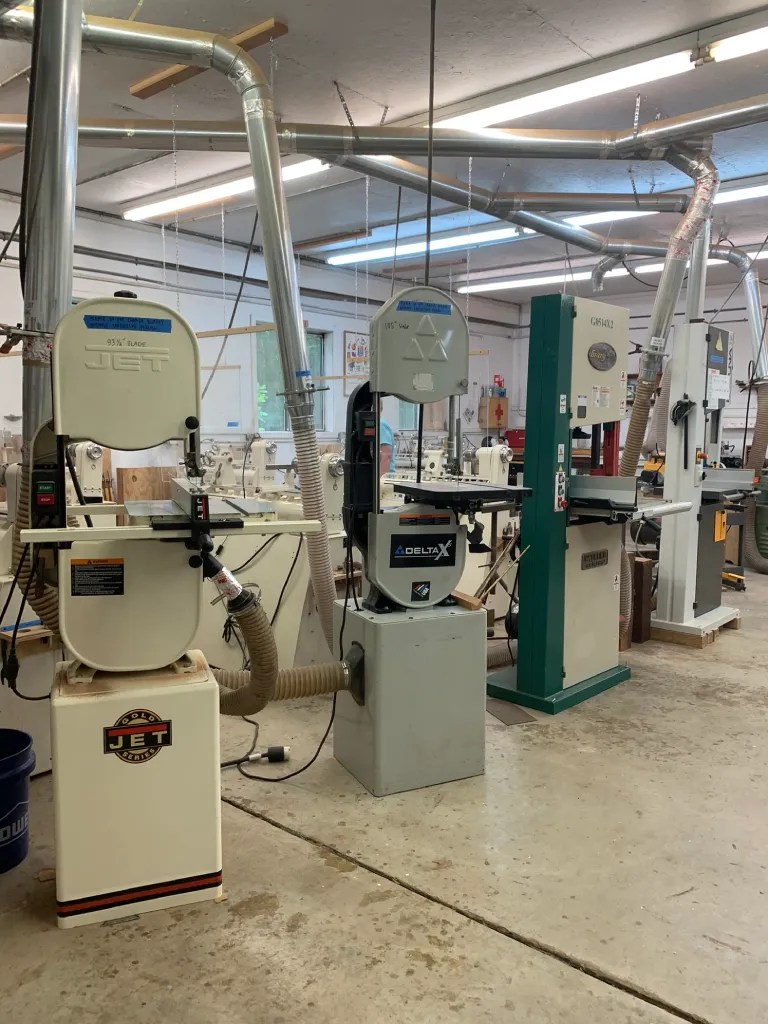
When I saw the planers, table saws, routers and lathes in our midst, I realized that getting comfortable with the machinery was going to be a necessary evil. We needed to build a frame that would support the weaving! Learning how to maintain safety while using the machines was practically half the class. (I’m happy to report no one lost any fingers.)
We first learned about wood as a material – how to work with the grain, and how wood expands and contracts. We each chose a slab of wood from the studio stash for our stools. Many students went for the dark, sophisticated tone of walnut, but the Teaching Assistant convinced me to go for cherry. And while I love the look of dark wood, walnut is quite hard to work. Cherry should age nicely.
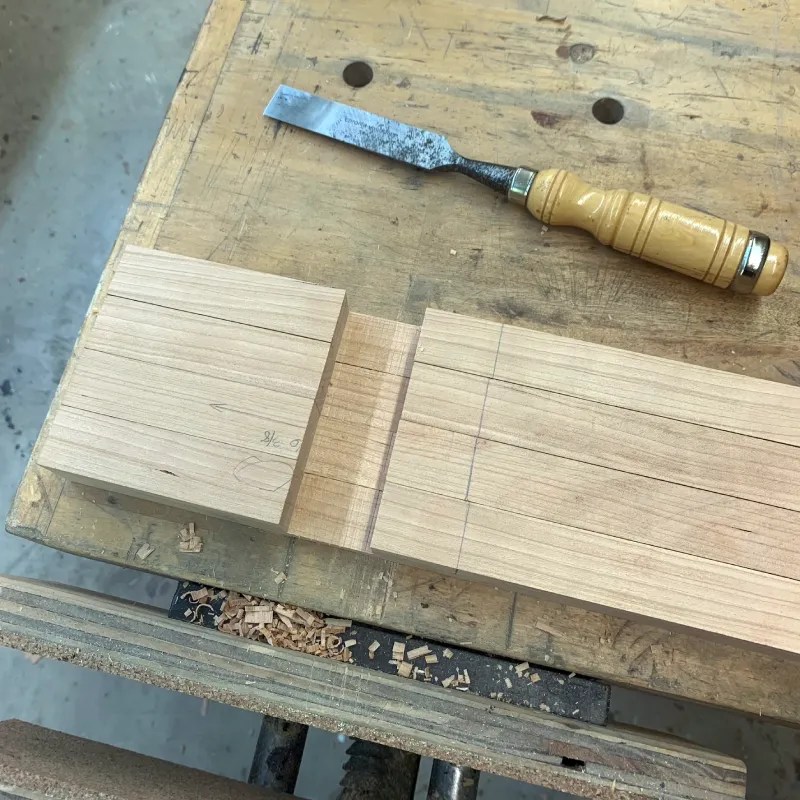
Before beginning our final projects, we practiced joinery on scrap wood first, combining machine-cutting and hand work. Chiseling a perfectly-fitting lap joint was a challenge. The technical planning plus hands-on finesse felt familiar, a lot like establishing tight, clean connections in metalsmithing using strategic clamping and applying gradual, precise cuts.
Our instructor was teaching Woven Seats for the first time. There was a sense of figuring things out in real-time as a class and assessing what we as class could feasibly accomplish in five days. There was a standard stool design we could replicate, though, of course, I wanted to design something of my own. I envisioned a slightly longer bench that would feel at home in a foyer or entryway. I also wanted to design something that incorporated as many of the techniques we learned as possible, utilizing different types of joinery.
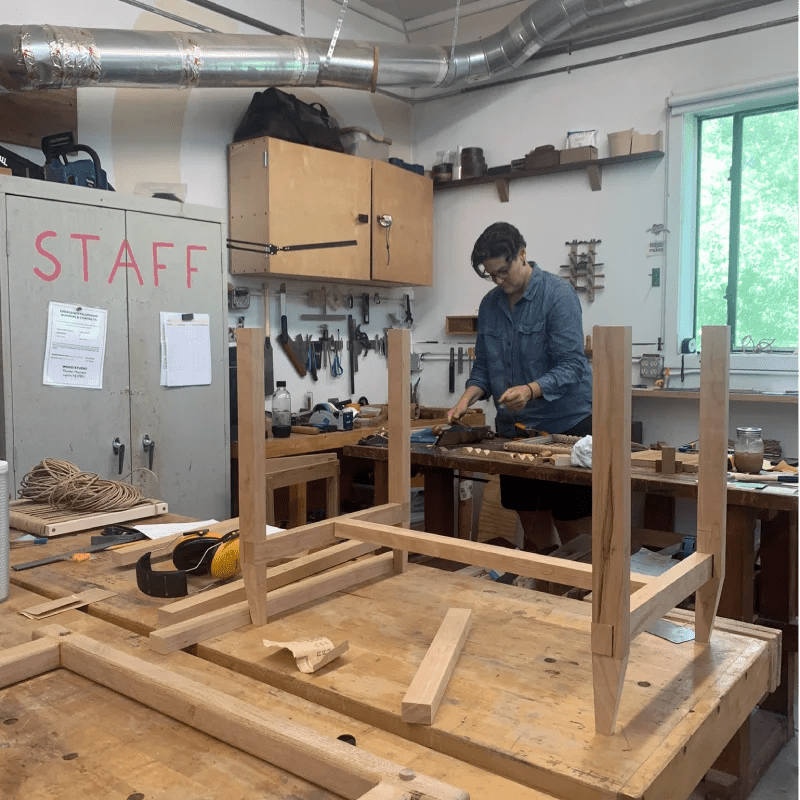
I leaned on the skills I learned in a drafting course at Parsons to plan a simple bench. Careful planning and visualization (arguably the most challenging part of the entire process) made the making relatively easy – after I established directions for myself, all that was left to do was follow through. My bench featured lap joints and dowel joints, and I chose to taper the legs.
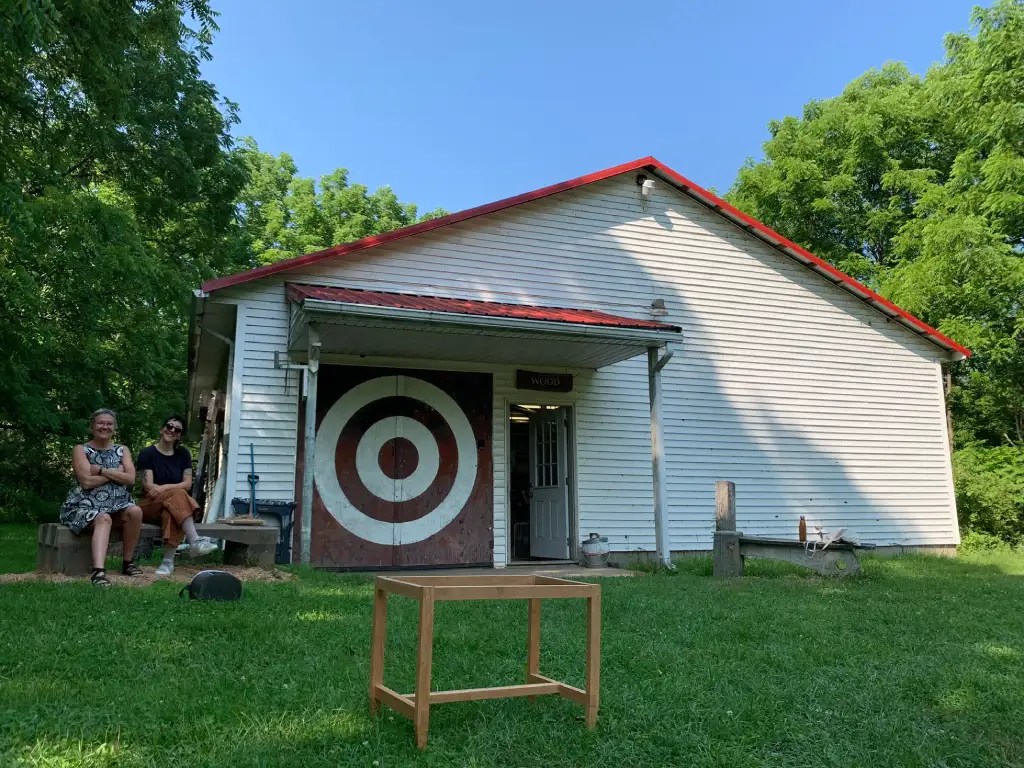
I managed to complete the frame before the end of the week, which involved burning the midnight oil on the final night in the studio, enlisting other pairs of hands to help me assemble, glue and stain, including those of the instructor and the TAs.
Though I was not able to complete the weaving in the five-day course, finishing the frame was still a major win, considering I normally don’t have access to a wood shop. I had to focus on getting the structural portion done on-site, setting myself up to finish the weaving on my own time.
Weaving with Danish Cord
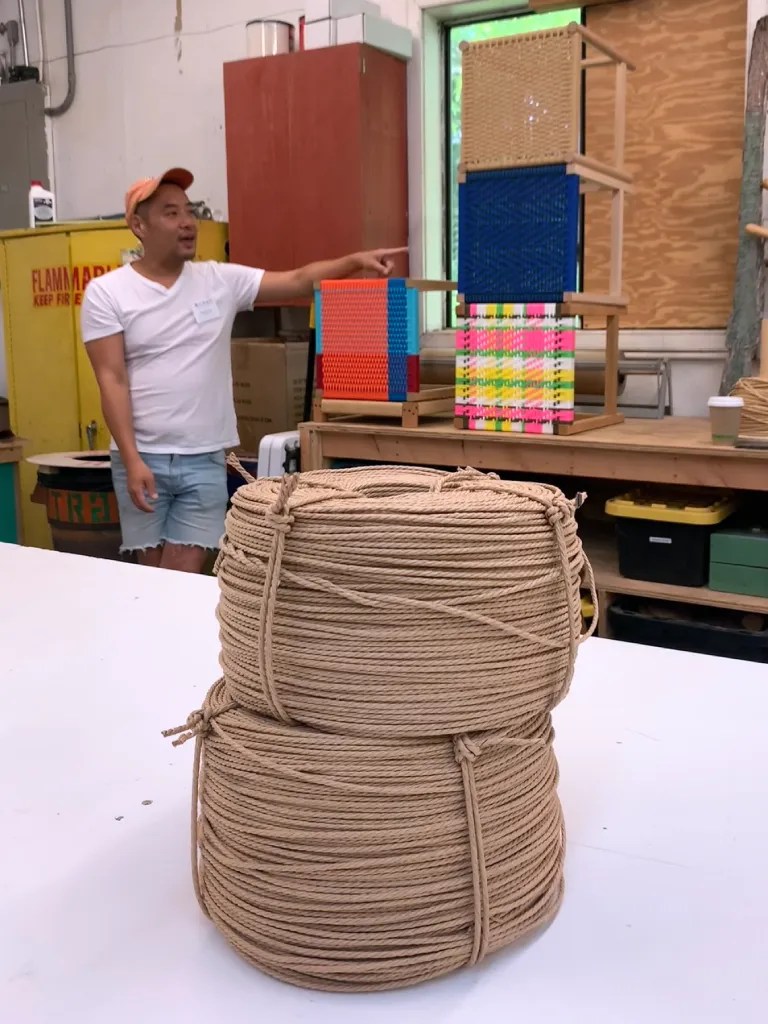
Thought the sample benches from the course catalog were woven in colorful polypropylene rope, we worked in beige braided Danish cord in class. This kept me focused on technique and not on color (choosing colors would have completely derailed me).
The instructor and TAs had pre-built practice wooden frames for us, which enabled us to dive right into learning to weave.
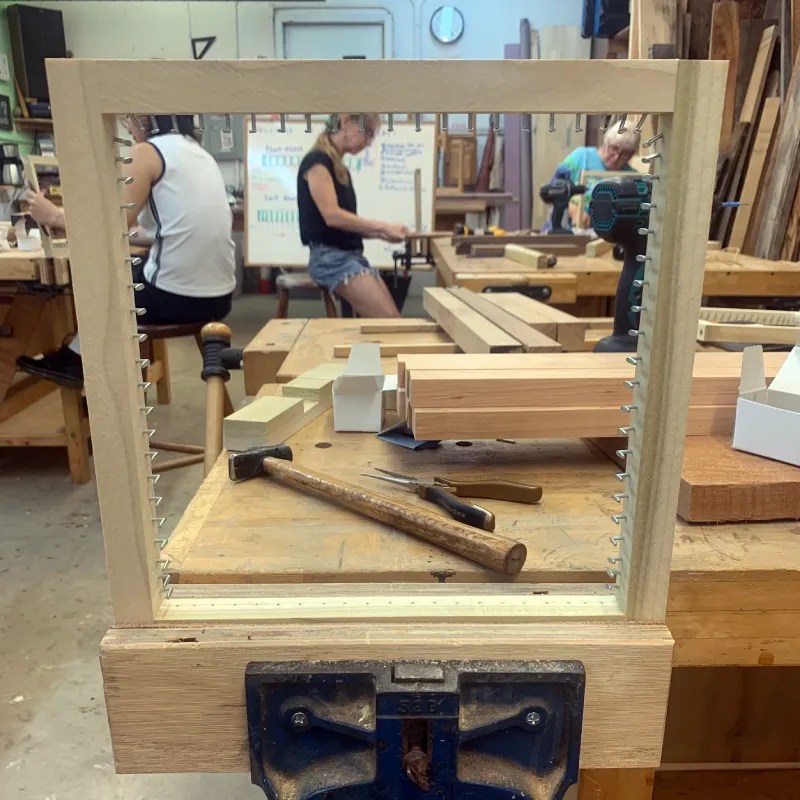
We clamped the frames into the vices our respective workbenches, and began hammering in the L-shaped nails needed to secure the weave. We were careful to space the nails at even intervals, dictated by the diameter of the cord.
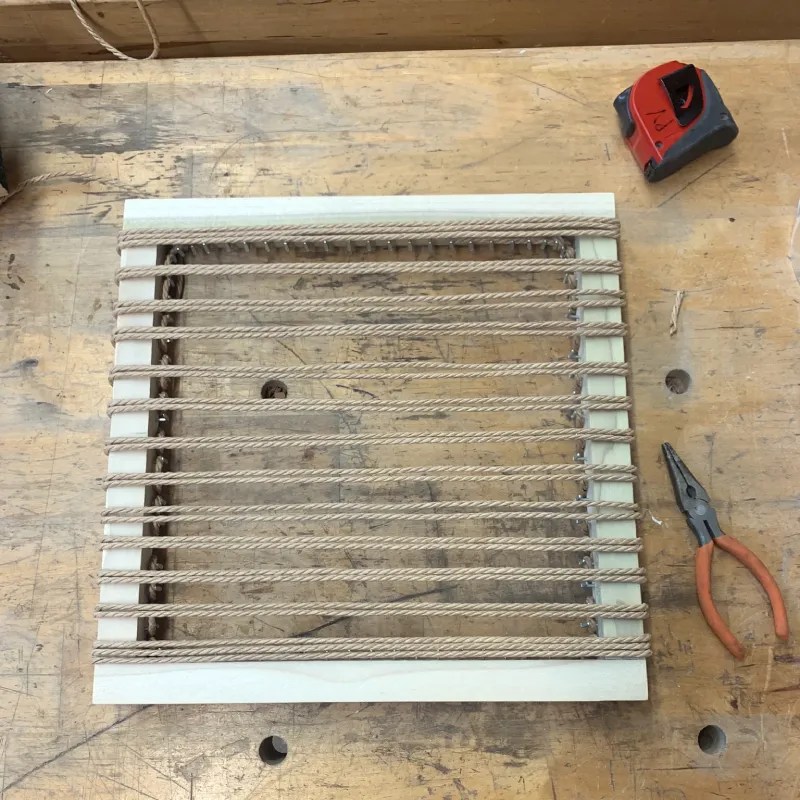
We began the weaving by setting the warp. The instructor proceeded to demo the counts for satin and twill weave, but most of us continued our samples in plain weave (the simplest pattern) to get the hang of how to wrap the cord around the L-shaped nails and achieve the appropriate tension.
The weaving was physical, especially as the frame began to fill and everything began to tighten up. Your entire body engages in pulling the the weft cords through the warp and wrapping them tightly around the frame.
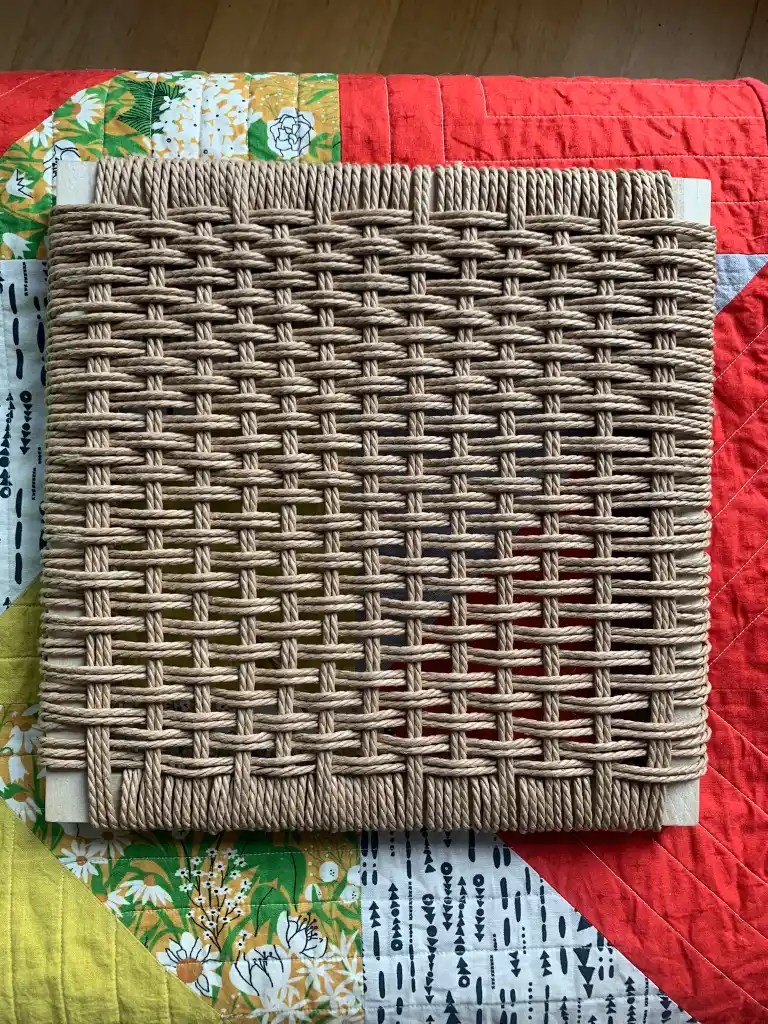
Our instructor, who had been a jeweler in a past life (and therefore, a perfectionist), encouraged us to pay close attention to detail, including the reverse side of the frame. Even if no one saw it, he didn’t want us to leave it sloppy. I completed my woven sample by the end of the workshop.
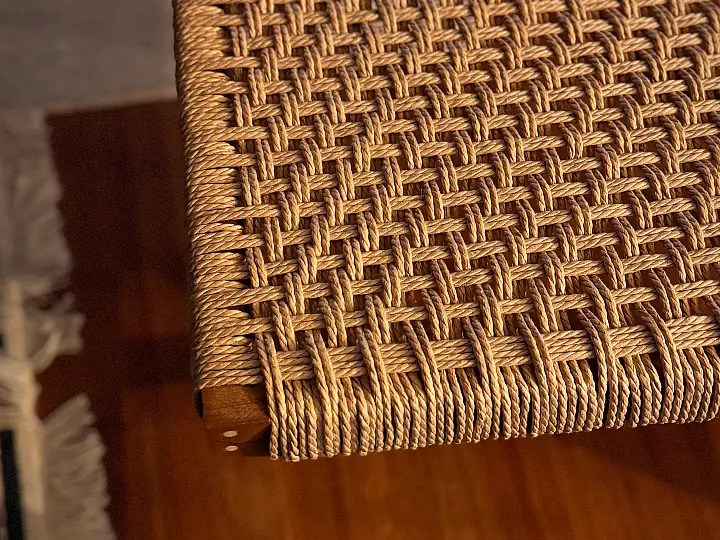
The sample (along with a few online tutorials) was helpful to have as a reference when I eventually returned to finish weaving my bench.
Who Are The Instructors?
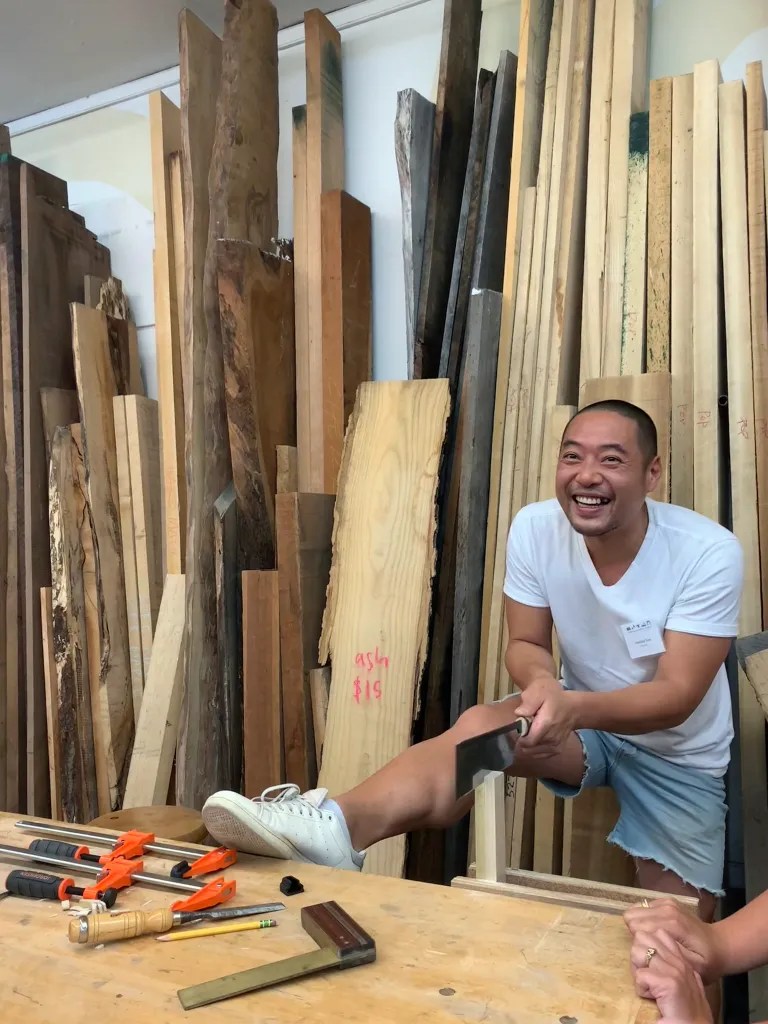
Our instructor, Heechan Kim, had a background in jewelry design and is a sculptor who taught himself how to make woven seats during the pandemic. His jewelry background brought a level of precision and intention that I could relate to, having also studied metalsmithing. His exacting nature was a great match for my own.
The course included a number of demos, especially early on as we got acquainted with the machinery, tools and techniques. Once we got going, Heechan made his rounds, giving each student individual attention when requested. He’d jump in when needed, helping solve clamping problems or adjusting cuts.
We were also around the same age, which made for fun rapport. Studio time was set to a soundtrack of 90s R&B, which I appreciated (even if no one else did). When it felt like a crunch to get everything done towards the end of the course, Heechan remained upbeat and energetic.
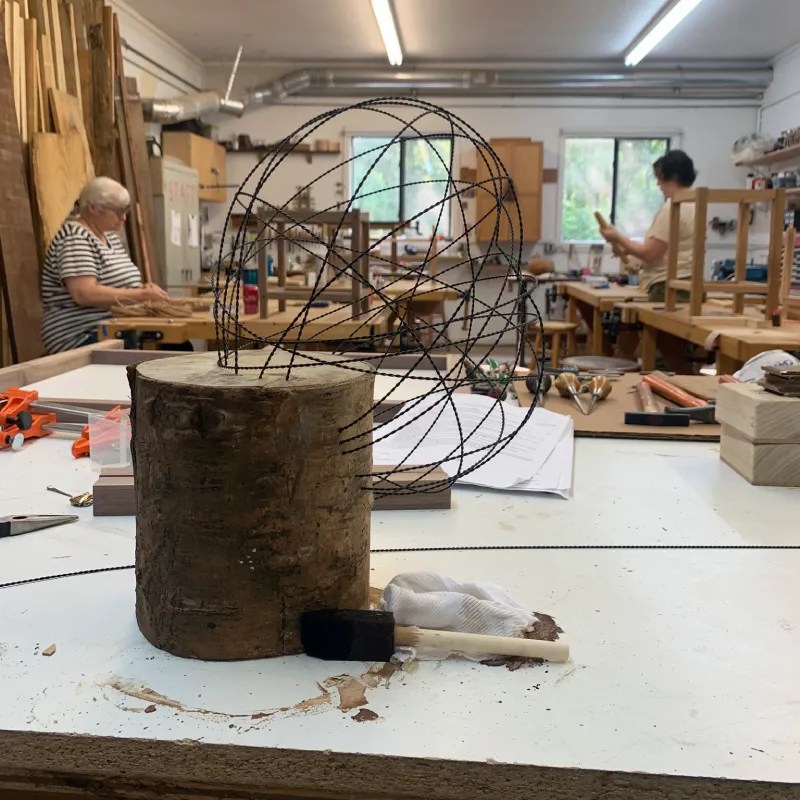
He even found time to build a sculpture for the end of class auction in between assisting students. Following the class he also offered for me to come visit him in his studio – an offer I’ve yet to take him up on.
How Long Is a Peters Valley Workshop?
The session I attended took place ran for five days and over a weekend (I only needed to take three days off work!). It seems most Peters Valley courses don’t exceed five days, making this craft school a good option for those who can’t afford to take a week off.
What’s the Daily Schedule Like?
Workshops at Peters Valley officially run from 9:00 am to 5:00 pm each day, but real progress often is made during evening studio hours. Everyone breaks for lunch from 12:15 pm to 1:15 pm at the Dining Hall. In summer, we all sat outdoors under a large shaded hut.
After dinner, studios reopen for optional evening work sessions (generally from 7:00 pm until 10:00 pm, though hours vary by studio and instructor). Many instructors are happy to let you work late, as long as you follow the buddy system: at least two people must be in the studio together in case of an emergency.
For safety reasons, it’s important not to push yourself past the point of exhaustion – listen to your body, and know when to call it a night!
If you’re taking time off work to attend, be prepared: this may not feel like a vacation. The schedule mirrors a traditional school day, including long, focused blocks of time. This can an be an adjustment if you’re used to an office routine stacked with meetings. For some, the time and space to focus is exactly the appeal; for others, a more relaxed creative retreat or vacation might be a better fit.
Navigating the Learning Curve in the Wood Studio
For this Woven Seats course, coming in with background knowledge in drafting and fiber arts gave me a helpful foundation. Woodworking itself was completely new territory, and we spent a considerable chunk of time (I’d estimate 2 of 5 days) getting comfortable with the tools and machinery.
The studio’s saws and tools are equipped with safety mechanisms, which provided a reassuring layer of protection. That said, if the idea of working with large power tools feels overwhelming, it’s worth considering whether woodworking is your studio. But doing something for the first time is always going to be a little scary. Experience with the unfamiliar makes it familiar – and much less intimidating.
Though it was a skill I hadn’t used in a while, taking a beat to visualize, sketch, and draft the bench I wanted to build made translating my order of operations and necessary cuts much easier.
After the Workshop: Continuing The Weaving
Instructors often provide materials to support your learning beyond the classroom. This might include links to instructional videos, either their own or curated from other platforms (like YouTube). The level of follow-up resources varies by instructor, and ultimately, it’s up to you how committed you want to be in continuing your practice.

When I brought my unfinished (unwoven) bench home, I leaned on the sample weaving we did in class to replicate the configuration of the L-shaped nails, as well as how to maintain proper tension in the weave. It took some trial and error, but with patience and muscle memory, I worked through it.
What Else Can You Do Outside of Class? Is There Free Time?
During this relatively short five-day session, there were no social activities organized by the school. Communal moments happened naturally, during meals and studio time.
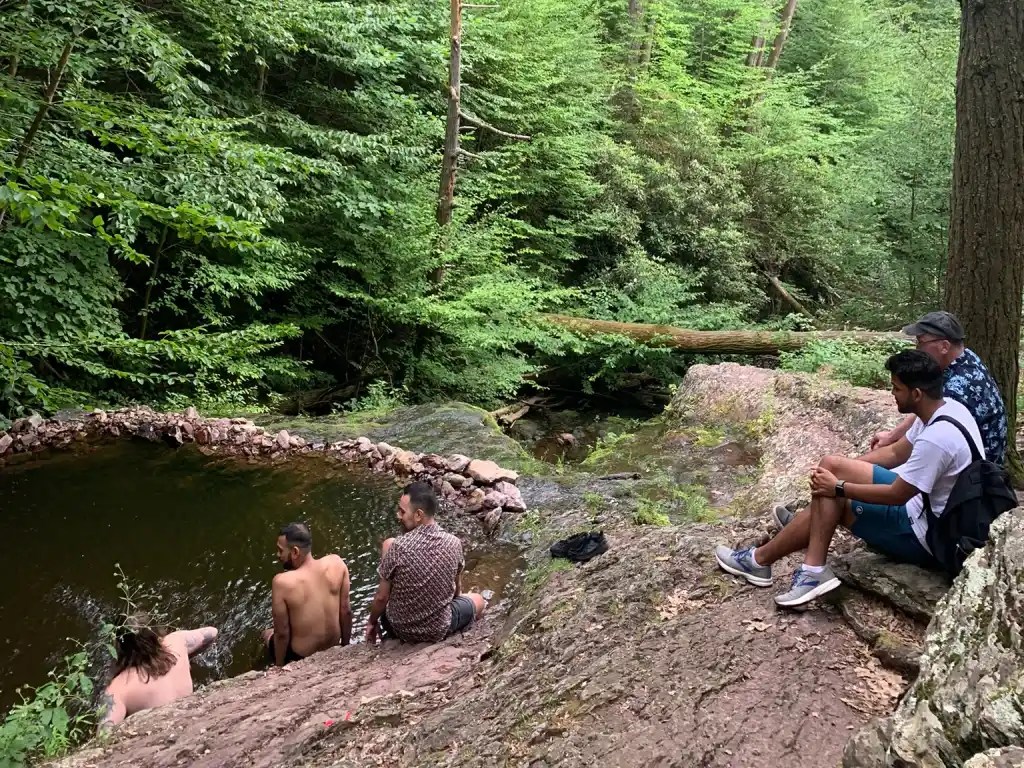
When the temperatures climbed, a small group of us rallied to check out a local swimming hole. It was thick with gnats due to the seasonal humidity and lush surroundings, but refreshing and cooling once I submerged myself in the cool water.
And like many craft schools, Peters Valley held an auction of donated instructor and student work during our final lunch, a creative way to raise money for the school. (These auctions are a fantastic opportunity to win something high-quality and artisan-made for much less than it would retail.)
Local-ish Stops Near Peters Valley
There’s not much nearby if you want to venture off-campus before or after your workshop. You’ll need a car to do so, as there’s nothing within walking distance.
- Layton is the nearest town, just a short drive from campus. Toward the end of our course, we headed to Layton Hotel Tavern, a casual bar-and-grill where we treated ourselves to a dinner out on our final night of class.
- For something more upscale, Bar Louis at Hotel Fauchère in nearby Milford, Pennsylvania is about an 18-minute drive away. I had flagged it as a possible “fancy dinner” option, though didn’t end up making it there. Reviews seem mixed. Plus, once the week got going, we were too busy making to carve out time for much else.
- For those driving in from New York City and points south, consider making a dinner stop en route. We stopped at Taphouse 15 in Wharton, New Jersey before it got too late. Me and Lucy both ordered the bourbon bacon jam burger, which hit the spot.
Who is Peters Valley For?
One of the truly special aspects of craft schools like Peters Valley is the diversity of people you meet. The community spans all ages and backgrounds from accomplished artisans who make their living through their craft, to art students, to enthusiasts like me who are just eager to work with their hands.
Whether you’re looking to deepen existing skills, explore a new creative outlet, or try on a studio practice, Peters Valley welcomes makers of all levels.
In my observation, craft schools attract a higher proportion of working artists, artisans, and art academics. but you shouldn’t let that intimidate you from attending.
Everyone I met was incredibly friendly and welcoming. Mealtimes are where you’re most likely to connect with students from other studios, so you should be at least be comfortable breaking bread and striking up conversation with strangers.
What’s Included in the Workshop Cost?
The room and board and course fees cover almost everything you’ll need during your stay, so you can have focused studio time.
What’s Included:
- Course Fee. Covers tuition for your chosen workshop, including instruction and studio hours.
- On-Campus Housing Fee. Includes accommodations, including linens (bedding and towels)
- Daily lunch.
What’s Not Included:
- Breakfasts and Dinners. Add an optional meal plan upgrade for breakfast and dinner.
- Early Arrival/Late Departure Housing Fees. Notify the registrar by phone as far in advance as possible if you prefer to arrive before your session starts or leave a day after it ends. Sessions are often back-to-back, and the school needs to prepare for incoming students.
- Materials Fee. Varies by course. Upon registration, you’ll receive an estimated range, with the final cost determined a few days before the workshop ends (based on the materials you used). You will be required to pay the fee on campus before departure.
How Do I Secure My Spot in a Peters Valley Workshop?
Registering is simple. Just book and pay for your chosen workshop. No application, personal statement or portfolio needed. If a session is full, you can join the wait list, as cancellations sometimes occur before the start date.
You can find a list of courses being offered at Peters Valley here and sign up for their mailing list to be among the first to know when new classes are announced.
What Should I Pack for the Workshop?
Peters Valley provides linens (bedding and towels) for the duration of your stay. A few things can make your stay more comfortable and enjoyable:
- Flashlight or headlamp: Useful for navigating back to your dorm from the studio after dark, or in case of a power outage (which did happen during my stay!).
- Course materials (different from Materials / Materials Fee): About 3-4 weeks before your workshop starts, you’ll receive a notification with a list of required supplies. (For my class, the only recommendations were a sketchbook and water bottle.)
- Summer essentials: Don’t forget sunblock and insect repellent or lotion if you’re attending during warmer months.
If during the course you need additional materials (for example, some students in my class wanted to order specific shades of polypropylene cord for weaving during class) you can order them online (e.g. Amazon) and have them delivered to the school – just be sure they’ll arrive in time.
Is a Workshop at Peters Valley Worth It?
Having attended four different craft schools, I found Peters Valley to be the most rustic of the group – which is not necessarily a bad thing.
If you’re comfortable with a more modest, no-frills setting and want to experience a dedicated studio practice for a few days, Peters Valley is a good choice. Take advantage of the space (physical, mental) to create and make. It’ll be an enjoyable, but not entirely leisurely trip – your mind and hands will be engaged throughout.
The cost of my five-day course, including housing, meal plan (lunch only), daily instruction and studio access worked out to about $230 USD per day (excluding materials). Considering this all-in rate, Peters Valley is very competitive, especially compared to instruction in a city like NYC, where even an continuing education arts class often approximates or exceeds that cost.
If you want hands-on skill-building with expert instructors, and the chance to be fully absorbed in craft, Peters Valley offers great value for the price.
If you’re looking for a more relaxed creative retreat that combines unique destinations with a combination of trendy artists and local instructors, you may prefer a group creative retreat.
Compared to other craft schools I’ve been to, I think Peters Valley has advantages in:
- Affordability and simplicity (in terms of accommodations and food), without sacrificing quality of instructors and studio facilities
- Accessibility and proximity to NYC / the Northeast US / Tri-State Area by car.
I’d love to one day return to Peters Valley to take a basket weaving course. When I popped by the studio, students were creating impressive pieces like wine carriers and backpacks made from twigs and bark (very helpful if I ever find myself in a Hunger Games-type situation).
From both a cost and convenience standpoint, Peters Valley is definitely worthwhile from NYC, if you have access to a car.
That said, if you’re looking for a more cushy experience (by that I’m referring to accommodations outside the studio – such as housing and food) you may want to explore other schools.
If you prefer a more flexible and leisurely experience – one where you don’t feel the pressure to complete a project – then a creative retreat might be a better choice. Thankfully, the two aren’t mutually exclusive, and I’ve enjoyed my experiences at craft schools and on creative retreats.

Leave a comment