
After so much time spent in front of screens – laptops, Kindle readers, TVs, I often have a desire to make something with my hands.
On the craft school circuit, Haystack was frequently mentioned as one of the nicest and most scenic. I’d also never been to Maine. I planned a longer trip around the workshop, with a hiking weekend in Acadia before the course and a weekend in Portland afterward.
The course I enrolled in was in the metalsmithing studio, and turned out to be one of the most unconventional jewelry classes I’ve taken. It was less about classic metalsmithing and fine jewelry, and more about what our instructor, Jillian Moore, dubbed “materials exploration”. We made jewelry out of insulating foam. More on that later.
Haystack itself is beautiful: an architecturally-stunning, walkable campus integrated into Maine’s breathtaking coast. Its rustic but comfortable dorms, fully equipped studios, delicious food, strong creative tradition, and welcoming community are all framed by the coastal beauty of Stonington and Deer Isle.
- What Is Haystack School of Crafts?
- Where is Haystack?
- How Many Studios Are There?
- Where Will I Stay? How is the On-Campus Housing?
- How Is The Food?
- Who Will I Be Rooming With?
- What Crafts Did I Learn?
- Who Was The Instructor?
- How Long is a Haystack Workshop?
- What is the Daily Schedule Like?
- Do You Do Anything Besides Craft? Is There Free Time?
- Who Is Haystack For?
- What Does The Workshop Cost Include?
- How Do I Secure My Spot in a Haystack Workshop?
- What To Pack
- Other Things To Do If You’re Making a Trip of It
- Is a Workshop at Haystack Worth It?
What Is Haystack School of Crafts?
When you turn onto the gravel road leading to Haystack Mountain School of Crafts, park your car, and take in the view from the top of campus overlooking the water, you’ll feel like you’ve stumbled upon someplace special. Founded in 1950, Haystack isn’t a traditional school with grades or degrees: it’s a creative retreat where makers come together.
Constructed into the forested Maine coast, the campus itself is a sight to behold, a marriage of stunning architecture and natural beauty. Part summer camp, part artist residency, Haystack offers a space for creativity and community to flourish.
Where is Haystack?
Haystack Mountain School of Crafts is located in the coastal community of Sunshine, on Deer Isle, Maine, about an hour south of Bangor. To get there, you cross the Deer Isle Bridge. When I reached the pale green suspension bridge after two half-days of driving, I smiled to myself. I was happy I’d made the decision to come.
I’d already had an amazing weekend of solo hiking in Acadia, and this was the moment I felt my Haystack adventure truly beginning. The bridge was a portal into another world. I left the mainland and entered a world of quiet bays, lobster traps, and hand-painted buoys strung like garlands across fences and trees.
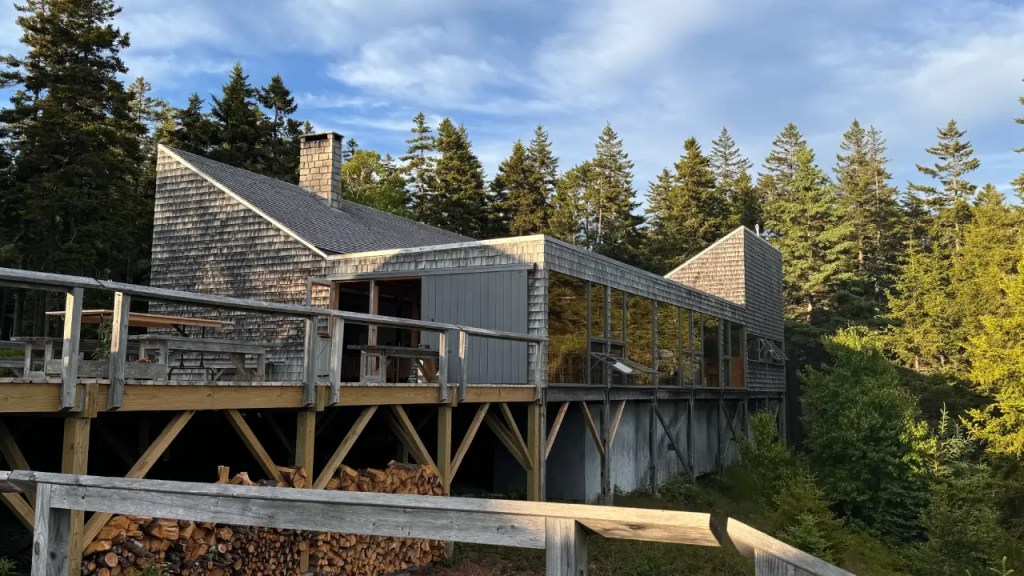
The campus itself is a work of art. Designed in 1960 by a renowned architect, Haystack includes 34 interconnected buildings, placed along a granite ledge overlooking the ocean.

The buildings are clad in weathered grey cedar, sandwiched between pine forest and coastline, linked by a series of wooden staircases and raised walkways. A dramatic main staircase cascading directly toward the water is the campus’s central artery.
It’s stunning. And it’s a workout.
Stairs are how you get around Haystack. Stairs are inevitable. You’ll feel them especially when you’re hauling luggage from the parking lot down to your dorm, and back up again at the end of the class. You’ve gotta make friends with stairs if you’re coming here.
Getting To Haystack
The closest airport to Haystack is in Bangor, Maine, and the school encourages participants to fly there if traveling by plane. Students/participants are responsible for their own transportation to campus, but the school sends out a travel/rideshare form prior to the session to help students coordinate rides.
If you have access to a car (and time to explore), I highly recommend it, not only for flexibility, but to take advantage of nearby places like Acadia National Park, just over an hour drive away.
Keep in mind: Deer Isle (and Maine in general) is farther than you think, even from the Northeast. From New York City, it’s about a 7.5-hour drive with no traffic. Many East Coasters (myself included) are always surprised by how long it actually takes to reach Maine by car. I chose to break up the drive over two days, stopping approximately halfway along the route in Portsmouth, New Hampshire, which made the journey more manageable.
From Bangor Airport, Haystack is still a 1.5-hour drive, so be sure to account for that in your arrival plans.
Once you’re on campus, there’s no need to leave. If you do want to do a quick supply run, or make a trip to Stonington for coffee or cocktails during your weekend break from classes, it’s easy to catch a ride with a fellow student.
How Many Studios Are There?

Haystack has eight fully equipped studios, all woven into the campus via its network of staircases and walkways. Each studio is dedicated to a specific craft – wood, metal, glass, ceramics, fiber, paper, blacksmithing, and metals/jewelry. All are just a short walk apart (with stairs), making it easy to pop into other studios to see what other cohorts are working on (one of the joys of the craft school experience).

The wall of windows of our studio looked right out over the Atlantic. The fiber studio was just behind ours, and the wood and blacksmithing studios were further up-campus. The ceramics studio was bustling, representing one of the largest creative cohorts. (The drama of pieces emerging safely from the kiln is always a hot topic.)
My class was small (a half dozen people), so we had plenty of room to spread out, leave tools and materials out overnight, and commandeer entire benches for our setups. The freedom to come and go from the studios and use the tools and the space is one of the advantages of attending craft school.
Where Will I Stay? How is the On-Campus Housing?

The dorms at Haystack are architectural and rustic: angular, grey cedar structures set among the trees and staggered along the hillside.
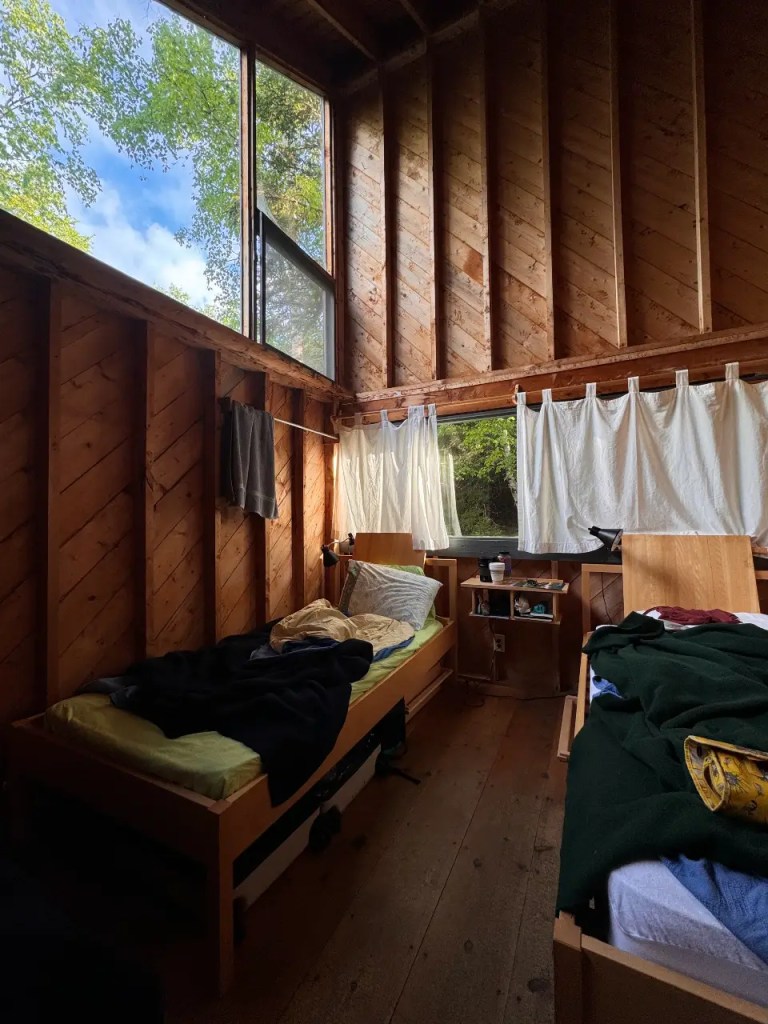
I stayed in a triple, which had three twin-sized beds (two facing one another), wall-mounted cubbies, bedside tables, and a small row of hooks. The beds have adjustable headboards and reading lights, thoughtful touches for a craft school. There’s some underbed storage and a small bedside table, but you won’t find closets or much extra space (smaller luggage is recommended unless you don’t mind constantly navigating around it).
The rooms don’t have heat or air conditioning. You’ll need to bring your own linens and sleeping bag. I was there for two weeks in early June, and while the first night got chilly, it was perfectly comfortable sleeping after that (in fact, it got pretty warm during the daytime, not that we spent much time in our rooms).
The shared bathrooms were cleaned daily. There were five or six shower stalls, and I never had to wait long. Just don’t forget flip flops or shower shoes, your own towel, and a robe, if you prefer.
You always have the option to commute to campus (if you’re local), but that might detract from the on-campus bonding experience.
How Is The Food?

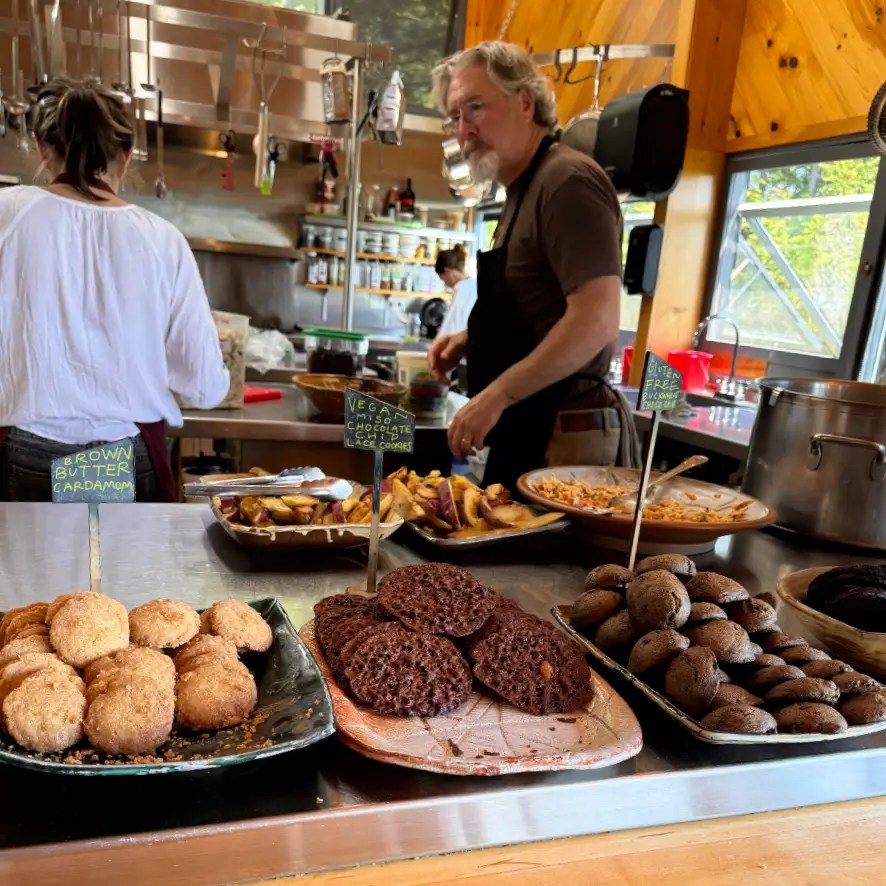
The food at Haystack was exceptional. Every meal included plenty of salad choices, thoughtful vegan options, and perhaps most importantly, a rotating selection of at least three kinds of cookies (vegan ginger molasses, brown butter cardamom, and buckwheat chocolate chip, to name a few). There was usually a featured fresh juice available too.

While meals are included in your session, Haystack also offers a special dinner you can opt into. When in Maine, this means a lobster and oyster feast (available at an additional cost). Our dinner was served on the Saturday at the midpoint of our session, on the deck outside the dining hall.
The hard shell lobsters were huge – among the biggest I’d ever eaten. My new Maine-r friend agreed that they were also among the hardest shells she’d ever had to crack. It was a messy, fun meal.
There’s no alcohol served on campus, but it’s easy enough to stock up if you have a car (or friend with a car) to make a quick run into town. The general store is well-stocked with local brews, wine, and spirits, and students have access to a large communal fridge to store adult beverages.
Who Will I Be Rooming With?
When booking a stay at a craft school or creative retreat, I usually opt for a triple room rather than a quad or dorm. It’s more economical, and a hedge against risky roommate dynamics. With three beds, there’s a social buffer – unlike a double, where you might be paired with one person you don’t click with.
That being said, I’ve been lucky: I’ve requested a triple at four different craft schools, and in all cases, ended up with just one other roommate. In each case, we got along wonderfully, and this time was no different. My roommate Sarah and I would come back late from studio and gossip in bed before turning the lights out. It was one of our favorite parts of the day.
In my experience, the housing coordinators at these schools strive to make thoughtful pairings, taking age and life stage into account when assigning roommates. A note: Unlike other schools, Haystack does not offer the option of booking a private room.
What Crafts Did I Learn?
Materials Exploration Using Resin and Found Objects
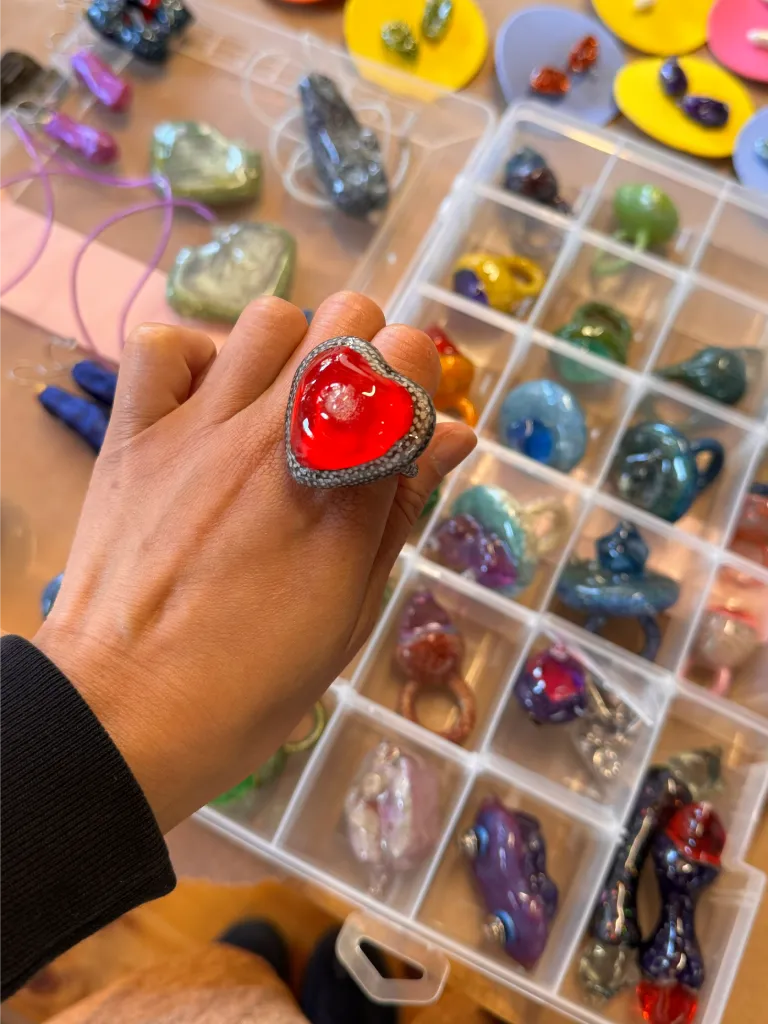
My course was listed as The Goohaus in the course catalog, and centered on making jewelry with resin. It was not the resin that initially came to mind (the translucent kind used to make trays with glitter or dried flowers suspended inside). The resin we used was incredibly drippy, and the meaning of The Goohaus began to make sense.
The course was taught by artist and contemporary jeweler Jillian Moore. This was the first time Jillian had ever led a course in her specific technique, which is playful, open-ended, completely unconcerned with conventional structure. In Jillian’s own words, “I make weird jewelry that’s big, and bright, and makes you feel sort of grossed out and turned on and hungry all at once.”
We spent the first week of the workshop was getting comfortable with the materials. Our first exercise involved using spray foam (yes, the kind you use to seal seams in your house) to produce organic forms at random. We learned the proper way to handle Jillian’s preferred, slow-curing resin safely, confidently, and in such a way as to reduce waste (and minimize air bubbles).
The sequence of the process was as follows:
- Build wild, organic shapes with a combination of spray foam, found objects, and other materials of choice, such as wire.
- Dip them in several coats of opaque resin to achieve structural stability.
- Coat them in translucent resin, applying different surface and graphic treatments (using mica, crystalline granules, glitter, paint pens, and even sanding) in between layers to achieve depth effects.
- Seal everything with a final coat of clear resin, achieving a smooth, shiny, luscious, glass-like surface.
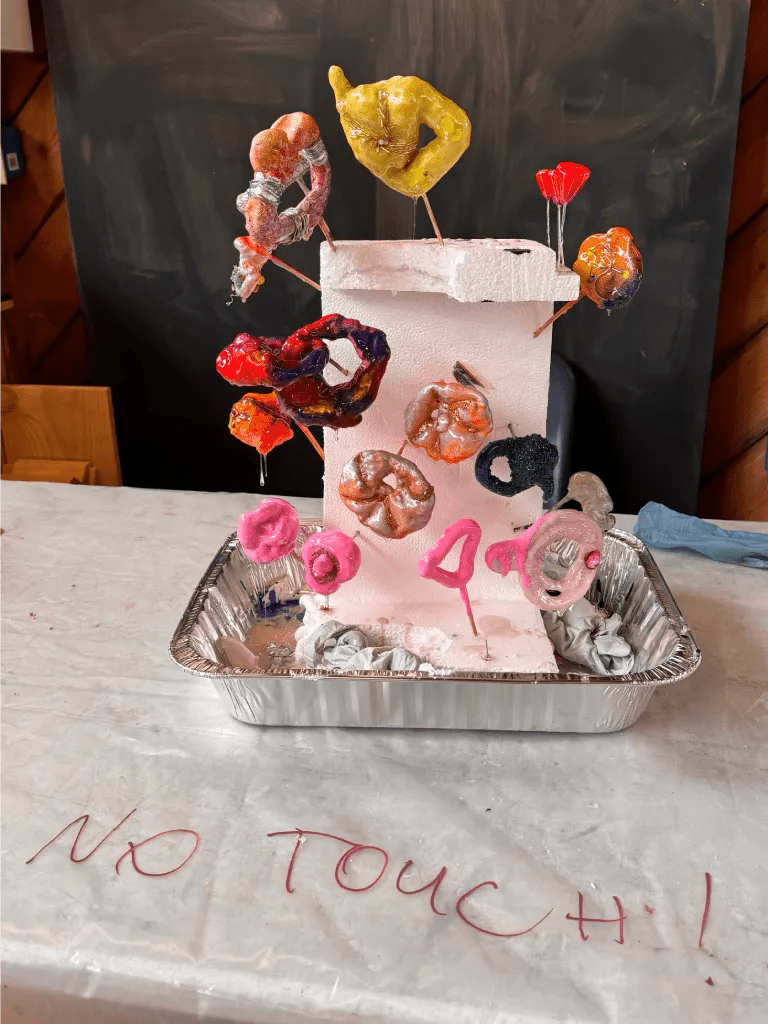
The Goohaus itself referred to the drying/dripping mechanism: a foil lasagna tray with a vertical foam board mounted inside. We strategically stuck cocktail skewers into our foam shapes, dipped them in resin wearing multiple layers of disposable gloves, and then stuck the other end of the skewer to secure our piece onto the Goohaus.
The resin would slowly drip down, and over time the whole structure became a sculpture in its own right: a sticky, glittering chaos of castoffs, gloves, and glossy layers.
Our class was small (fewer than six people) so our Goohauses could take up plenty of space. Jillian, along with our prolific TA, Janine (well-trained in Jillian’s Goohaus method), created a lively environment where there was no pressure to create finished pieces, which was liberating.

Once we were comfortable with the resin, Jillian demonstrated how she uses paint pens, mica powders, sandpaper, and glue to build iridescent, dimensional finishes. If this all sounds all over the place… it was. The studio was an explosion of colors, textures, and (resin) goo.
We learned to layer and sequence our design activities (like painting and surface embellishment) around drying times.
There was no soldering, no sawing, no traditional metalwork. I hadn’t done serious metalsmithing in a few years, so I was relieved this class was more about exploration than precision. There was some lecture and demonstration on how to incorporate metalsmithing with these delicate foam pieces. While it would have been nice to do both in studio, that was not in the scope of this workshop.
Who Was The Instructor?

Thoughtful, encouraging, and deeply committed to her philosophy of making, Jillian Moore was a great instructor and more importantly, a lovely human and advocate for creativity. I admire her for developing her own method of jewelry fabrication that challenges traditional notions of value.
Her work proves that fine jewelry doesn’t have to be precious in the conventional sense, lowering the barrier to entry. Her jewelry, while involving a long process, doesn’t require expensive materials, and certainly isn’t confined by tradition.
In fact, Jillian brought a collection of thrifted and scavenged materials for us to play with. They included old toaster-oven-stained-glass-kit granules (if you’re of a certain age, you know what I’m referring to), strings of plastic popcorn, and odds and ends most people would overlook or discard. Jillian has built her entire brand point of view and creative practice around it.
In class, Jillian was patient and hands-on, inviting each of us to take a turn mixing the resin epoxy and hardener so we could intuitively register the point at which the two were combined and ready for dipping.
As a practicing artist who makes her living from her craft, Jillian shared insights not only about materials and technique but set an example for creative sustainability: protecting time for your practice and staying curious.
How Long is a Haystack Workshop?
Most summer workshops run for two weeks, which makes them quite immersive (My session stretched two weeks). For me personally, Week 2 is when things start to feel less like a class and more like a mini-artist residency, once you’ve had a chance to sink into the rhythms of studio life and begin to find your focus.
In 2025, Haystack’s season included six sessions: the first five were two weeks long, and the final one a shorter, one-week session. Other craft schools offer shorter programs (under a week) if you’d rather gear up to a longer session or can’t afford a two weeks off.
What is the Daily Schedule Like?
The rhythm of a day at Haystack (and most craft schools) is wonderfully straightforward: eat, class, eat, class, studio. Meals and studio time anchor the weekday schedule, with a little break before dinner to rest or to get outside before heading back to work.
Artist talks and slideshows are scheduled most weeknights after dinner, so students have the chance to be exposed to other studio disciplines. While most students make the effort to attend, they are not mandatory. You’re free to head back to studio and keep working.
There is no instruction on weekends, but studios stay open. You can choose to rest, dive deeper into your project, or explore the surrounding area. (Weekend meals are provided.)
Do You Do Anything Besides Craft? Is There Free Time?
On-Campus Activities
- Instructor Talks and Lectures: Haystack held evening lectures by instructors and TAs a couple of nights each week, which offered insightful and inspiring glimpses into the creative practices and career paths across studios.
- Dancing and Karaoke: There was an impromptu dance party in the blacksmithing studio, with a pill-shaped portable speaker placed in a bucket and rotating iPhone DJs providing the tunes. Another evening brought a round of YouTube karaoke in the lecture hall.

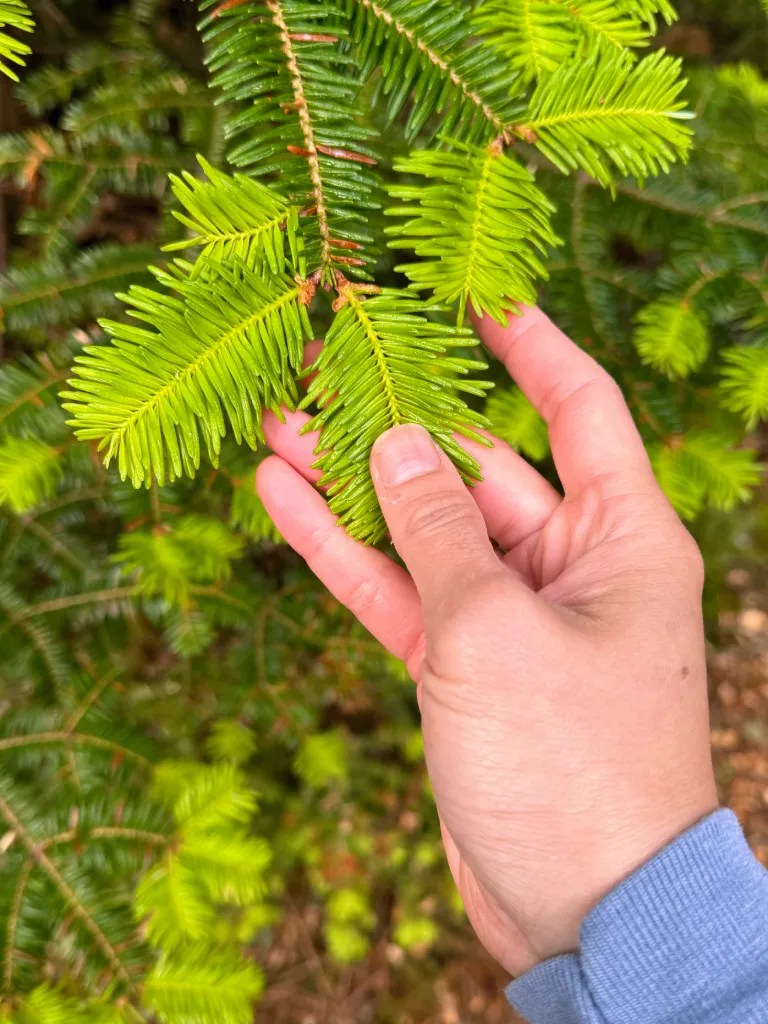
- Hiking trails and the beach: The campus makes it easy to immerse yourself in nature in the spaces between instruction and studio. I really appreciated the ability to get outside without having to venture off-campus. You can hike a short trail from the dorms to a small beach in just a few minutes. Winding through cedar and spruce, and the scent alone is worth the trip. The water is cold (it is the Atlantic, after all), but it’s super refreshing.
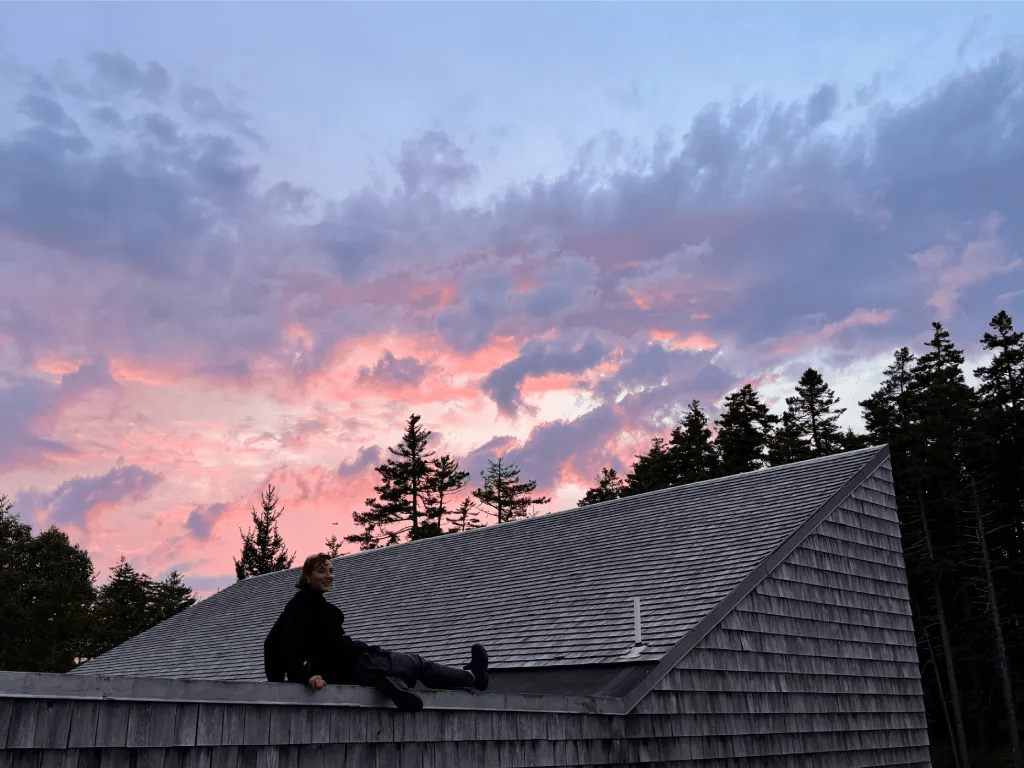
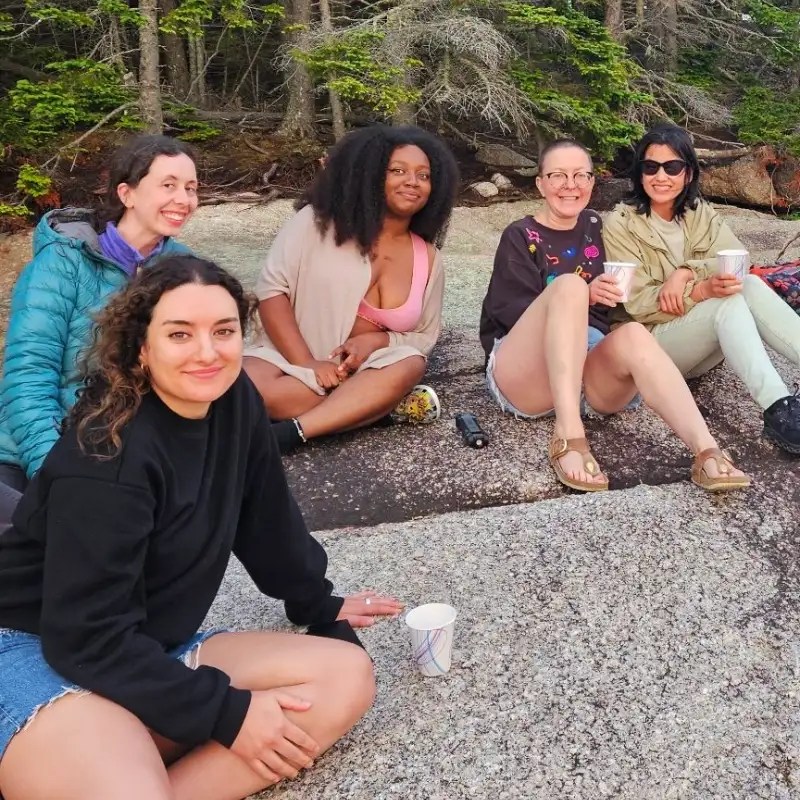
- Catch the sunset. Whether its popping your head just outside the studio to adjust focus (and your eyes) or grabbing a bottle of chilled wine and heading to the beach at the end of the trail with new friends, the pink and purple skies at dusk were a popular attraction.
Off-Campus Activities
- Shop at Nervous Nellie’s Jams and Jellies (8-minute drive, Sunshine Road). Nervous Nellie’s is a quirky, beloved shop offering small-batch jams, chutneys, chocolates, honey, and hand-thrown pottery. I wasn’t able to get there myself, but several classmates said it was worth a visit. I’d have picked up one of these locally-designed, hand-printed bandanas.

- Spend an afternoon in Stonington (25 minutes away). On our free Sunday, a friend and I made our way to Stonington, a small town named for its abundance of granite. There aren’t a ton of spots to choose from, but we grabbed cocktails at the bar of 27 Fathoms Waterfront Grille, a casual restaurant with a small deck on the waterfront.

- Get coffee and browse the galleries in Deer Isle Village (15–20 minutes from campus). On a Saturday supply run, three classmates and I wandered through Deer Isle’s tiny town center, which has a few galleries, a local coffee shop (44 North) and a charming gift shop (The Periwinkle). If you’re mailing studio work home, you can grab boxes at the post office.
Who Is Haystack For?

Craft schools like Haystack attract people of all ages and skill levels, from practicing artists and experienced craftspeople, to beginners looking to explore new mediums. While many attendees are working creatives or art academics, your class doesn’t need to align with your professional focus (I became friends with two graphic designers exploring ceramics and textiles). Experimentation is encouraged.
In my small class, there were two recent college grads from New York and San Diego, a woman from Pennsylvania who owned her own craft-based business, and an entrepreneur from Dallas who designed metal-fabricated home fixtures (the only man in our class), and me.

Like other creative retreats, Haystack offers a chance to form inter-generational friendships. I brought along an old work swag sweatshirt I was on the verge of tossing. Ken, a friendly gentleman from the textiles studio, offered to remix it for me. He dyed it blue and added a bright yellow faux “mustard” stain as a playful joke. It’s no longer going in the trash.
What Does The Workshop Cost Include?
Your workshop fee at Haystack covers seven to eight hours of daily instruction plus room and board, with all meals (breakfast, lunch, and dinner) included. Don’t forget: you’ll need to bring your own bedding and towels!
Additional expenses include:
- A materials fee, which varies depending on your studio. You’ll get an estimate at the start of the session, and the final amount is settled toward the end of your workshop, usually in the last day or two.
- Special meals, e.g. the mid-session lobster and oyster dinner.
For your convenience, you can open a tab at the school store and can settle all additional expenses + school store purchases before the end of the session.
How Do I Secure My Spot in a Haystack Workshop?

The application process at Haystack is simple – it’s all online. When I applied, the fee was about $50 USD and required only a short personal statement (no artist portfolio necessary). Scholarships are also available, which makes the program more accessible.
After the application deadline, there’s a short review period, and you’ll hear back by email whether you’ve been accepted. To lock in your spot, you’ll need to pay a deposit, with the remaining balance due about a month before the start of your session.
What To Pack

Haystack is rustic (though I would certainly call it rustic-chic compared with other craft schools) and that’s the draw. You’ll want to come prepared, especially if you’re attending a summer session:
- Comfortable walking shoes for going up and down the stairs. Furthermore, closed-toe shoes may be a more practical choice for studios with heavy machinery.
- A sleeping bag appropriate for the season. I was there in early June (the first summer session). While the first night was chilly, I was totally fine after that. I had this sleeping bag (link to Amazon affiliate link).
- Your own linens, including sheets, pillowcase, and a towel. Bring a separate towel for the small beach – I recommend this towel. (link to Nomadix towel).
- Studio supplies for your course (Haystack will send a list in advance of your session).
- Hiking shoes or boots – the campus trails aren’t strenuous, shoes you’re ok navigating the forest floor with – sport sandals like Tevas are great in warm weather
- A bathing suit – for swimming or lounging by the water.
- Shower shoes or flip flops – especially helpful for the shared bathrooms.
- Bug spray and sunscreen – the Maine woods are gorgeous… and buggy.
- A flashlight, headlamp, or small lantern – the campus is beautifully dark at night. If you’re keeping late studio hours, it’ll help you navigate the paths safely.
- While it’s not necessary, I brought a small travel kettle so I could enjoy a quiet moment with tea in my room in the mornings before joining everyone in the dining hall for breakfast.
There’s also a small campus store with art supplies, merch, sundries and snacks, if you forget something.
Other Things To Do If You’re Making a Trip of It
- Enjoy a drink or meal at Aragosta at Goose Cove (23 minutes from Haystack).
Helmed by James Beard-nominated chef Devin Finigan, this destination restaurant was named the #2 restaurant in the U.S. by Food & Wine in their 2024 Global Tastemakers awards. Aragosta means “lobster” in Italian, and the menu features seafood-forward dishes, handmade pastas, and classic entrees like duck breast and steak frites. We had hoped to grab a drink on the deck, but they were closed for a private event on our free night. - Get a lobster roll from The Maine Lobster Lady (25 minutes away, Sargentville).
Just past the Deer Isle Bridge heading north on your way back to the mainland sits this Google-rated lobster shack, which, in addition to lobster, offers other seafood rolls and fresh clam sandwiches. Upon leaving Haystack, I had to save my stomach for lunch (and beer) with my brother and cousins in Freeport, so this will have to wait until the next time I’m in the area. - Explore Ellsworth, Maine (If you’re driving West to Haystack, e.g. from Acadia)
I stopped in Ellsworth on a rainy day and spent a surprising amount of time browsing the aisle at Goodwill (which had lots of retired L.L. Bean). Weather kept me from exploring its downtown/Main Street properly but this writeup had some great suggestions.
Is a Workshop at Haystack Worth It?
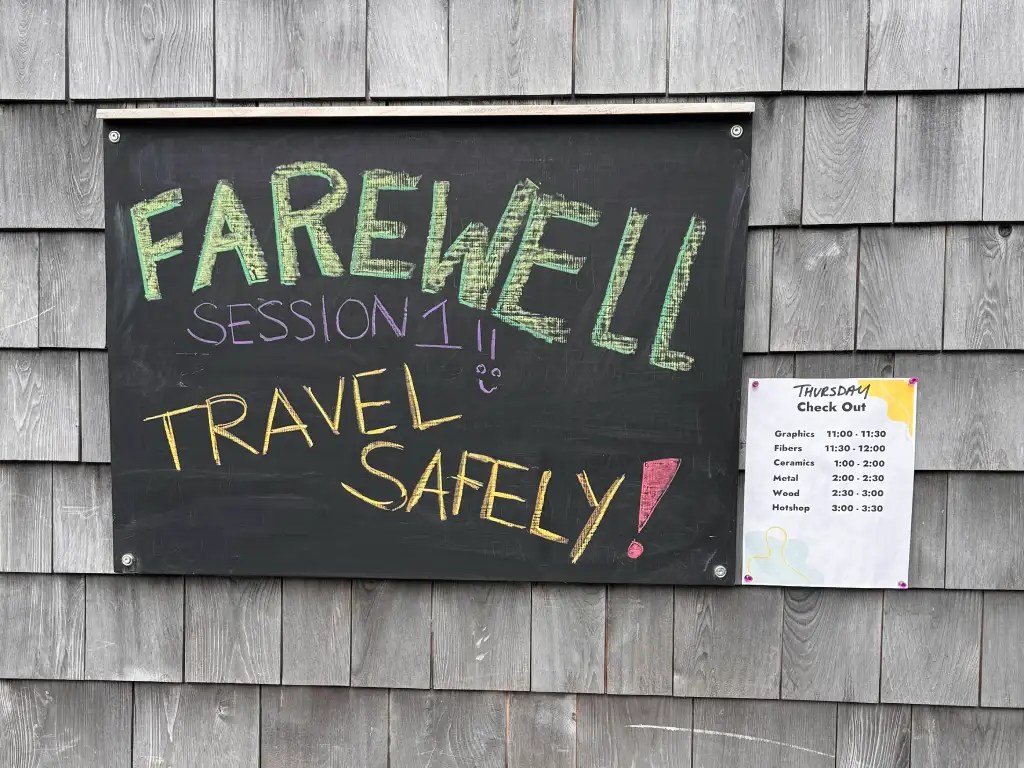
Haystack (and craft schools in general) offers an experience that goes far beyond just learning a new skill. The chance to immerse yourself in studio, surrounded by the beauty of coastal Maine is a unique experience.
While the setting is naturally and architecturally stunning, what really makes it memorable is the creative community you’ll join – artists, casual crafters, and curious people from all walks of life. For anyone looking to step out of routine and into a dedicated (and gorgeous) space for making, Haystack delivers.
If you’re curious about creative retreats but not sure you’re ready for a full two-week craft school experience like Haystack, you might want to start with a shorter program at another school like Peters Valley or a combination sightseeing / creative retreat such as those organized by Ace Camps Travel. Each offers a different rhythm and environment, from a daily studio practice to destination-inspired projects. The right fit really depends on your schedule, experience level, and how deep you want to go.
The Goohaus was definitely one of the more outside-the-box jewelry classes offered, so if the vibe didn’t turn you on, don’t let that discourage you from exploring what Haystack has to offer. Sign up to receive email notifications from Haystack, including when the seasonal class calendars are released. The instructors and topics rotate year over year – it’s rare that the same class is offered twice. Each instructor provides their own spin on a technique.

Leave a comment