
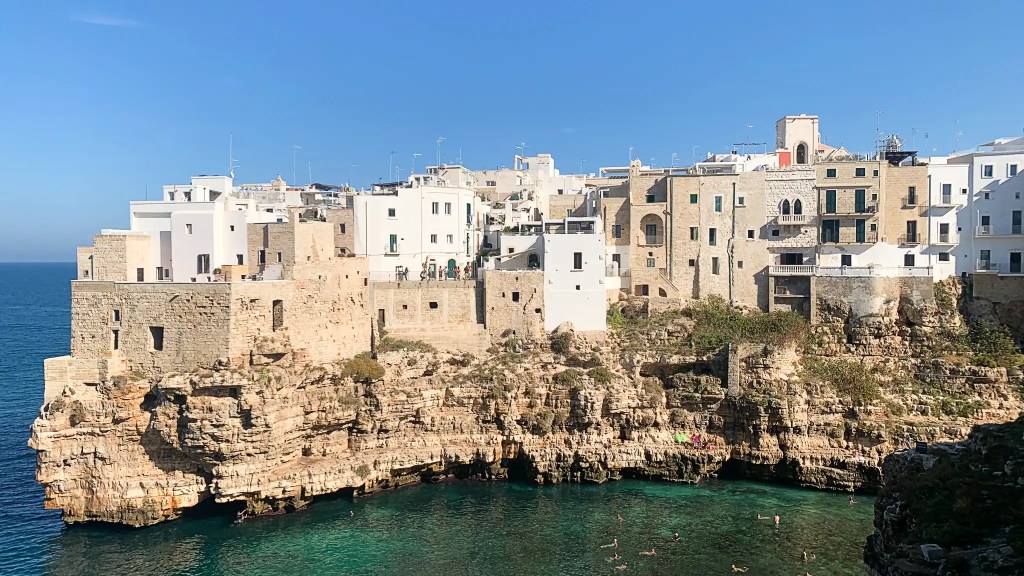
Signing up for an Ace Camps Travel trip in Puglia, Italy created an opportunity for a European road trip. The workshop and group tour were based in the southern part of Puglia near Lecce. The region’s charming towns are close enough together (an hour drive between each, give or take) to explore by car.
I mapped out an itinerary heading from north to south, hopping from one town to the next each night. Our journey began in Rome, where we had just half a day to squeeze in as many plates of alla gricia as possible before catching a train to Bari – the gateway to our tour of Southern Italy.
- Puglia Itinerary At-A-Glance
- Getting From Rome to Bari by Train
- Tips For Driving (and Parking) in Puglia
- Our Complete Puglia Itinerary
- Where To Stay
- What To Eat + Drink
- Where To Eat + Drink
- Where To Shop
- Add These To Your Puglia To-Do List
- Is Puglia Worth Visiting?
Puglia Itinerary At-A-Glance
- Day 1 – Rome to Bari: Day – Train from Rome to Bari, explore Bari Vecchia. Night – Drinks and light bites at Ciclaterra
- Day 2 – Bari to Matera: Day – Panificio Fiore, fresh seafood at Porto Vecchio, drive to Matera, check into Hydria Rooms, lunch at Giu a Sud, dinner at Conzato
- Day 3 – Matera to Alberobello: Coffee and pastry at Caffe Schiuma, Casa Noha museum in Matera, drive to Alberobello, lunch at Vino & Amore, check into Borgo Canonica, pool hang, wine and dinner at Borgo Canonica
- Day 4 – Alberobello to Polignano a Mare: Breakfast at Borgo Canonica, drive to Polignano, day trip / afternoon beach hang at Lama Monachile and Lido Cala Paura, drive to Fasano, dinner in Fasano
- Day 5 – Fasano to Ostuni to Lecce: Breakfast at Airbnb in Fasano, day trip to Ostuni, beers and snacks at Borgo Antico Bistrot, drive to Lecce, dinner at Alle due Corti.
- Day 6 – Lecce: Breakfast at Airbnb in Lecce, strolling and shopping in Lecce, return rental car to Brindisi
Note: This post contains affiliate links. I may earn a small commission if a purchase is made through these links, at no extra cost to you. I only include links to products, properties or services I have direct experience with, have seriously researched, or would personally recommend.
Getting From Rome to Bari by Train
How Far Is Puglia from Rome?
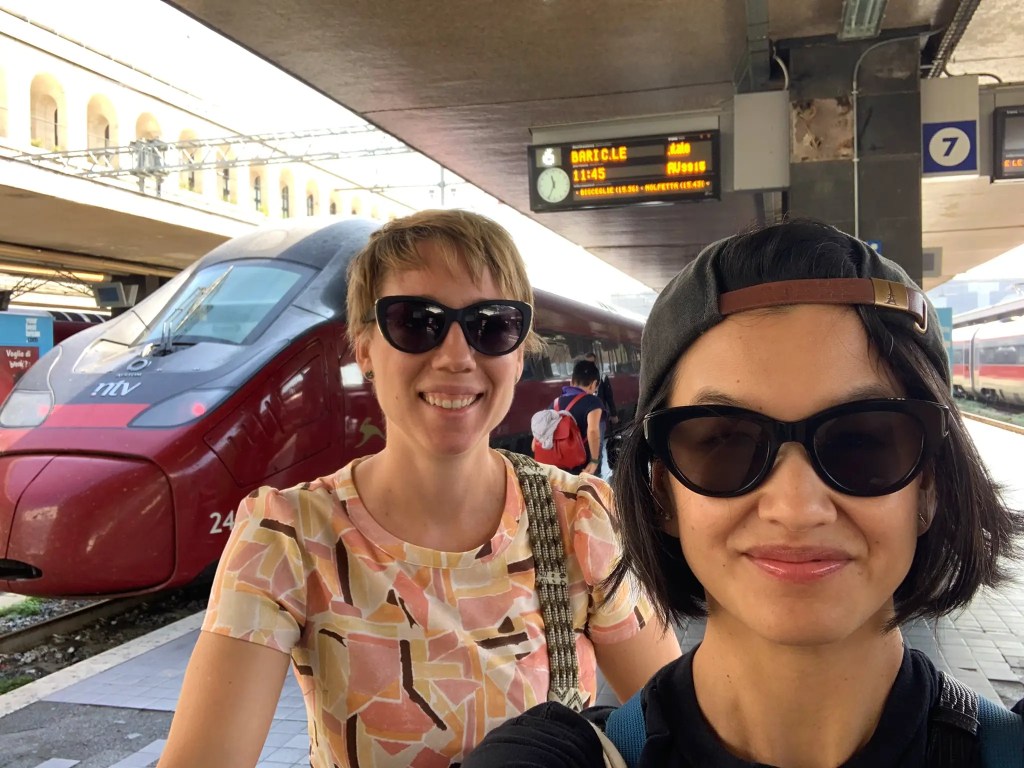
Our trip through Puglia began in Bari, and we arrived by train from Rome. The train ride from Rome to Bari takes about 4–5 hours, and you’ll have the option to book first class or regular class (we booked on Italo).
First-class seating is marketed as more spacious, with upgraded leather seats, a quieter atmosphere, more room for luggage, and snacks. The included snacks were a selection of prepackaged cookies. Was it worth the upgrade? Maybe not, but from what I recall, the price difference was just a couple of bucks.
We enjoyed a leisurely half-day and morning in Rome after flying in from the U.S. via Fiumicino Airport before catching the train to Bari. However, if you’d rather skip Rome and fly direct, Neos Airlines now offers non-stop flights from JFK to Bari.
Tips For Driving (and Parking) in Puglia
Do You Need an International Driving Permit? Before the trip, both Leah and I got International Driving Permits (IDPs) for $20 at our local AAA office (a faster option than applying by mail). My friend laughed at me for bothering, and in the end, we never needed them—no one ever asked. That said, it’s an inexpensive backup in case of unexpected checks.
Mind the tourist zones! The historical city centers are open to pedestrian traffic only. We unknowingly crossed an electric fence into a restricted tourist zone and got hit with a fine— which didn’t come until nearly a year later. We tried to protest, but the Italian authorities would not cut us any slack. Boo.
Take advantage of free parking. Outside of Lecce, where we had to pay for metered street parking, we consistently found free street parking or lots within walking distance of our accommodations and zones of interest.
Our Complete Puglia Itinerary
Day 1: Rome to Bari
We arrived in Bari by train from Rome, dragging our suitcases from Bari Centrale up Via Sparano, the city’s main shopping street. From there, we continued hauling them uphill along the eastern coast to our Airbnb on Lungomare Imperatore Augusto.
Once settled, we headed into the heart of Bari Vecchia (Bari’s Old Town), stopping at Basilica di San Nicola and the Cattedrale di San Sabino, the first of many churches we’d visit throughout the trip.
We considered waiting in the long line for Maria delle Sgagliozze’s famous fried polenta, but lacked the patience. We ended up at Ciclatera Sotto Il Mare, a cozy spot with Adriatic views close to our Airbnb, where we sampled mini panzerotti (another Barese specialty) alongside a spread of appetizers. That held us over for the night.
I hadn’t made dinner reservations in advance for any leg of the trip (very unlike me). I’m a little embarrassed to admit we also skipped spaghetti all’assassina, the fiery, burnt pasta dish that Bari is known for.
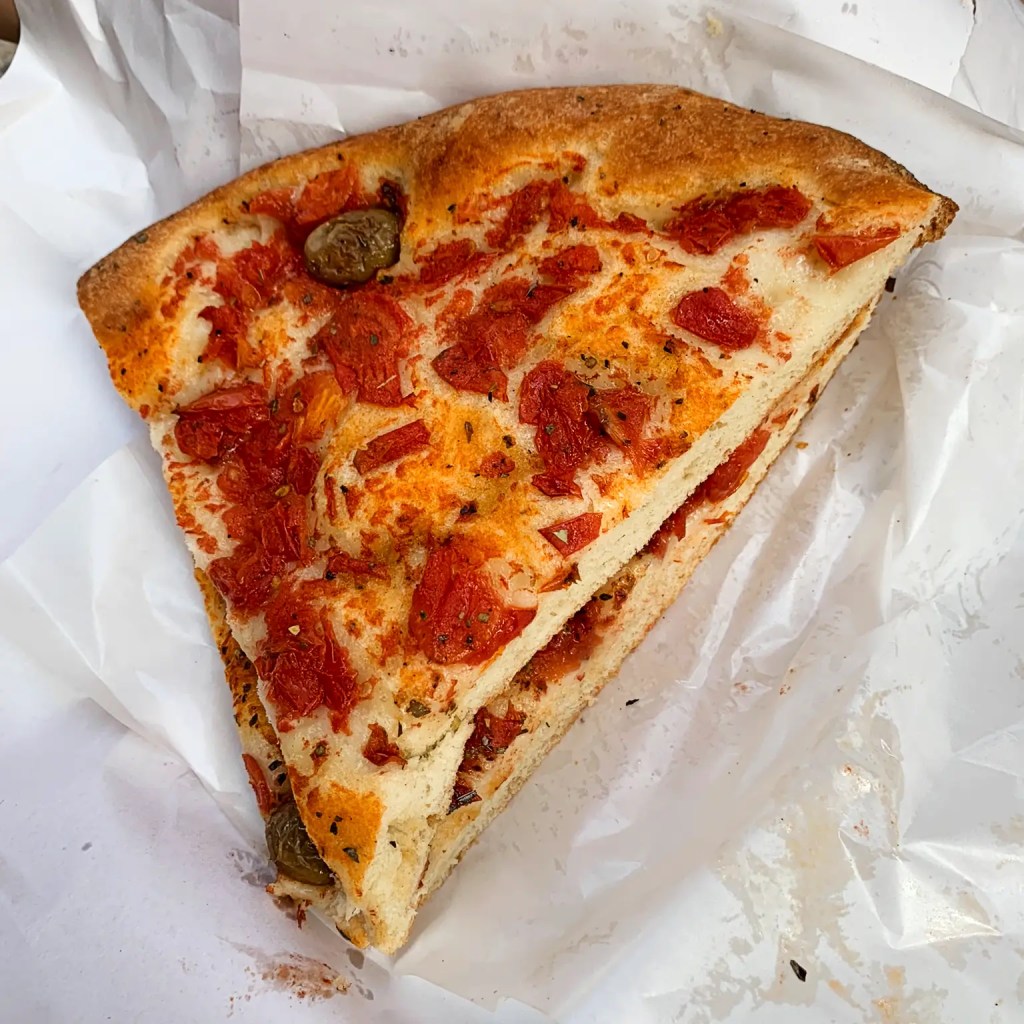
The next morning, we set out early for focaccia Barese from Panificio Fiore. Our first stop was Martinucci (Palazzo del Sedile) so Leah could grab coffee. True to Italian time, Panificio Fiore, which was supposed to open at 9:00 AM, didn’t seem in any rush to do so. We ducked into a nearby caffetteria for a €1 espresso to pass the time. When Fiore finally opened, a short line of tourists had already gathered. We grabbed our warm, olive- and tomato-topped focaccia and found a quiet spot on some nearby steps to enjoy it.
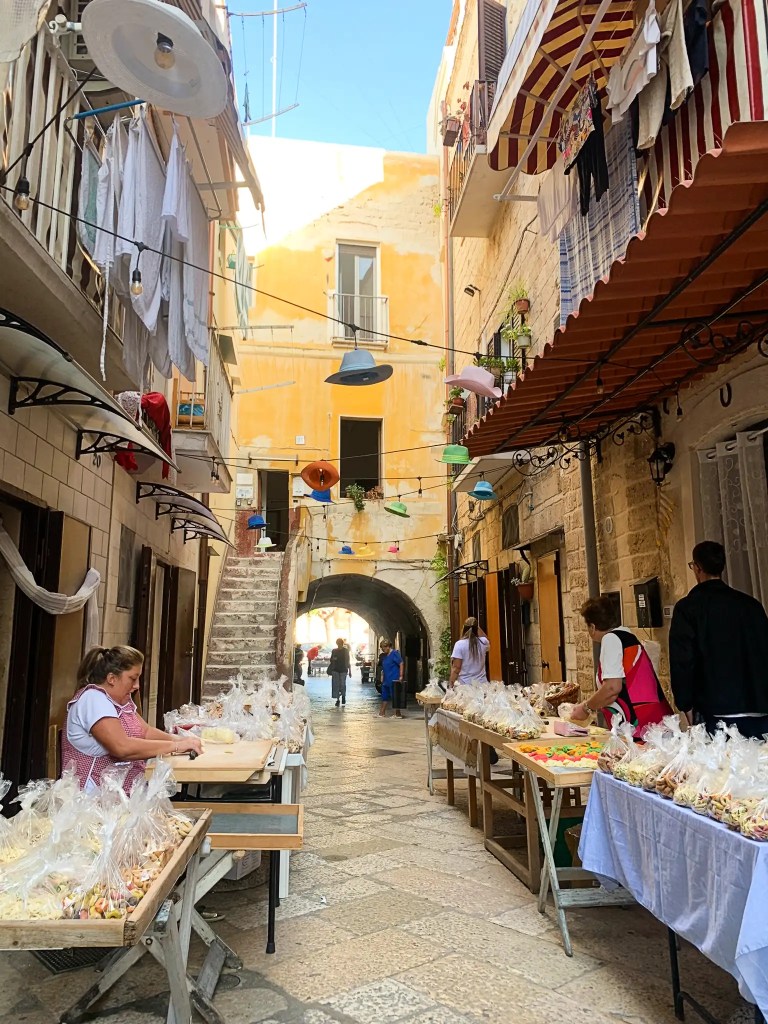
Next, we wandered to the southwest corner of the Old City to visit Via Arco Basso—better known as Strada delle Orecchiette or “Pasta Avenue.” Bari is the birthplace of orecchiette pasta, and here, nonnas work at a brisk pace, shaping perfect “little ears” with nothing more than a knife and a flick of the wrist.
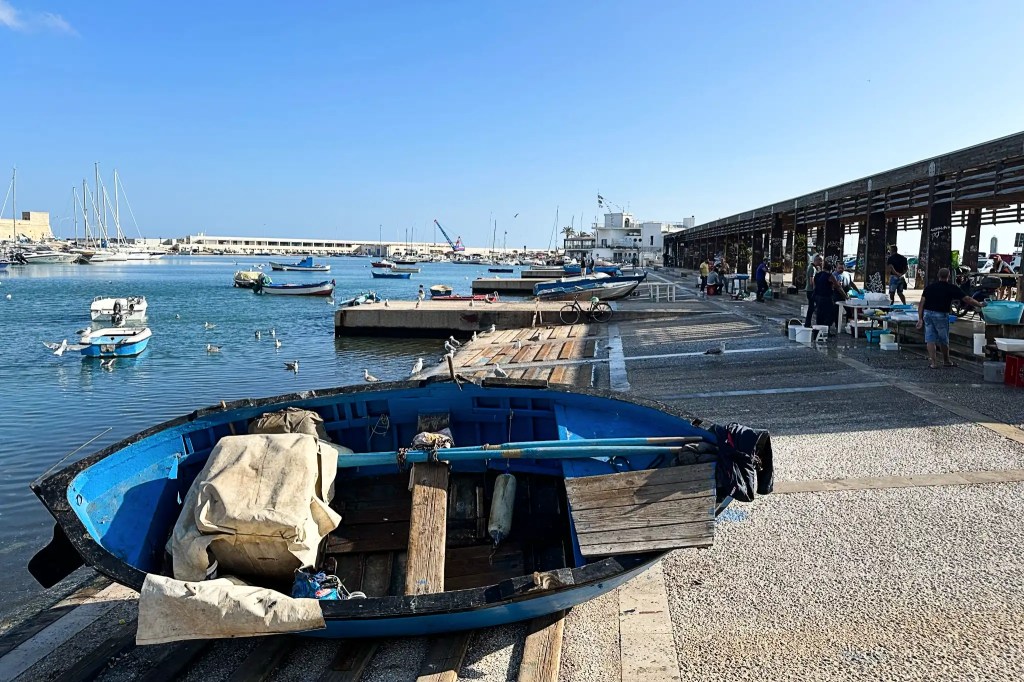
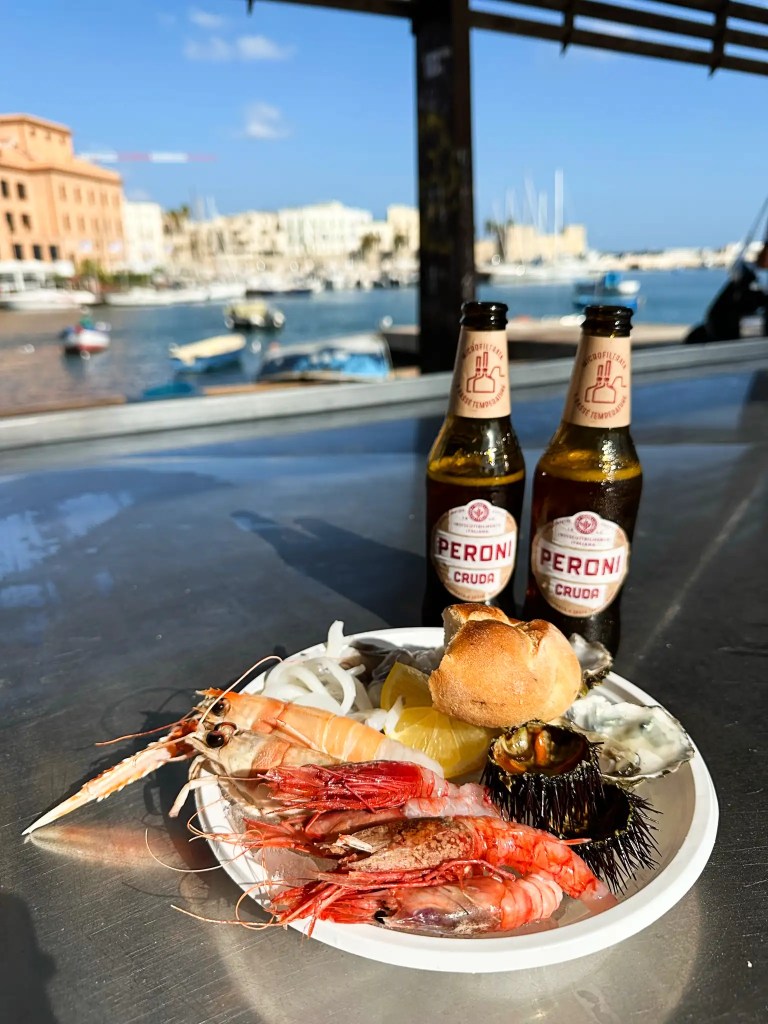
From Pasta Avenue, we strolled east along the waterfront for second breakfast: a freshly caught seafood sampler at Porto Vecchio. For about $25 USD, a fisherman assembled a plate of raw shrimp, octopus, and sea urchin. While the seafood was sweet and fresh, we struggled with the soft, slippery textures at 10:30 in the morning. Thankfully, we found relief in two cold Peronis at El Chiringuito, just down the pier.
Even though we were cutting it dangerously close to our Airbnb checkout time, we made one last stop at Magicaterra, a ceramics shop known for its handmade pumi (plural; pumo, singular), the bulb-shaped symbol of Puglia with acanthus leaves at the base. Like Fiore, it was supposed to open at 10:00 AM but, naturally, did not. When the doors finally opened, we picked up a small army of pumi, along with ceramic pomegranates and prickly pears, before rushing back to grab our bags.
Our Bari itinerary ended with a long, crowded local bus ride to Bari airport. From there, we picked up our rental car. Keys in hand, we were officially ready to hit the road.
Day 2: Bari to Matera

The drive from Bari to Matera takes just under an hour. Leah took the wheel as our designated driver, while I played navigator and DJ. As we arrived in Matera, we accidentally crossed into the zona turistica—an electric-fenced area off-limits to unauthorized vehicles. We didn’t realize it at the time, but eight months later, this little mistake came back to haunt us in the form of a fine.
When planning our trip, I had stumbled upon a blog claiming Matera wasn’t worth visiting—I couldn’t disagree more. Technically, Matera isn’t part of Puglia; it belongs to Basilicata, an inland region known for its rugged beauty. But from the moment we (innocently) breached that electric fence and caught our first glimpse of the ancient sassi—Matera’s iconic cave dwellings—we were captivated.
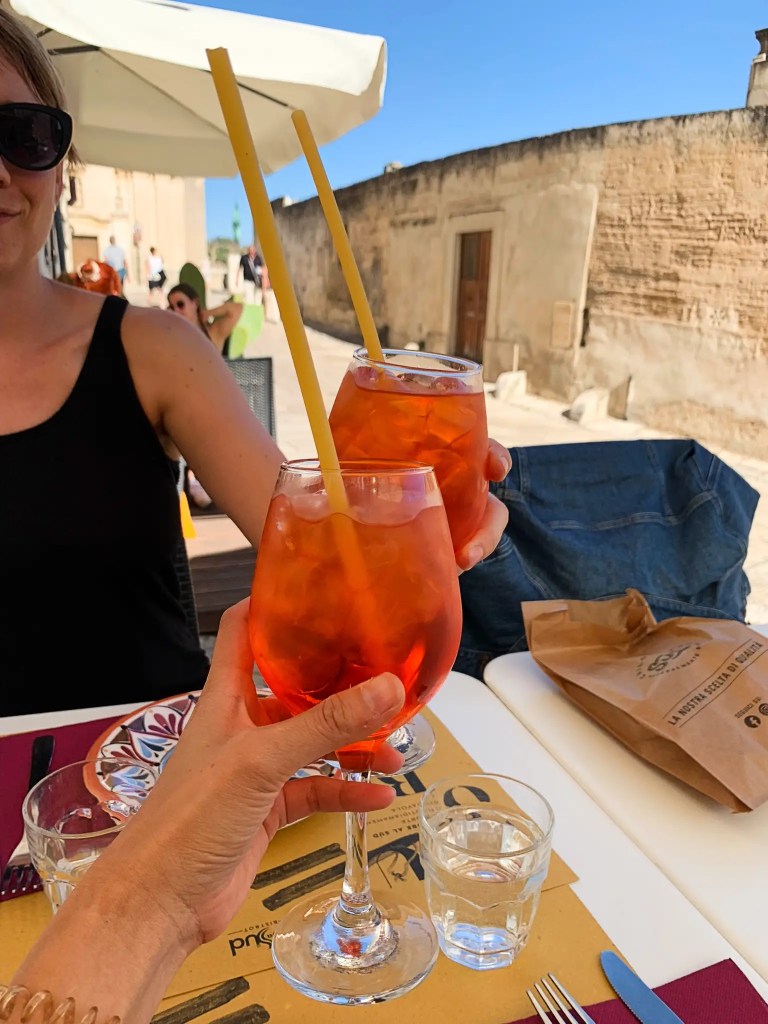
Our B&B, Hydria Residence on Via Piave, was perfectly situated just a three-minute walk from the sassi. We lucked out with free street parking nearby and immediately set out in search of food. At Giu a Sud, we toasted giant goblets of Aperol Spritz (with pasta noodles as straws) and shared friselle—whole wheat crostini with roasted peppers. But cheese always wins, and the fried caciocavallo left an indelible mark on my palate, so much so that I made myself a dish not long after I got home.
After lunch, we walked off our meal with a bit of shopping. MaterArte, a boutique along the edge of the sassi, offers contemporary pieces bursting with color. Both Leah and I bought painted terracotta whistles shaped like cucù, or rooster, the traditional symbol of Matera. Leah also picked up a handcrafted olive wood bread whistle topped with a tiny rooster from a local woodcarving studio.

Matera is impressive by day and transforms into something magical at night. As the sun sets, the light inside the sassi twinkle. Following a recommendation from the staff at Hydria Residence, we had dinner at Conzato on Via Fiorentini.
Our meal was a delicious spread of fava bean purée with chicory, grilled pane di Altamura (a rustic local bread), farmer’s bread salad with fava beans, eggplant, basil, and pecorino, smoked burratina, and sweet biscotti for dessert. Our waiter was a flirt, and we indulged him. (He even tried to invite himself to along to Polignano.) After dinner Leah and I wandered back to Hydria Residence together – alone (!) – contented.
Day 3: Matera to Alberobello
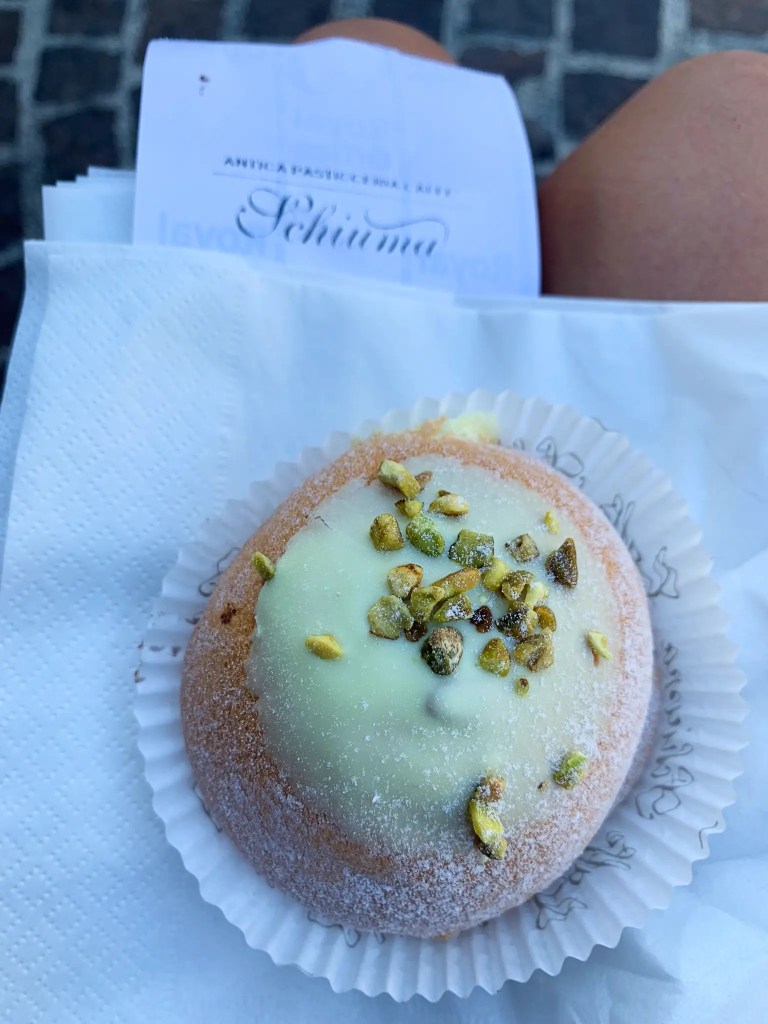
The next morning, we walked to Caffè Schiuma (recommended by that same flirtatious waiter) for our morning espresso. I ordered a caffè Leccese (espresso over ice with almond syrup) and a pistachio cream puff, which we enjoyed in a nearby park.
Before leaving Matera, we made one final stop at Casa Noha, a small but enlightening museum that provided invaluable insight into the history and evolution of the sassi. It was an interactive experience where we moved from room to room as the story progressed. It was the perfect way to round out our time in one of Italy’s most extraordinary cities.

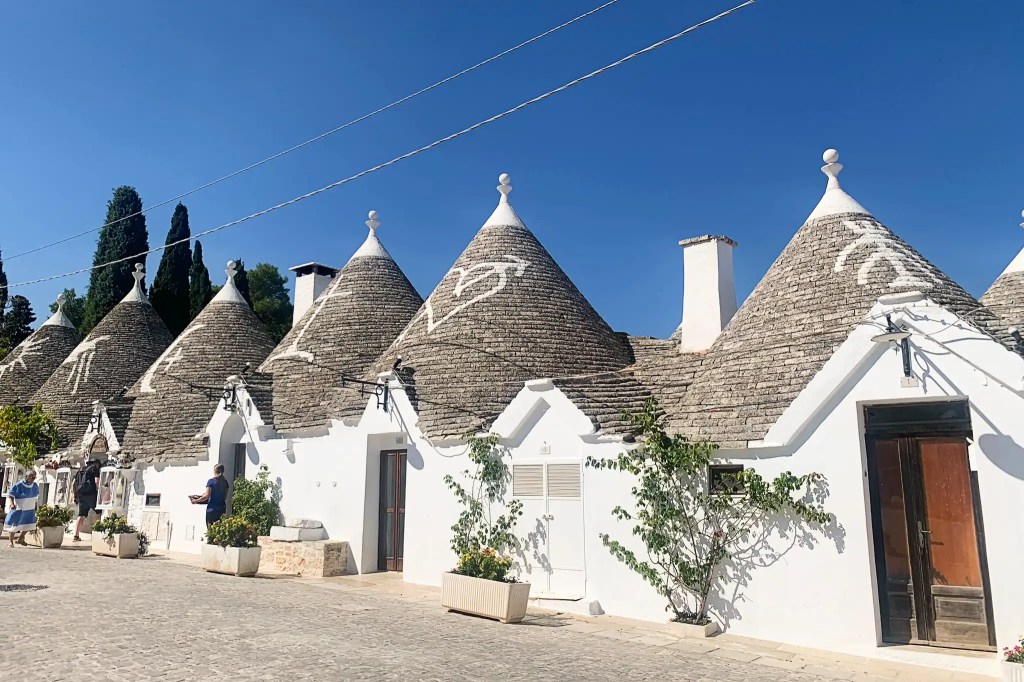
Leaving Matera, we headed east toward Alberobello, a UNESCO World Heritage site known for its enchanting trulli—traditional white limestone huts topped with conical grey roofs. I had been eager to see these iconic structures in person, and as we drove through the Valle d’Itria, clusters of trulli dotted the rolling landscape.
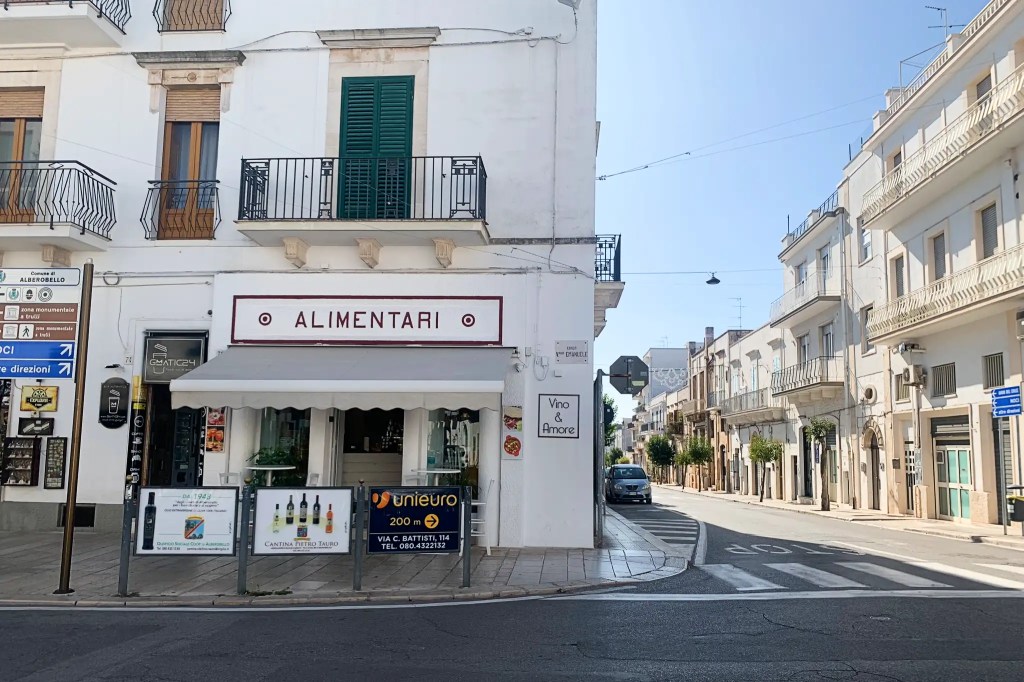
We once again found free parking just outside the tourist zone, but as soon as we entered the town, we were met with crowds. Busloads of day-trippers had just arrived. Many of the trulli in the city center had been converted into tourist shops.
I had hoped to find Alberobello more charming, but the commercialized atmosphere left me a bit underwhelmed. That said, Google Maps led us to an excellent lunch spot just beyond the main strip—Vino & Amore, a casual restaurant and alimentari (deli/grocery).
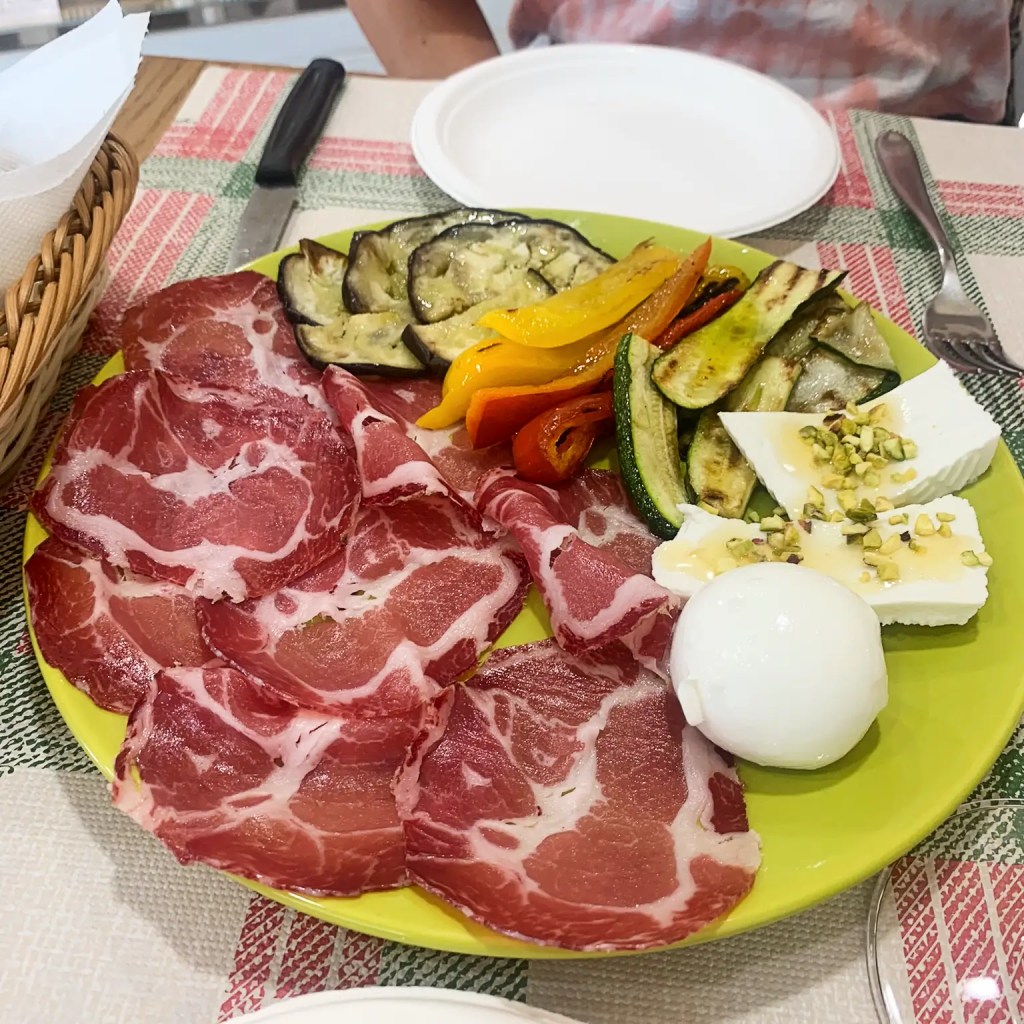
We went all in on lunch: capocollo, a platter of assorted antipasti (including another perfectly bouncy burratina), orecchiette with broccoli rabe swollen with sugo, and a porchetta panini… because we could. We grabbed a chilled bottle of white wine from their fridge for later, which the staff sold to us for a “special price.” Something about their faces told us they were just as happy to have us there as we were to have found them.
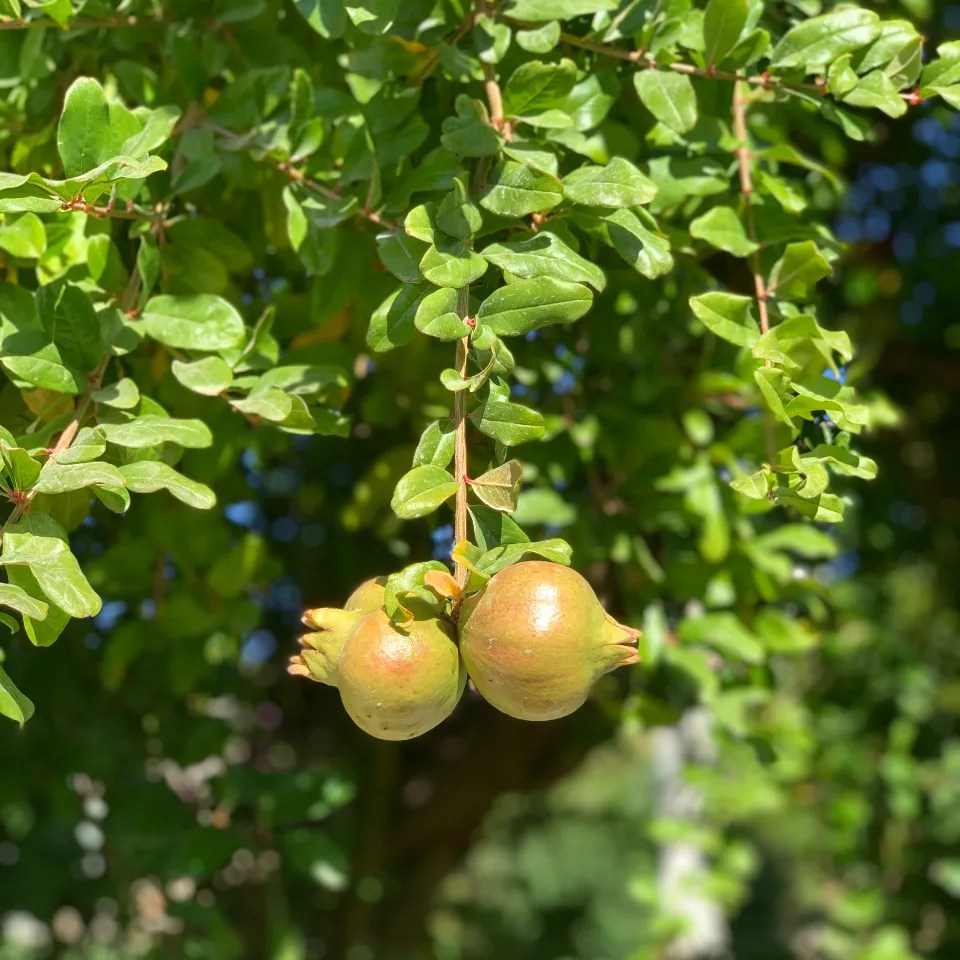
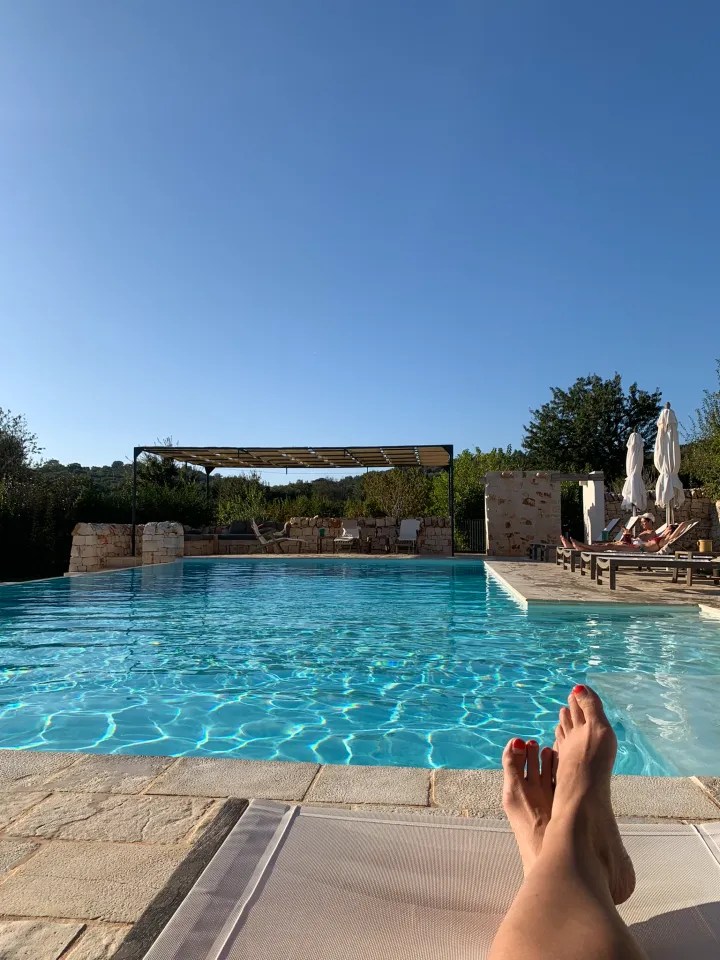
After lunch, we continued onto Borgo Canonica, our trulli-style hotel just outside Alberobello. Upon arrival, a staff member met us with a golf cart to shuttle us from the parking lot to reception. The grounds were lined with pomegranate trees, adding to the rustic beauty of the property. After check-in, we spent a leisurely afternoon by the pool, soaking up the warm Puglian sun.
Before dinner, we cracked open our bottle of white wine and enjoyed it under the pergola by our trullo. That evening, we dined in the hotel restaurant, savoring the peaceful, authentic trulli experience I had been hoping for.
Day 4: Alberobello to Polignano a Mare
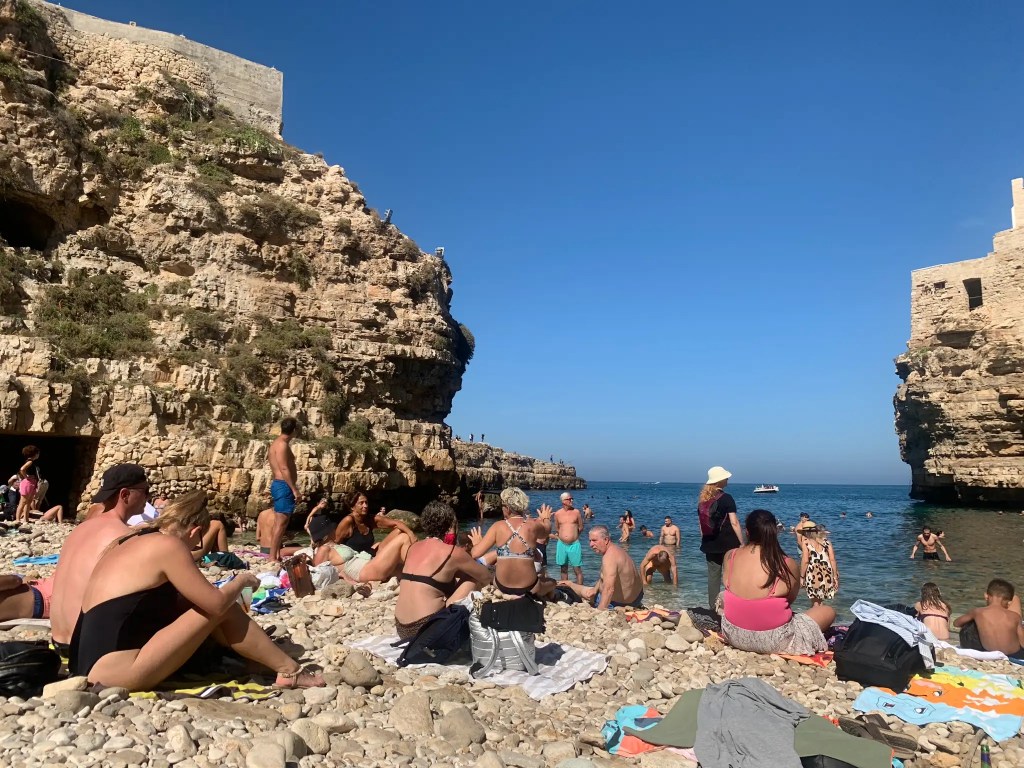
After breakfast at the hotel, we set out for a day trip north to Polignano a Mare, a postcard-perfect coastal town perched on dramatic limestone cliffs. Once again, we lucked out with free street parking.
Our first stop was Lama Monachile, the town’s famous beach tucked between towering cliffs. There, we watched Italian women with burnished skin bask unapologetically in the sun and daring divers leap from the cliffs. Vendors sold Aperol Spritz in pouches. The beach itself is small, pebbled, and packed, making it less than ideal for lounging. Still, it was a beautiful setting, and the warm water was inviting—despite the slightly painful experience of walking barefoot over the stones.
Once we’d had our fill of the see-and-be-seen beach scene, we made our way to Lido Cala Paura, a quieter spot that offered a welcome break from the crowds.
After we’d soaked up enough sun, we drove to Fasano, a town 20-minute drive northeast of Ostuni, where we’d be spending the night. For dinner, we ate at a restaurant in Piazza Mercato Vecchio, indulging in a white pizza topped with zucchini flowers and anchovies, alongside a simple yet incredible salad. It was essentially a Greek salad made with tomatoes, red onions, and cucumbers—but these were not your run-of-the-mill cucumbers. Unlike the watery versions back home, these were not as watery and surprisingly sweet, almost like fruit. That’s when I learned they were cocomero, a Puglian variety that’s a hybrid between cucumber and melon. Who knew.
Day 5: Fasano to Ostuni
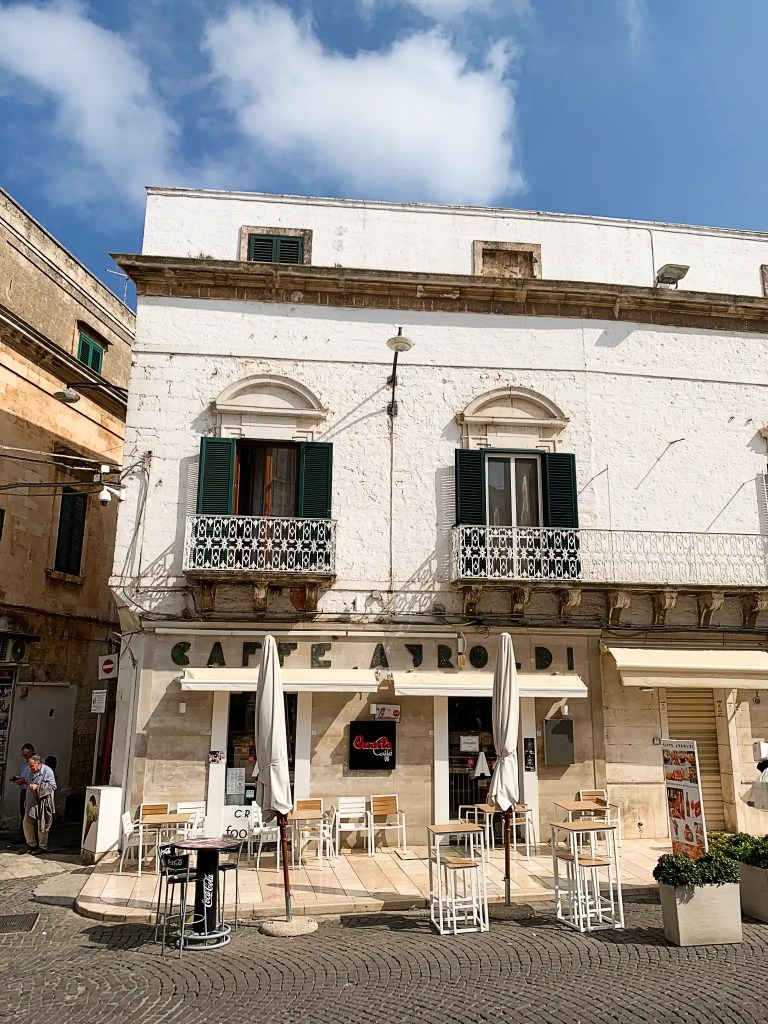
After waking up in Fasano, we set off for Ostuni, also known as La Città Bianca (The White City) for its striking whitewashed buildings perched on a hilltop. It’s considered the most fashionable town in Puglia.
A day trip was just the right amount of time to explore. The boutiques were charming but on the pricier side, so we spent most of the day simply strolling through the streets, admiring the architecture, and window shopping.

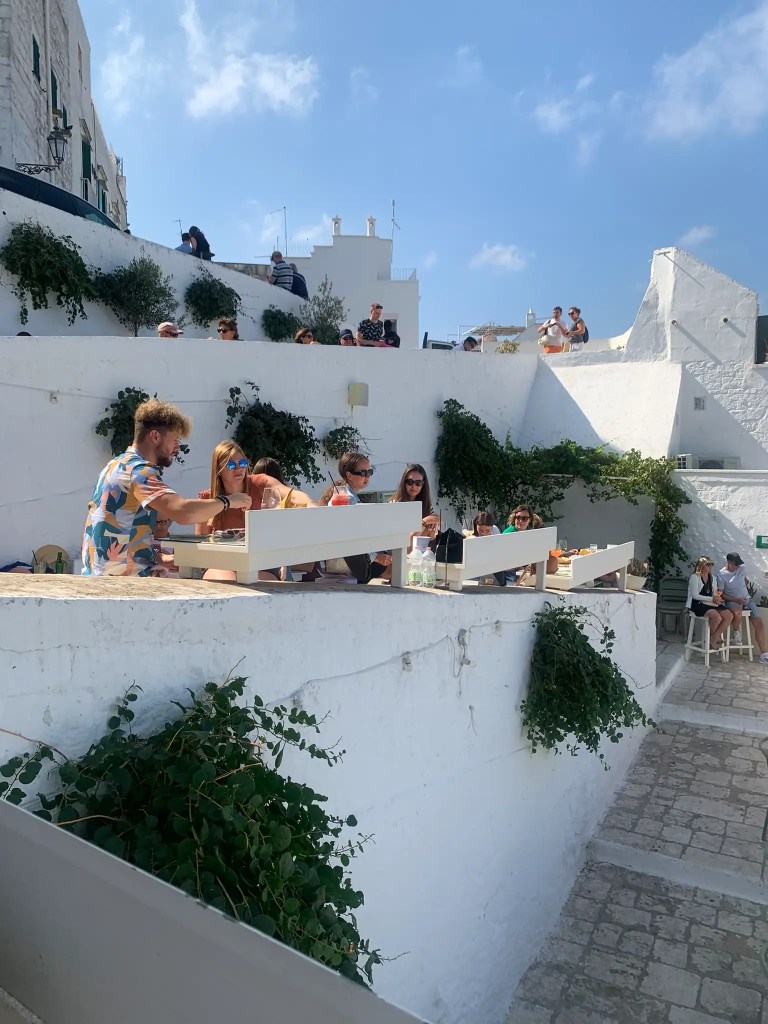
When we needed a break, we found a perfect spot at Borgo Antico Bistrot, just a short distance from the Porta Azzura. where we enjoyed a panoramic view all the way out to the Adriatic, a pair of cold Peronis, and a cone of crispy, golden frites.
Day 6: Ostuni to Lecce
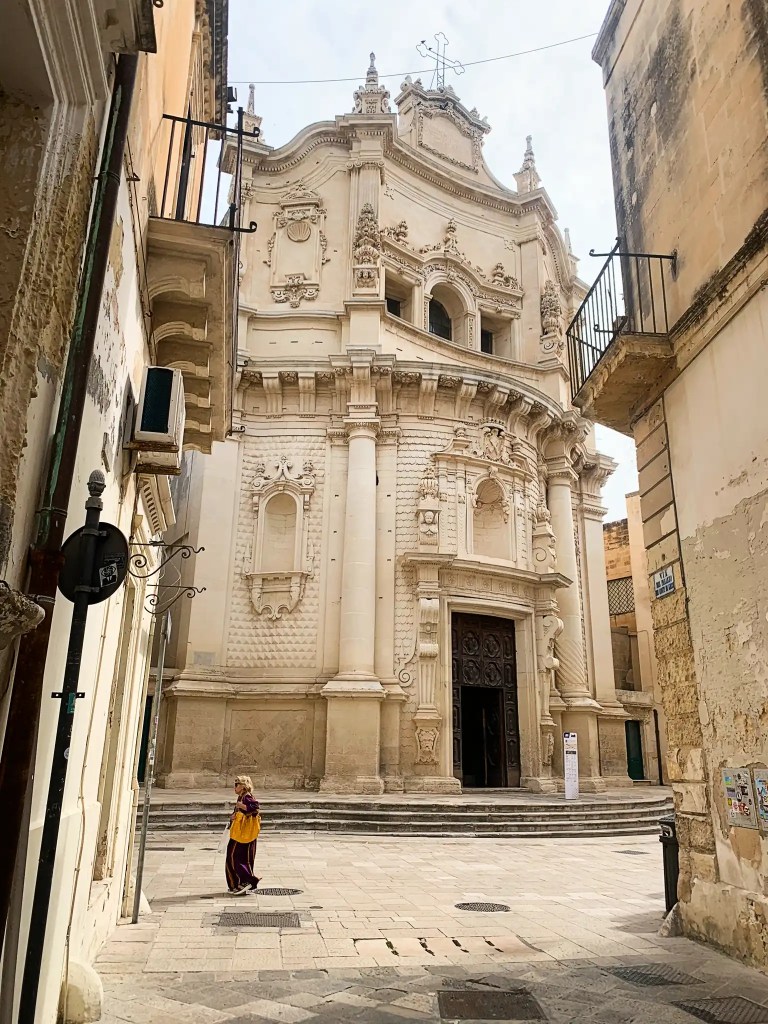
After our day trip to Ostuni, we headed south to Lecce for the night. Lecce is a Baroque masterpiece, brimming with intricate facades and grand piazzas.
We wandered through the city’s historic center, stopping at the Roman Amphitheater, a striking remnant of Lecce’s ancient past, before making our way to Alle Due Corti for dinner. Anthony Bourdain had eaten here, which was reason enough for us.
The next day we found ourselves drawn to Vico dei Bolognesi, a concept store featuring an impeccably curated selection of chic international brands for both home and wardrobe. I walked away with a black-and-forest-green striped wool beret from Kopka, but was also tempted by black leather tassel earrings from Giulia Boccafogli and a blue camouflage poncho by Rainkiss, made from recycled bottles. (We returned to Lecce the following week with our tour group and cleaned the place out.)
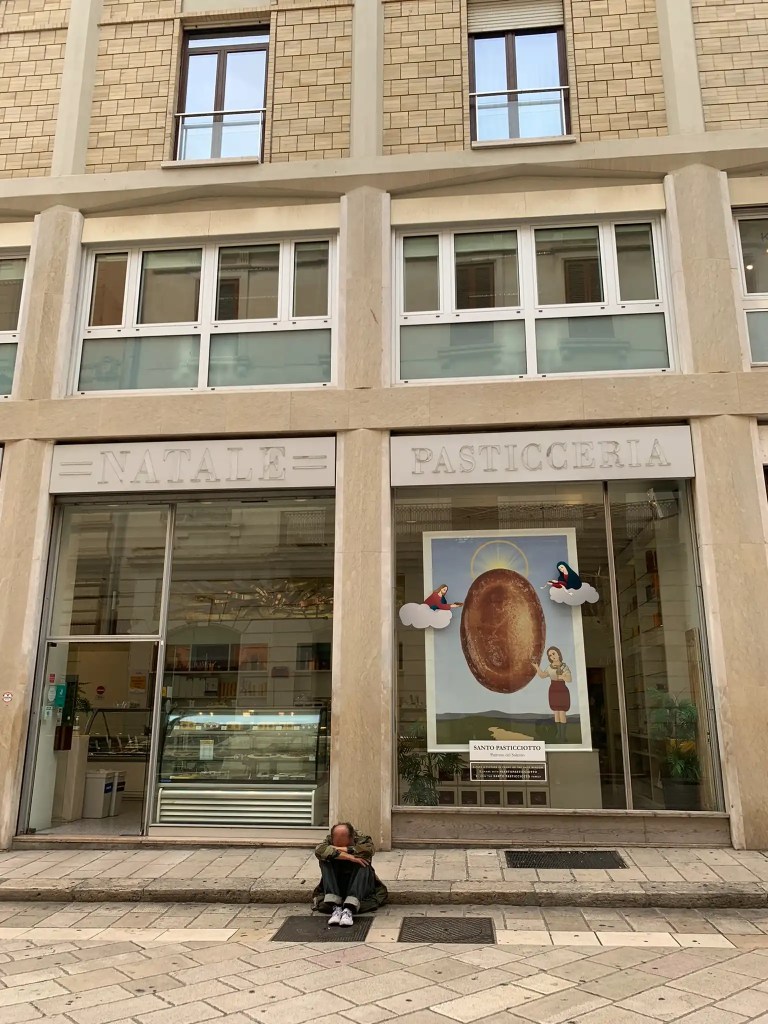
Before leaving Lecce and returning the rental car, Leah and I each grabbed a pasticciotto from Natale Pasticceria. It was time to return the car to Brindisi and meet our Ace Camps tour group for Part 2 of our Italian adventure – a basket weaving workshop in Puglia.
Where To Stay
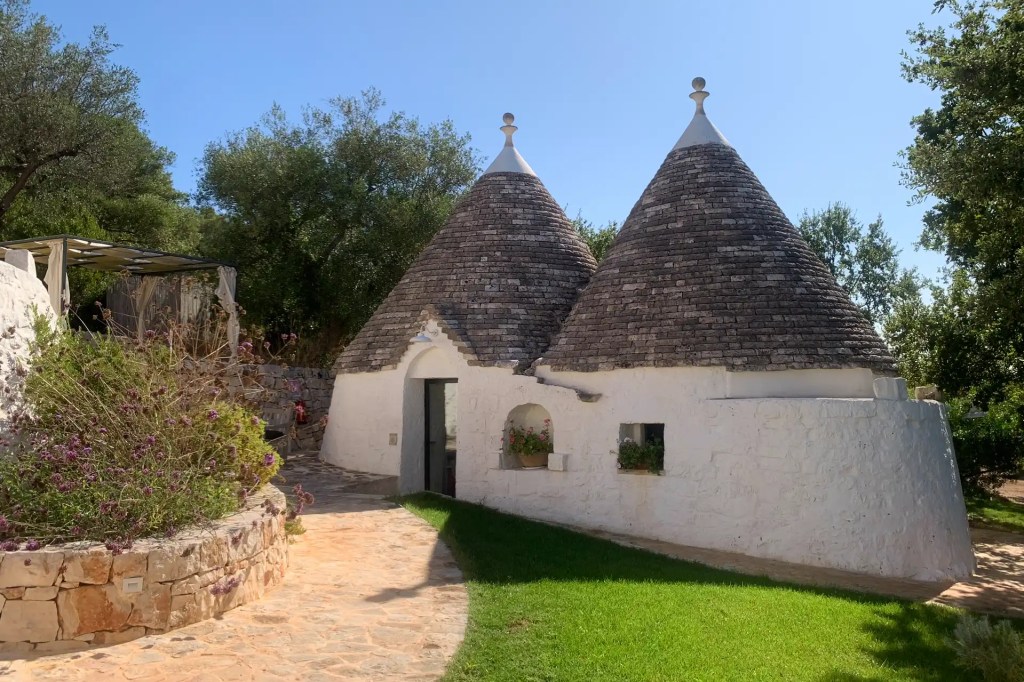
Borgo Canonica (Alberobello). A stay at Borgo Canonica means your very own private trullo – a traditional stone hut that offers the ultimate Puglian experience. We arrived in the afternoon with time to lounge by the pool under the warm sun. We had dinner on-site, enjoying potato-filled bottoni in porcini broth and grilled octopus. The next morning, the breakfast buffet was complemented by made-to-order entrées, giving us plenty of options to start the day.

Hydria Residence (Matera). A modern take on the ancient cave dwellings of Matera, Hydria Rooms blends contemporary comfort with historic charm. The mini bar was stocked with complimentary snacks, and the location couldn’t have been more convenient—just a 3-minute walk to the sassi. We didn’t get the room with the sunken soaking tub, but our shower stall came with disco lights.
What To Eat + Drink
- Caffè Leccese. I had one at Caffè Schiuma and was expecting a tall drink. It was a shot of cold espresso with almond syrup, served over ice—super sweet.
- Oriecchiette. We had many plates of this little ear pasta throughout our trip, and I also bought two bags of this ear-shaped pasta at a Carrefour along our route- one semolina and one “burnt grain” variety. Each bag cost me the equivalent of $2 USD. Grocery stores in foreign countries are one of my favorite places to shop for inexpensive “gourmet souvenirs”.
- Panzerotti (Bari) – Deep-fried, savory turnovers that resemble calzones. Say less.
- Pasticciotto (Lecce). A short-crust pastry filled with lemon-flavored custard. The ones from Natale Pasticceria were hefty and satisfying.
- Spaghetti all’Assassina (Bari) – A fiery, crispy spaghetti dish that Bari is famous for. Sadly, after a long train ride, stroll, and drinks and appetizers at La Ciclaterra, we were too full and tired for a proper dinner. I have yet to one day recreate it at home.
- Taralli. Crunchy, wheat-based crackers popular in Southern Italy. They were a staple at hotel breakfasts, and Hydria Residence in Matera even stocked small bags in the complimentary minibar. They’re like savory breadsticks twisted into rings (though sweet varieties exist). In New York, I grab them from Caputo’s in Carroll Gardens.
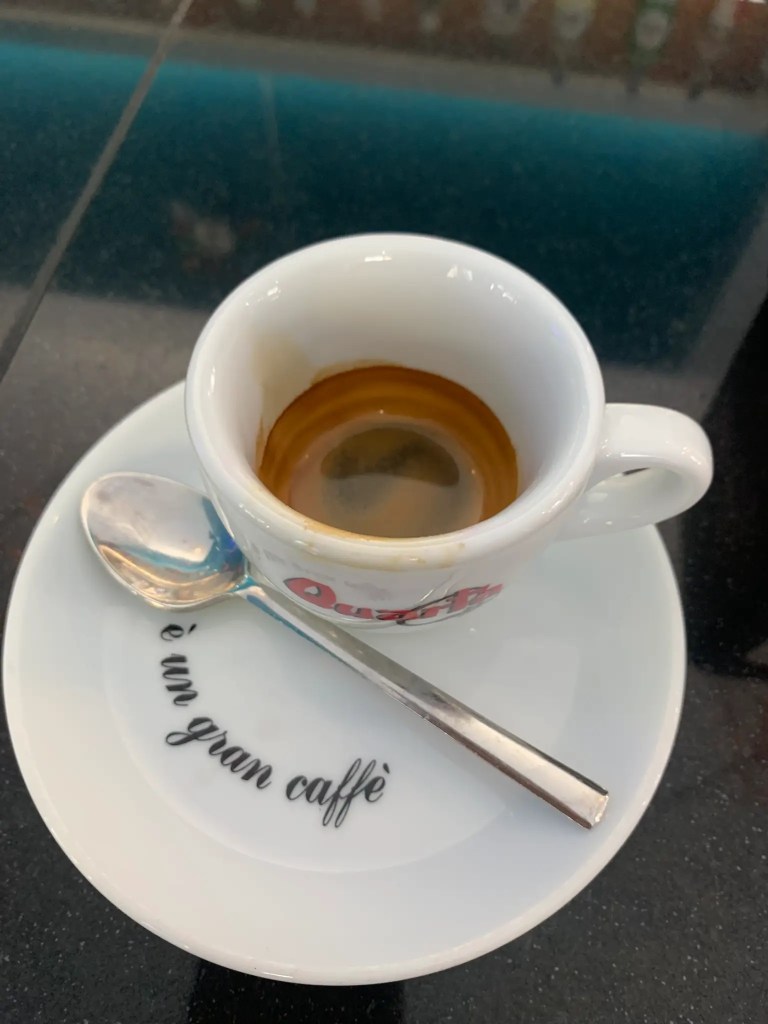
- Espresso (Everywhere!). For just 1 EUR, I can’t resist standing at the counter with a tiny cup, partaking in this beloved national ritual (even though I don’t drink coffee).
Where To Eat + Drink

Alle due Corti (Lecce). If it was good enough for Anthony Bourdain, it’s good enough for us. This family-run restaurant offers a cozy atmosphere where you can order a carafe of house wine and settle in for a delicious meal. We tried ncannulate (pasta with fried eggplant, tomato sauce, and dried ricotta), orecchiette with turnip tops and mussels, and clay pot octopus with carrot, onion, celery, and tomato.
Borgo Antico Bistrot (Via Fina, Ostuni). If you’re in Ostuni, make sure to stop by Borgo Antico Bistrot, located near the iconic blue door (Porta Azzura). It’s a charming spot to relax with a drink and take in the views over the water. We enjoyed a pair of Peronis and a cone of crispy frites.
Conzato (Matera). We had a memorable meal at this restaurant recommended by the staff at Hydria Rooms. We dined on fava bean puree and chicory with pane di altamura, a farmer’s bread salad of fava, eggplant, basil, and pecorino, smoked burratina, and sweet biscotti for dessert.
Vino & Amore (Alberobello). Casual alimentari with dine-in tables and chilled wine bottles available for purchase. Friendly staff and very reasonably priced, just outside the main commercial area in Alberobello.
Where To Shop
Magicaterra (Bari). Magicaterra offers a more refined selection of pumo (the symbol of Puglia) than the typical street vendors, all at reasonable prices. I stocked up on small pumo, pomegranate, and prickly pear pieces keepsakes that capture the essence of the region.
Vico Dei Bolognesi (Lecce).This stylish concept store offers an eclectic mix of international brands for both wardrobe and home. Ultimately, I picked up a wool, black-and-forest green striped beret from Kopka, but black leather tassel earrings by Giulia Boccafogli and a blue camouflage poncho made from recycled bottles by Rainkiss also caught my eye. The adjacent wine bar features natural wines and outdoor seating.
Add These To Your Puglia To-Do List
Monopoli. A charming beach town further southeast along the Puglian coast (just a 15-minute drive from Alberobello). It’s known for its crystal-clear waters and picturesque old town, with historic sites like the Castello di Carlo V and beautiful beaches.
One of four Michelin-starred restaurants in Matera. Though we didn’t indulge on this trip, Matera is home to four Michelin-starred restaurants. Our evening walks around the sassi took us past a couple of these culinary gems (Vitantonio Lombardo Ristorante, Baccanti). While we didn’t have time to spare for a long meal given we were in Matera for just one night, I’d splurge I’m ever back in the region.
Fondazione Le Costantine (Uggiano La Chiesa). A women-owned textile lab about a half hour drive southeast of Lecce. this space is known for producing luxury accessories and home goods woven on ancient looms, a practice that blends tradition with modern craftsmanship. Once a collaborator with Maria Grazia Chiuri at Dior and featured in Vogue, their pieces are a true testament to artisan skill and high-end design. While the pieces are gorgeous, they aren’t cheap.
Ristorante da Silve (Fasano). This renowned restaurant specializes in Puglian cuisine, with an emphasis on fresh, local ingredients and traditional recipes. Unfortunately, his restaurant is closed on Wednesdays (the one night we were in Fasano).
Masseria Moroseta (Ostuni). A boutique resort located in the Ostuni countryside, known for its sleek, modern design and farm-to-table restaurant. (The resort was occupied for a yoga retreat during our visit.)
Is Puglia Worth Visiting?
What makes the Puglia region truly special is the variety: from stunning beaches to ancient cave dwellings and striking Baroque architecture, every stop offers something captivating. Even on the move, the pace never felt rushed. Part of the joy is sampling each town’s distinct flavor.
Exploring Puglia by car gives you maximum flexibility to linger or move on as you please. The drives between towns are refreshingly short and straightforward – Bari to Lecce clocks in at just about two hours nonstop. A road trip through Puglia is easy to navigate, and offers both adventure and ease.

Leave a comment