
Rome is sprawling, grand – a lot to take in. The first time I visited in 2005, I remember feeling overwhelmed by its scale compared to the more relaxed rhythm of Florence and the intimate charm of Cinque Terre. This time, I experienced it differently.
We only had one afternoon before heading to Puglia, and one night before heading back to the States. I was determined to make the most of limited time and to see Rome through fresh eyes.
My friend Leah flew in from Austin (and I from New York) and met at Roma Termini. Even after a long international flight, there’s something electric about reuniting with a friend in a foreign city. We dropped our luggage, and from there ran on fumes… and Italian espresso. We walked all afternoon, weaving past some of Rome’s greatest hits. Though we didn’t have time to squeeze in the Colosseum or tour Vatican City, but I think we did pretty well.
Then, after two weeks in Puglia, we opted for convenience on our way out of Italy, spending our final night by the sea in Lido di Ostia, a beachside district of Rome near the airport. Though it wasn’t the Rome of monuments or masterpieces, it was a calm contrast to the city’s grandeur and the perfect wind-down before flying home.
Whether you’re passing through Rome on a stopover, planning a brief visit, or looking for an airport-adjacent option with more charm than a chain hotel, consider this your guide to making even a short stay in the Eternal City feel full.
- Getting to Rome (Proper) from Fiumicino Airport
- Getting Around in Rome
- Things To Do: A Self-Guided Walking Tour of Rome’s Centro Storico
- Where to Eat (and Where to Espresso)
- Where We Stayed
Note: This post contains affiliate links. I may earn a small commission if a purchase is made through these links, at no extra cost to you. I only include links to products, properties or services I have direct experience with, have seriously researched, or would personally recommend.
Getting to Rome (Proper) from Fiumicino Airport
If you’re flying into Rome, the easiest way to reach the city center is by high-speed train. During my first trip to Rome, I was promptly overcharged by a taxi driver. This time, my ride was much smoother: I took the Leonardo Express from Fiumicino to Roma Termini.
The train runs every 15–30 minutes, costs about €15, and takes just over half an hour to reach the heart of the city. You can buy tickets at the airport upon arrival, and there’s space for luggage onboard. Settle in by the window, let the Italian countryside roll past, and take those first quiet minutes to exhale: you’ve arrived.
Getting Around in Rome
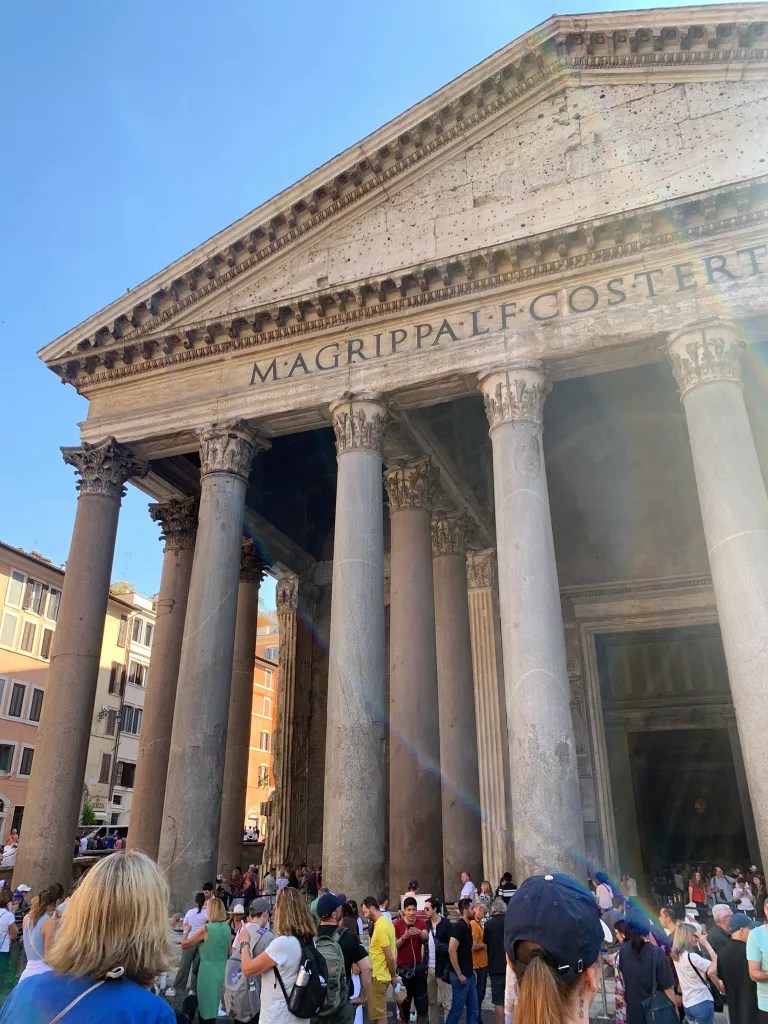
Rome is big… and not exactly walkable. In certain pockets, especially the Centro Storico, the best way to explore is still on foot. You can weave from one masterpiece to the next – the Pantheon, Piazza Navona, the Trevi Fountain – without needing a taxi or bus.
Sometimes you’ll need to cover more ground. We hopped on a local bus from our Airbnb near Villa Borghese to Trastevere, on the other side of the Tiber River, for dinner. It was a ride and a crash course in Roman life, for just €1.50. We sped past crumbling ruins and lively piazzas with young people gearing up for a night out. Hang tight to the bars and watch the city blur past.
Things To Do: A Self-Guided Walking Tour of Rome’s Centro Storico
Only have a few hours in Rome? The Centro Storico is a great place to be. Compact enough to explore on foot, yet full of history (and great food), it’s the Rome of postcards and film and the perfect way to maximize limited time. Here’s how we spent our afternoon:
Campo de’ Fiori
Start at this lively open square, home to one of the city’s oldest markets. In the morning it’s filled with stalls selling produce and flowers. By afternoon, it morphs into an prime spot for people-watching with a coffee or slice of pizza al taglio.
Piazza Navona
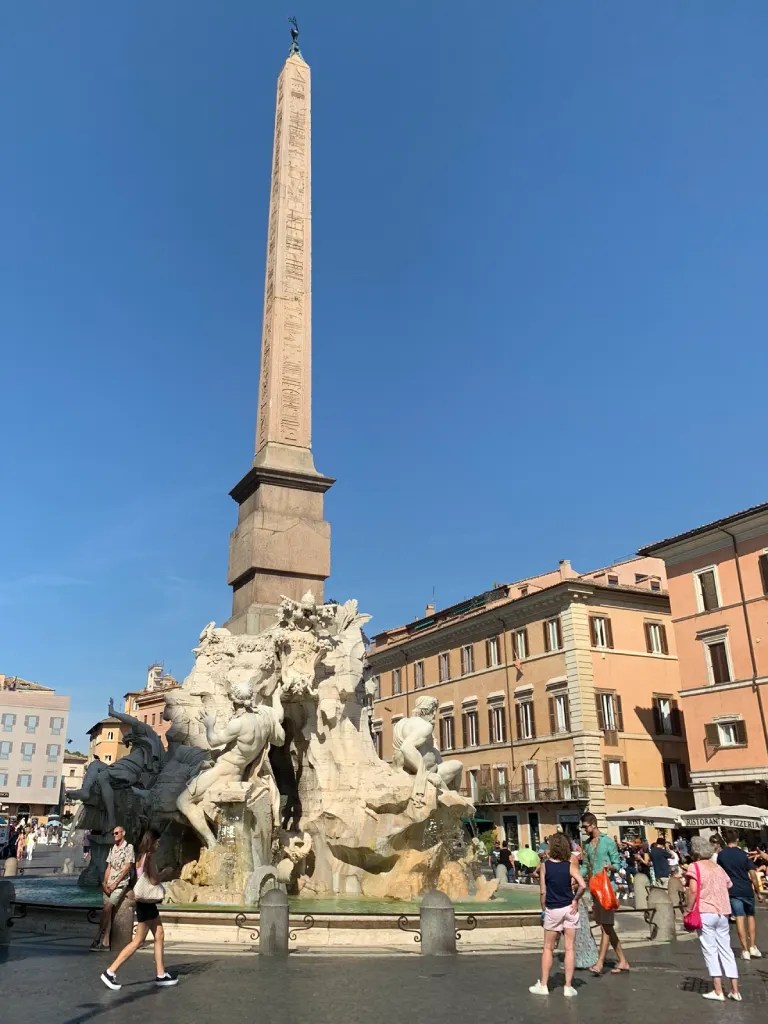
Just a short stroll away is Piazza Navona. Once a Roman stadium, it’s now framed by Baroque palaces and fountains, including Bernini’s Fountain of the Four Rivers. Fans of Dan Brown will recognize it instantly from The Da Vinci Code.
The Pantheon
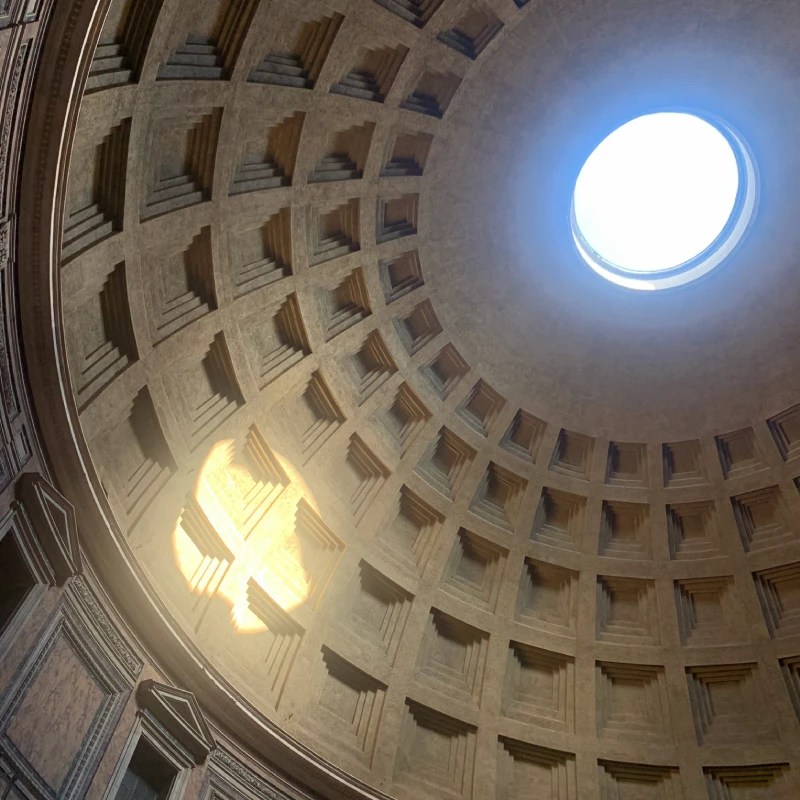
Wander onward to the Pantheon, one of the city’s marvels and one of the best-preserved structures of ancient Rome. The rotunda’s geometry and its oculus, open to the sky, never fail to awe. There is a small admission fee, and be prepared for a queue.
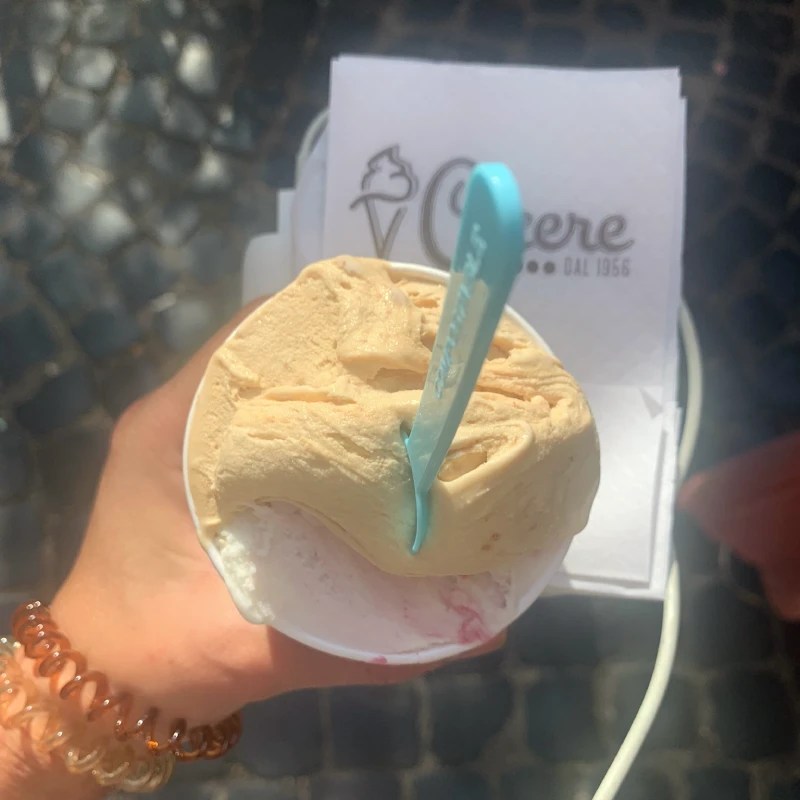
Before moving on, we stopped at Gelateria Cecere for an obligatory gelato.
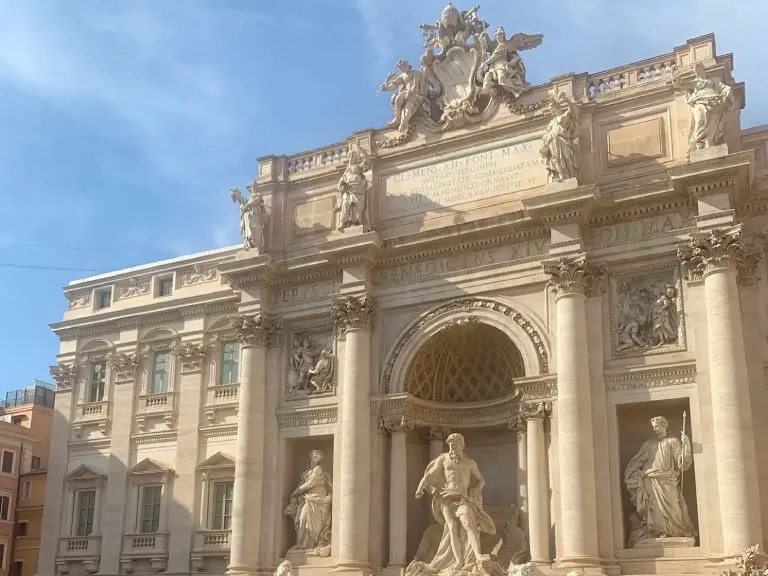
Trevi Fountain
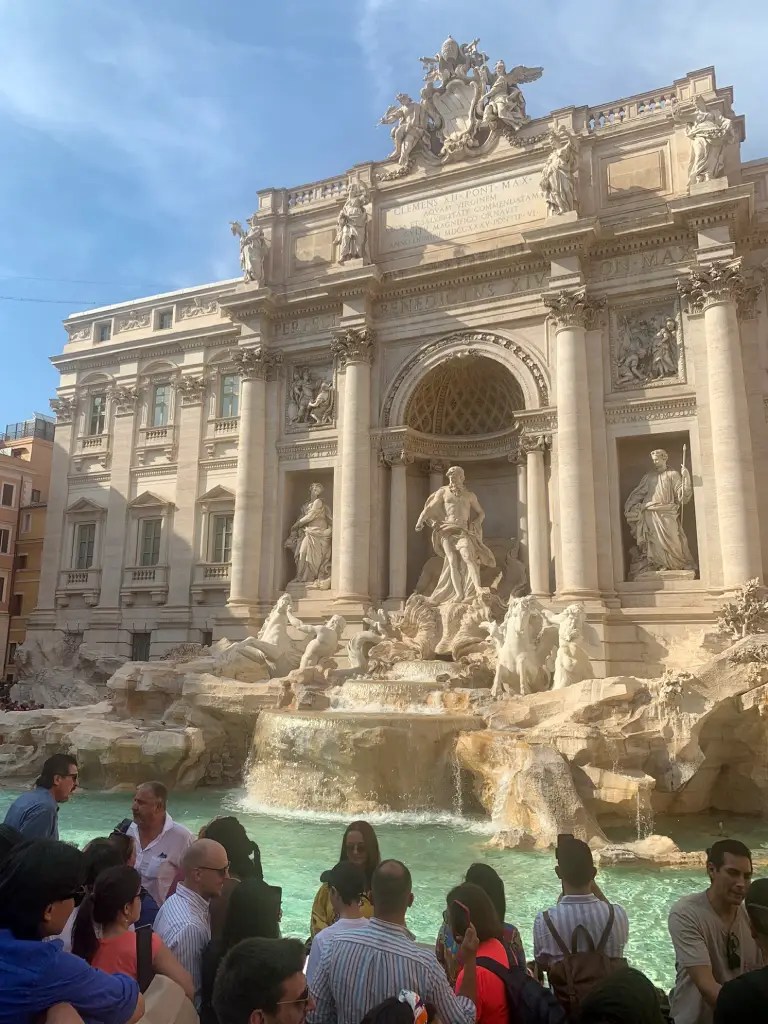
From the Pantheon, follow the narrow cobbled streets to the Trevi Fountain, one of Rome’s most famous (and most photographed) spots. You won’t be able to avoid the crowds.
Where to Eat (and Where to Espresso)
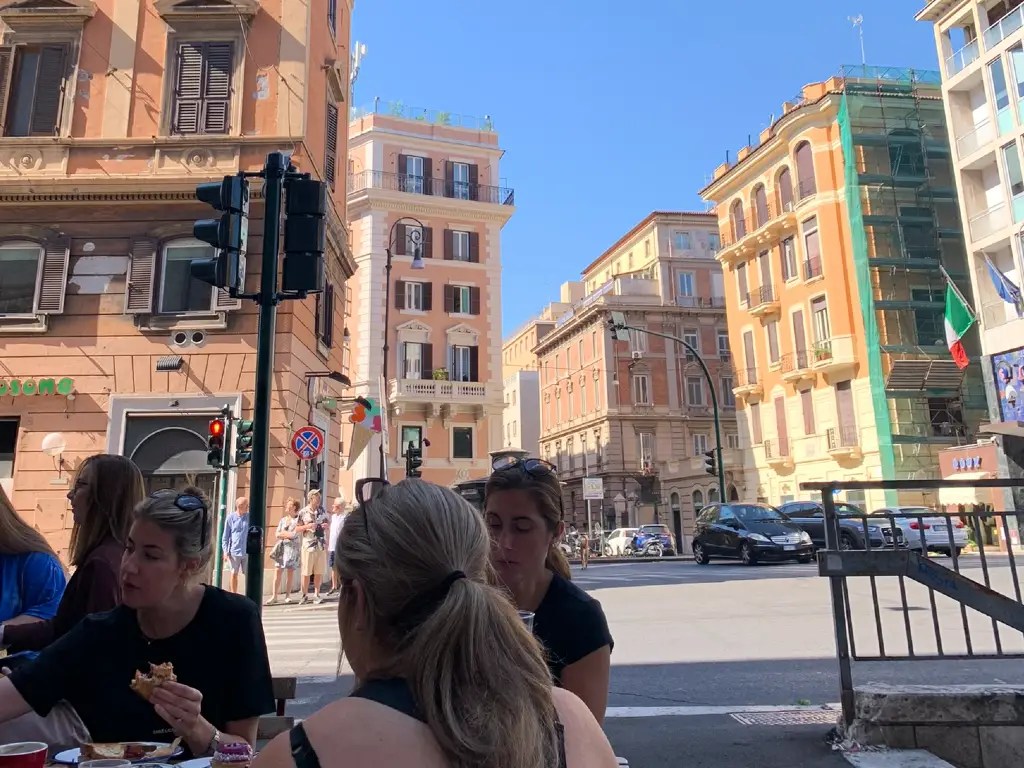
Faro Caffè. Our first stop in Rome (before museums, monuments – even a shower!) was Faro Caffè, a modern coffee bar with streetside seating. The menu is available in English, and the staff were quite friendly.
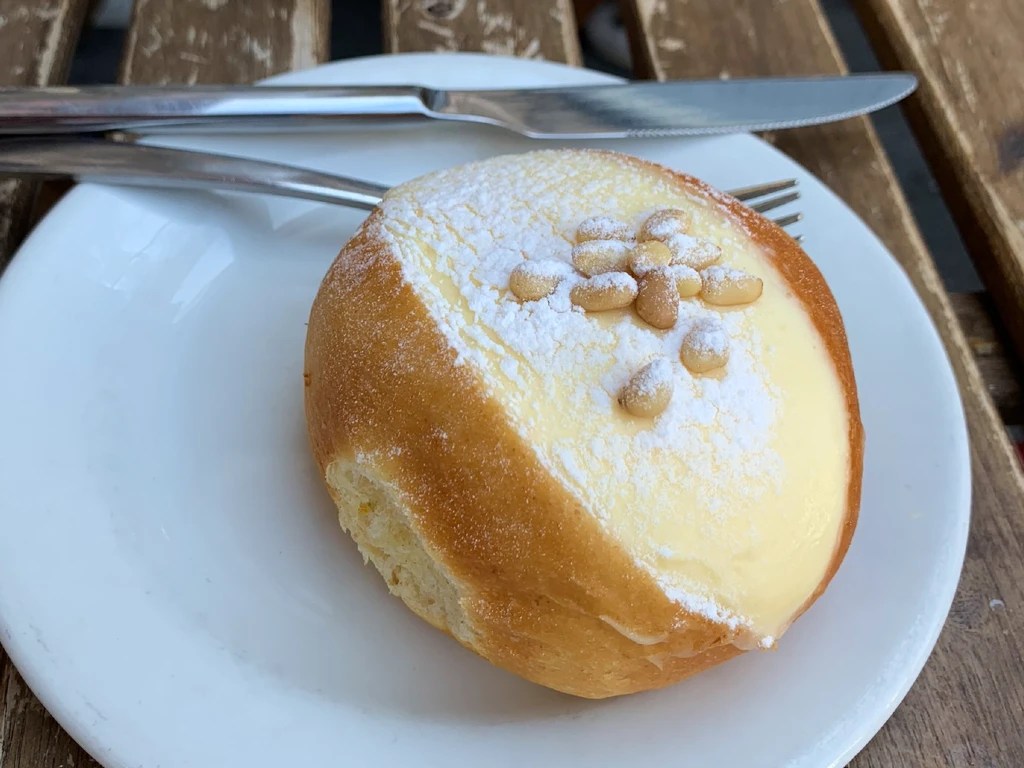
I don’t normally drink coffee, but when in Rome, I do. I ordered an espresso and shared a maritozzo (a Roman sweet bun filled with whipped cream) with my friend. A quick burst of caffeine, a place to collect ourselves, and a bite of Roman pastry was just what we needed before heading out to explore the city.
Faro also sells beans from Aliena Coffee Roasters, whose futuristic packaging caught my eye – a fun souvenir if you’re a coffee lover (or shopping for one).
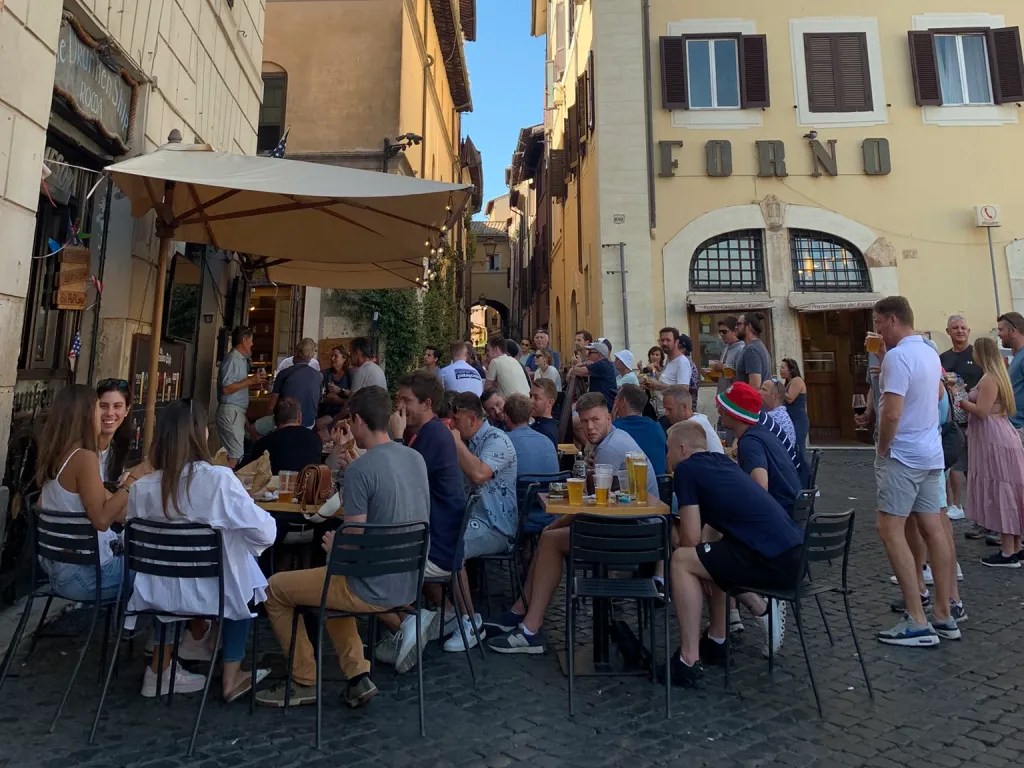
Forno Campo dei Fiori (Centro Storico). This legendary bakery sits right on the piazza and serves the city’s famous crisp and chewy pizza bianca, sold by the cut (al taglio). Just point to whatever looks good, or better yet, take a local’s cue and turn it into a pizza sandwich with mortadella and rucola tucked inside.
Stand outside, snack in hand, and watch the city swirl around you. When we stopped by, the Ryder Cup golf tournament was in town. The crowd watching at The Drunken Ship pub spilled out onto the corner. We grabbed a couple of cold Peroni to go with our pizza.
Da Enzo 29 (Trastevere). For a true taste of Roman dining, head to Da Enzo – beloved by tourists and locals alike. There are no reservations here, and that’s part of the fun. If it were the kind of spot that took reservations, you’d miss half the experience.
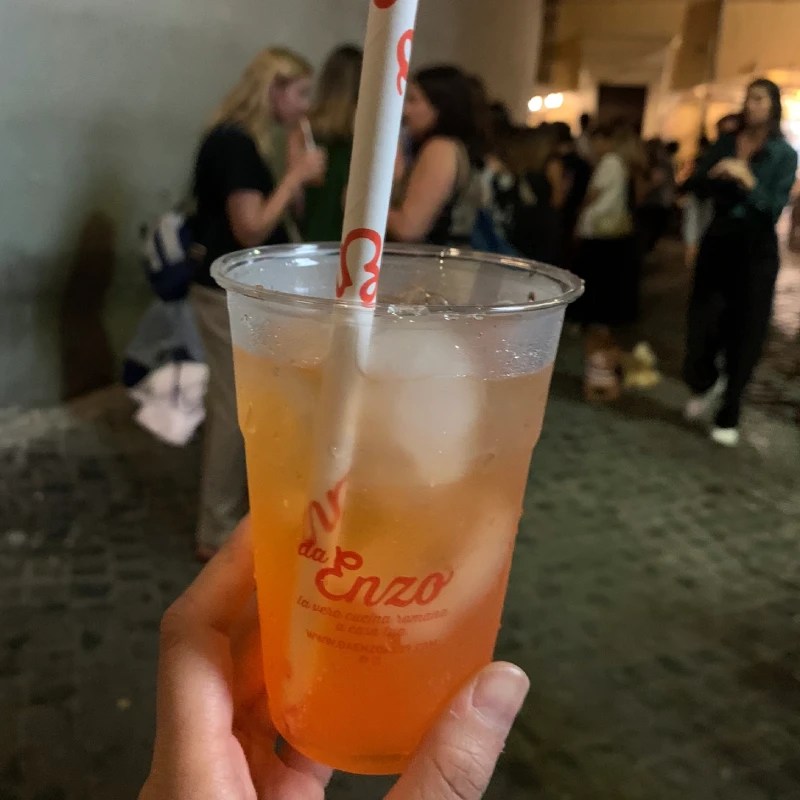
The narrow cobblestone street outside was buzzing with a mix of locals, Ryder Cup visitors, and travelers like us waiting for a table. No one seemed to mind the hour-and-a-half wait. Soon we were sipping Aperol spritzes through striped paper straws, while people-watching and keeping jet lag at bay.
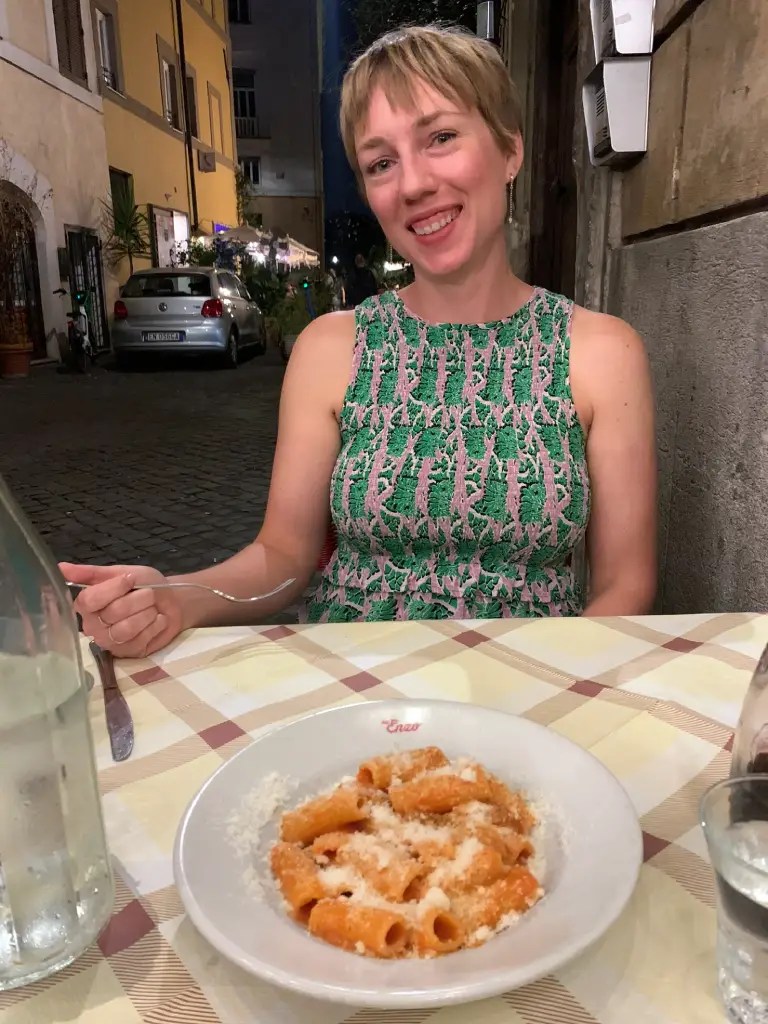
We sat down close to 10 p.m. more than ready to eat. We started with polpette (meatballs) and sautéed chicory with chiles, then shared two classic Roman pastas, amatriciana and alla gricia, with a half carafe of house red wine. We finished with tiramisu.
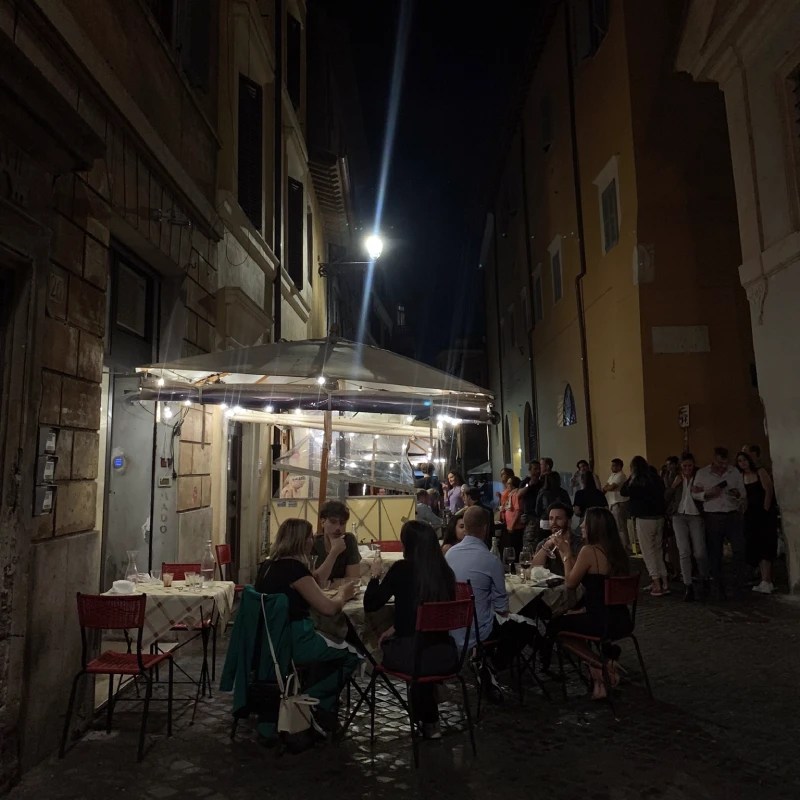
My kitten heels didn’t fare well on the cobblestones (completely unnecessary, as it turned out) but it was a small price to pay for an evening that felt quintessentially Roman.
Roscioli (Campo dei Fiori): We tried and failed to snag a table at the famed Roscioli, but it remains high on my list. The original location, tucked near Campo de’ Fiori, is a beloved Roman institution that combines salumeria, wine bar, and trattoria in one space. It’s known for its carbonara, creamy cacio e pepe, and extensive wine list.
When Leah later visited me in New York, we managed to experience a slice of it at the newly opened Roscioli NYC.
Where We Stayed
Near Termini: The Smart Choice for Traveling Beyond Rome
If your travels through Italy include connecting by train to other regions – like Puglia – staying close to Roma Termini can save valuable time and make your next leg of travel smoother. Termini is Rome’s central rail hub, connecting high-speed trains, regional routes, and the Leonardo Express from the airport.
We stayed in an Airbnb near Villa Borghese on the front end of our trip. The neighborhood had a welcome residential feel. Within walking distance were an excellent café, a cool vintage shop (Molayem Art), and plenty of green space.
Though we weren’t in the immediate center of the main sights, they were a short ride away. It’s a great setup if you want to make the most of limited time in Rome: enjoy an afternoon walking tour, while positioning yourself for a convenient departure the next morning.
If you prefer a hotel over an apartment, I also considered Generator Rome (sister to the design-forward Freehand Hotels family), a boutique hostel just a five-minute walk from Roma Termini, with private rooms, dorm options, two bars, and a café.
Lido di Ostia: A Charming Seaside Alternative to an Airport Hotel
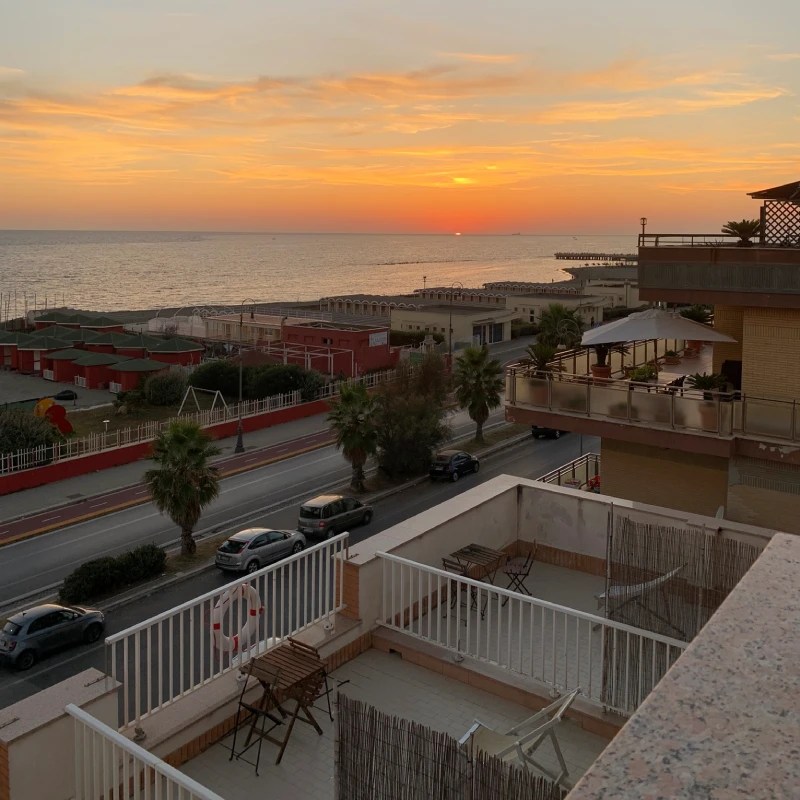
Have an early flight home from Rome? Consider trading an airport hotel for a seaside stay in Lido di Ostia. Just 30 minutes from Fiumicino Airport, this coastal neighborhood is technically part of Rome, yet feels a world away.
Ostia stretches along the Tyrrhenian Sea, with wide sandy beaches, umbrella-shaped Italian stone pines, and an easygoing energy that feels more small town than capital city. You’ll find plenty of cafés, gelaterias, and casual seafood spots, as well as a long waterfront promenade – the Lungomare di Ostia.
Getting To Ostia From Fiumicino Airport
Staying in Ostia means you can skip the stress of crossing the city during peak traffic. For our early flights back to the U.S., we arranged a transfer through our hotel so we were guaranteed a ride.
Originally, I’d looked into spending the night at hotels which include a free airport transfer. The room rates were high enough that it made more sense to stay somewhere we preferred and simply pay for our own ride. It was the right call: better value and more picturesque surroundings, with proximity to the airport.
Where To Stay: Hotel Sirenetta
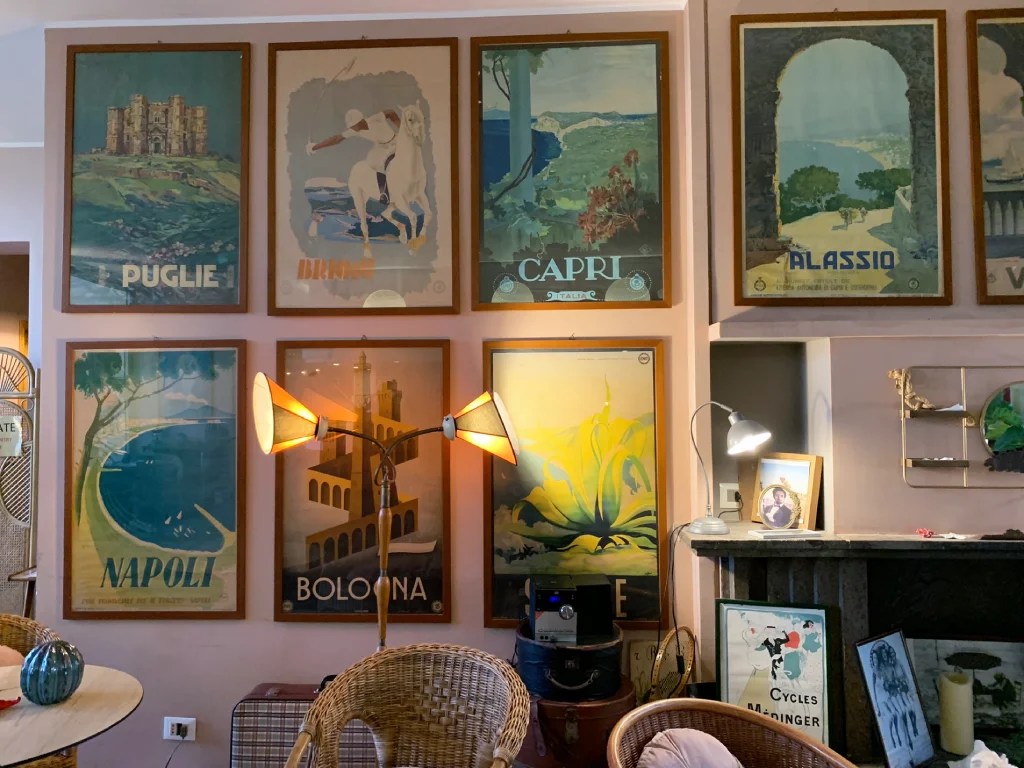
We stayed at Hotel Sirenetta, a vintage, slightly eccentric seaside hotel with Wes Anderson vibes – retro travel posters, wicker seating, and a time capsule of a lobby. While the rooms could use a refresh (as some Google reviewers point out), it was perfect for a one-night stay. Watching the sun set over the ocean on our final night in Italy felt infinitely better than watching planes taxi on a runway.
On our last night, we had dinner al fresco and popped into Conad, a local grocery chain, for my favorite kind of souvenirs: edible ones. (I stocked up on rolls of Orange Fanta Mentos and packs of Nutella biscuits for the folks back home.)
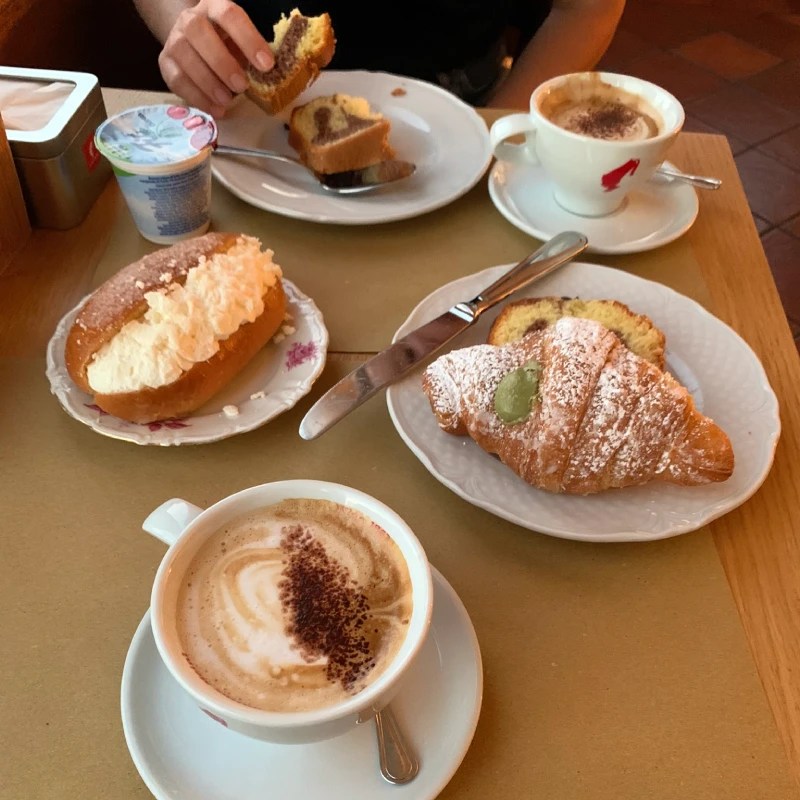
Before heading for the airport, we enjoyed one last breakfast buffet (included in the room rate), including made-to-order cappucinos, a pistachio-cream filled croissant, and one last maritozzo.
Memorable glimpses of a place can happen in the quiet stretches between destinations: during stopovers, and in the hours between arrival and departure.
When I first came to Rome fifteen years ago, it overwhelmed me. This time, with only a day and a night to spare, I did my best to savor the time I had.
Our brief Roman holiday reminded me that travel isn’t only about where we go, but how we move through the in-between – staying open to small discoveries, even when time is short.
It doesn’t always require an elaborate agenda or a calendar full of reservations to experience the energy of a place.

Leave a comment