
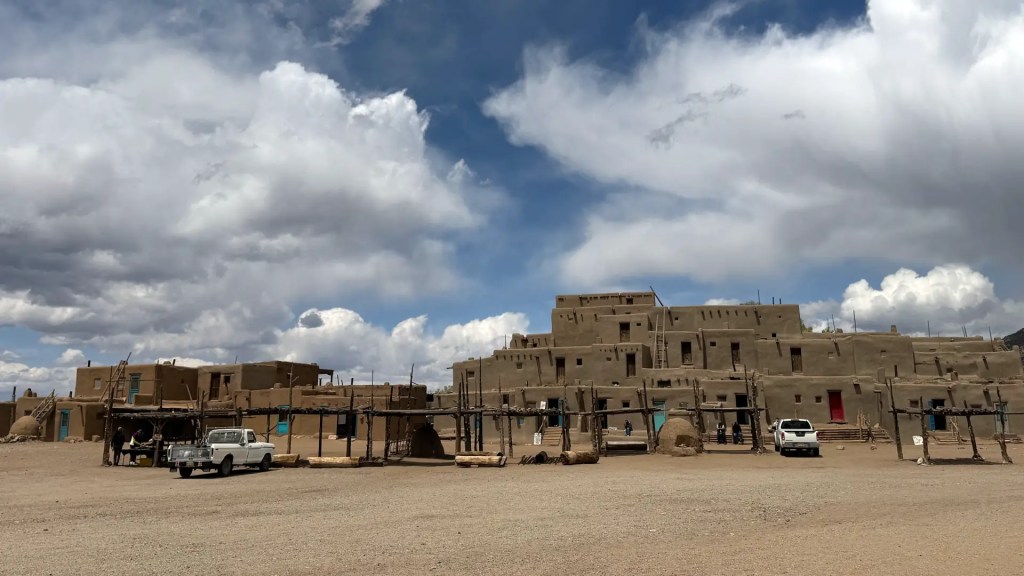
I’m a city girl who loves getting out of the city – and in Northern New Mexico, you must. Taos was the second stop on our road trip and our home base for exploring the Enchanted Circle. The scenic loop winds through small towns and ever-changing terrain, from alpine forest to sunbaked canyon. While we dipped into Taos proper for craft beer and craft goods, we found the real magic on the road, and out on the trails.
- Taos Itinerary At-A-Glance
- When To Go
- Driving the High Road to Taos from Santa Fe
- Where To Stay
- Where To Eat
- Where To Drink
- Things To Do In & Around Taos
Taos Itinerary At-A-Glance
- Day 0.5: (Sunday): Day – Drive High Road to Taos from Santa Fe. Lunch at Rancho de Chimayo, Santuario de Chimayo, stop at San Francisco de Asis Church before checking into Hotel Luna Mystica (Taos). Night – Dinner and a beer at Taos Mesa Brewing.
- Day 1 (Monday): Day – Devisadero Loop trail in AM, taco truck lunch, drive Enchanted Circle Drive PM, shopping in Arroyo Seco. Night – Dinner in Arroyo Seco.
- Day 2 (Tuesday): Day – Rio Grande Gorge Trail and Bridge, Breakfast Burritos at Abe’s Cantina (Arroyo Seco), Visit Taos Pueblo. Lunch at Manzanita Market in Taos before driving to Ojo Caliente Spa.
Note: This post contains affiliate links. I may earn a small commission if a purchase is made through these links, at no extra cost to you. I only include links to products, properties or services I have direct experience with, have seriously researched, or would personally recommend.
When To Go
Our trip to New Mexico took place from late April into early May – either just before or right at the edge of high season. Hotel rates ranged from reasonable to competitive, depending on the style of lodging. No place ever felt overrun, and navigating major attractions never required battling crowds.
That said, weekend dinner reservations at popular spots in Santa Fe were in high demand. Booking a few days out was competitive, but not impossible – especially if you’re open to sharing a table.
Spring weather north of Santa Fe, however, has a few quirks worth knowing. Mornings are typically sunny and bright, while afternoons can turn gusty, and nights are colder than you’d expect. During the day, temperatures hovered in the high 60s to low 70s. In Taos, we saw lows dip to 35°F, with one evening hitting a RealFeel of 25°F.
Pack layers. Even if the forecast calls for sunshine. In spring, it’s often too chilly to sit outside and stargaze comfortably unless you’ve got a fire going.
One more note: seasonal businesses and shops in rural areas or smaller towns (especially along the Enchanted Circle) may not yet be operating at full capacity. Before you make a detour for a specific gallery, restaurant, or museum, it’s smart to call ahead – Google listings weren’t always accurate during our visit.
Certain businesses in Taos and small towns, including galleries, restaurants, and breweries, follow a schedule catering to peak tourist season (summer). Confirm re-opening dates before booking travel.
Driving the High Road to Taos from Santa Fe
While the “Low Road” from Santa Fe to Taos is the quicker route, taking the “High Road” rewarded us with a scenic journey through historic Spanish villages and artistic communities, offering chances to discover local handicrafts, sacred healing dirt, and a landscape immortalized by Georgia O’Keeffe. The drive takes ~90 minutes without stops.
Chimayó Weaving Village
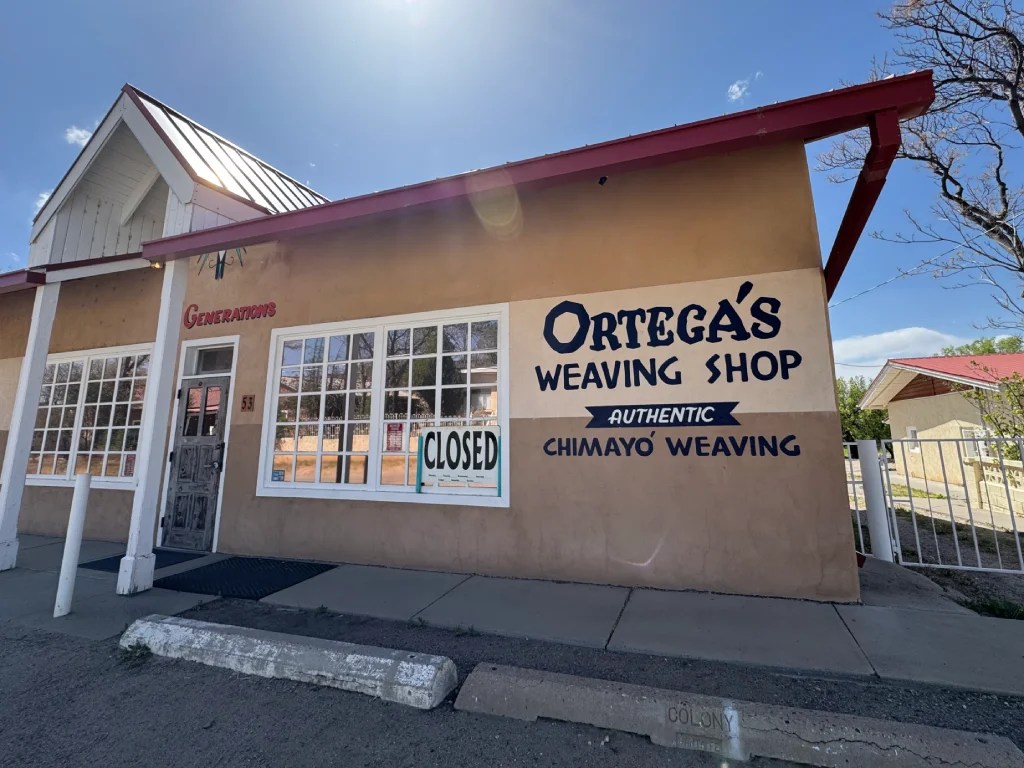
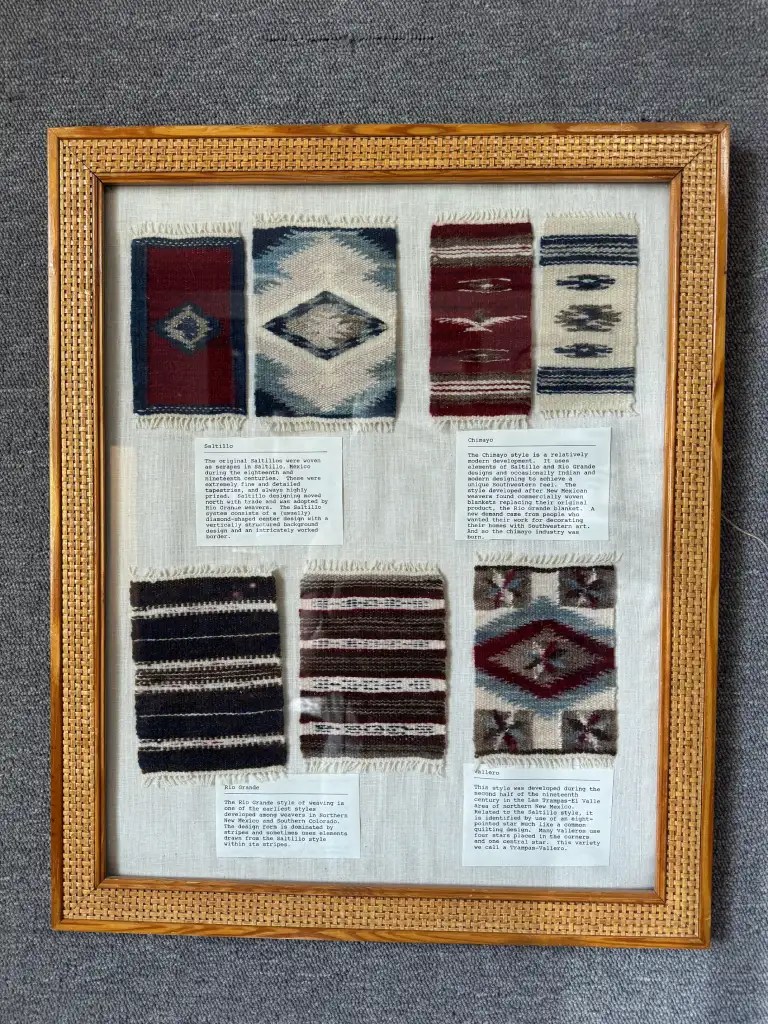
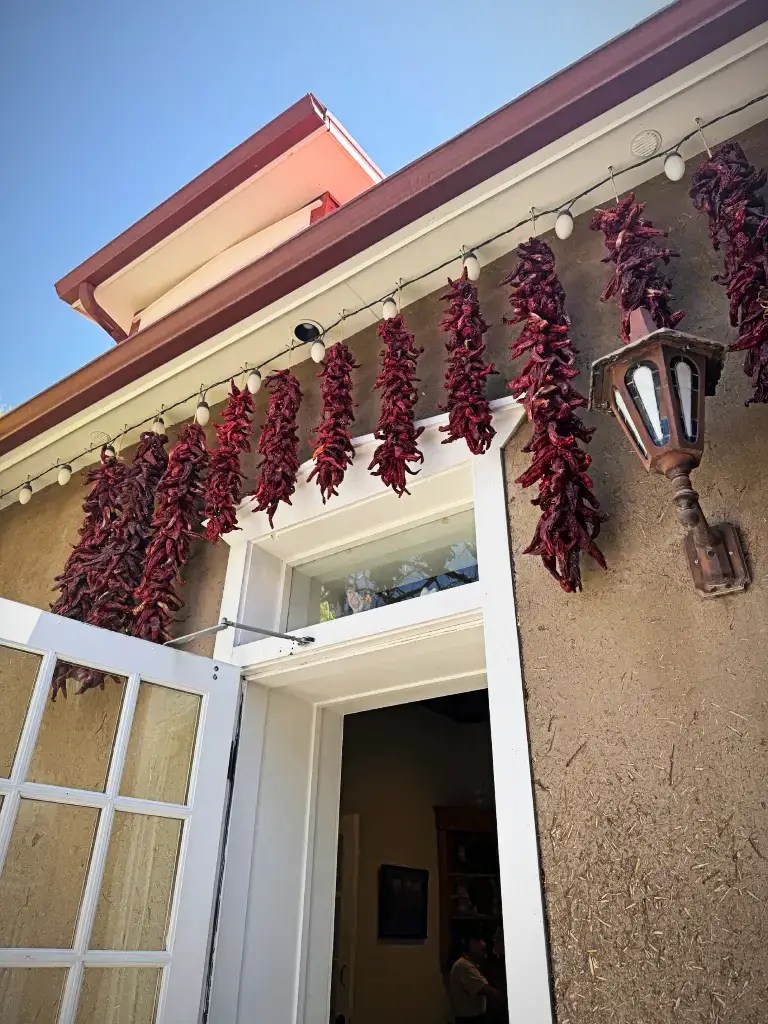
We set out along the High Road to Taos most excited to visit the weaving village of Chimayó. Unfortunately, our bubble burst when we learned that both Trujillo’s and Ortega’s – both well-regarded Native American weaving families – were closed on Sunday (a reminder to always check the hours). Centinela Traditional Arts was open, however, so we were able to pop in and marvel at the heirloom-level textile work.
Rancho de Chimayo
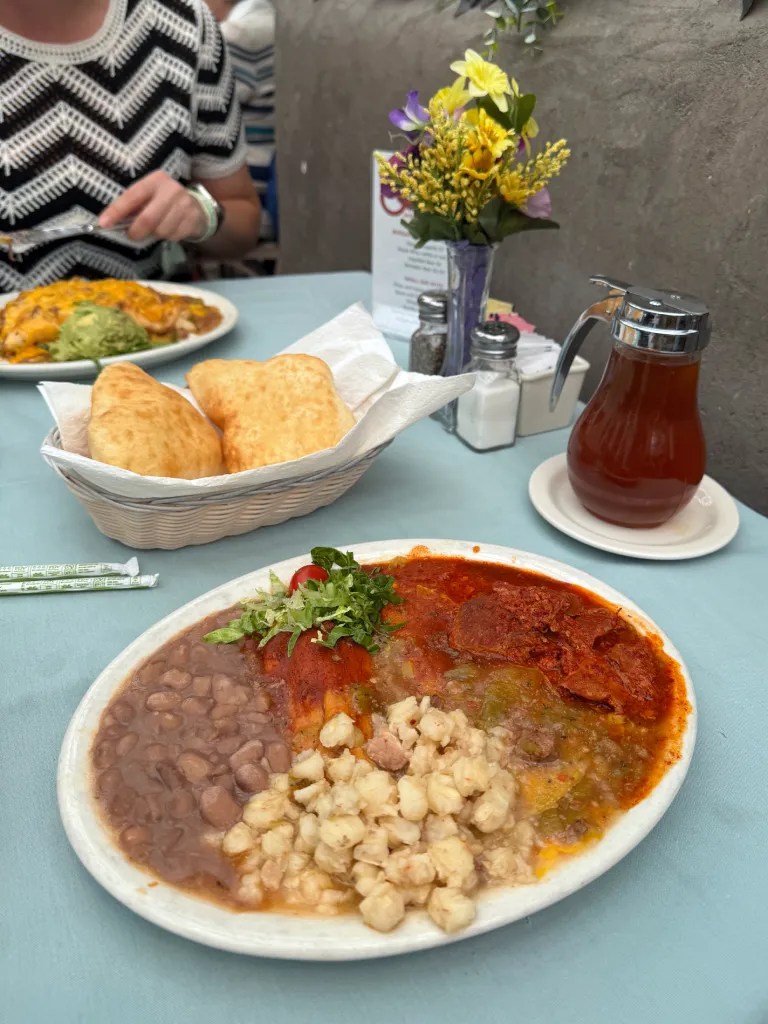
Lunch was at Rancho de Chimayó, a beloved institution celebrating its 60th anniversary. We waited about 45 minutes to be seated in the (very warm) sun room. I went for the Combination Picante plate, featuring their signature carne adovada, a pork tamale, and a rolled cheese enchilada, Christmas style. Leah opted for the massive cheese-smothered stuffed sopapilla with beans.
Carne Adovada is a traditional New Mexican dish featuring slow-cooked pork in red chile sauce, and is one of Rancho De Chimayo’s specialties.
The food didn’t blow us away compared to other restaurants we’d visited serving similar fare, but the servings were generous. And who could ever refuse complimentary house-made sopapillas with honey?
Santuario de Chimayó
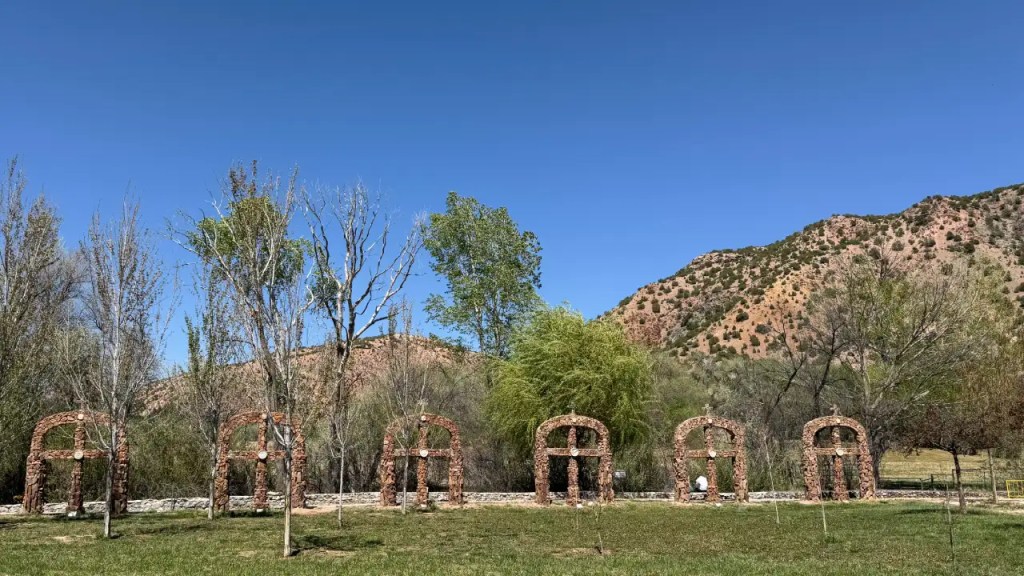
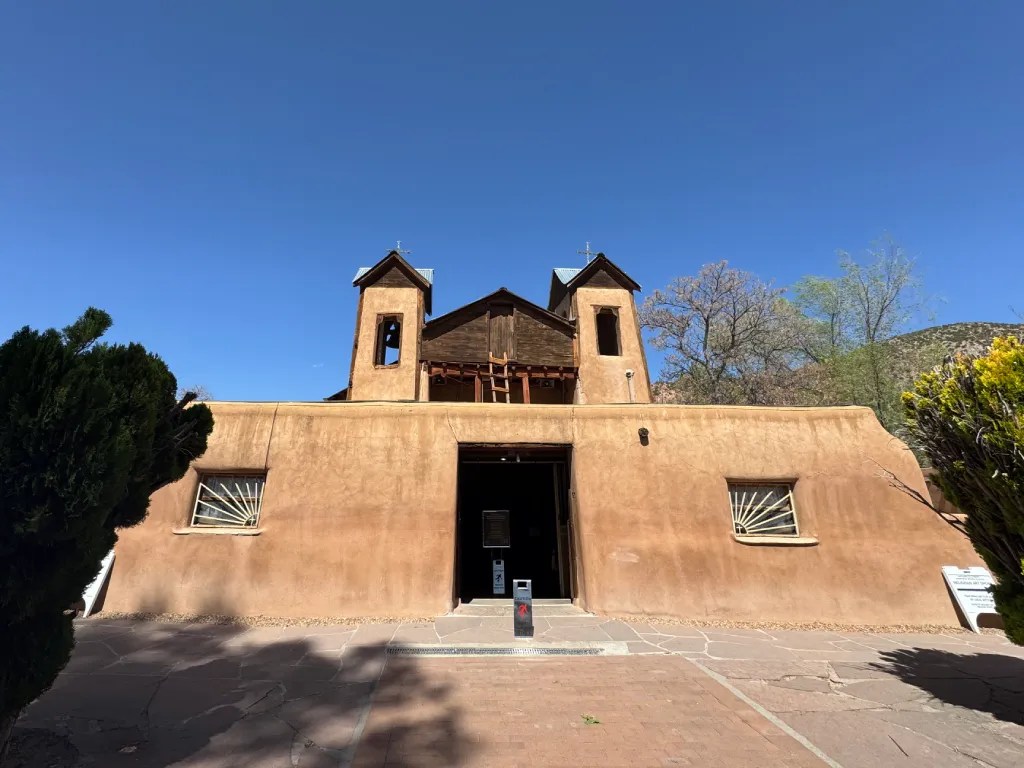
After lunch, we visited the Santuario de Chimayó, famous for its holy dirt. I assumed this would be a quick stop, but the site includes multiple chapels, peaceful grounds, and a few gift shops, so plan accordingly. The Holy Dirt Room (El Pocito) is clearly marked. If you’re hoping to take sacred dirt home, bring a container (we were ready with ours, thanks to the desk staff at The Mystic). Note: no photos are allowed in El Pocito.
Plan Ahead: Bring a small container (a condiment cup with lid from a take-out restaurant will do) if you plan to take some sacred dirt from Santuario de Chimayó home with you.
Rancho de Taos
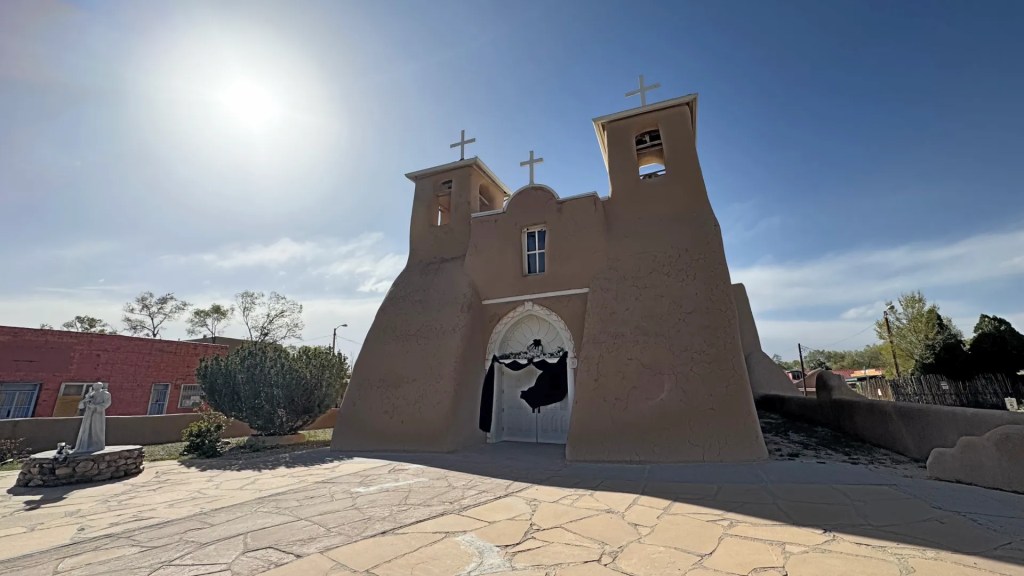
Later that afternoon, we stopped by San Francisco de Asís in Rancho de Taos (a.k.a. Ranchos Church), photographed by Ansel Adams and painted by Georgia O’Keeffe. We arrived around 4:00 PM, just as the wind started to pick up, and had the place nearly to ourselves. The church itself was closed, but seeing its adobe silhouette was worth a stop.
Near the church is Chimayo Trading del Norte, another well-curated mercantile for art and gifts. I was intrigued by naturally-formed staurolite “fairy crosses” displayed in a glass case and meticulously painted straw-inlay crosses by Santa Ana Pueblo artist Carlton Gallegos. Leah picked up some teeny turquoise studs to complement the earrings she picked up in Santa Fe, and we continued on our way to our home base in Taos.
Where To Stay
Hotel Luna Mystica (El Prado)
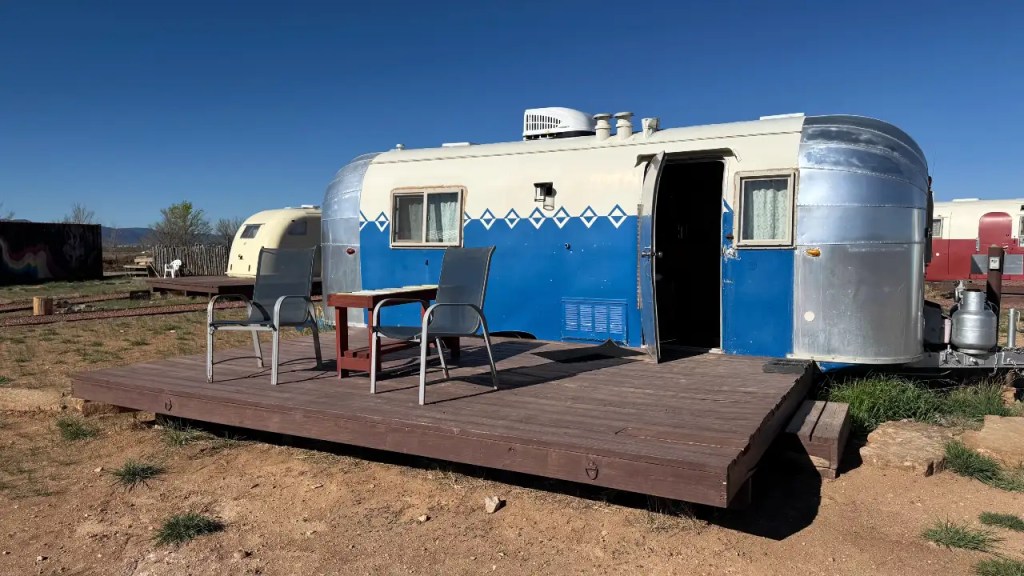
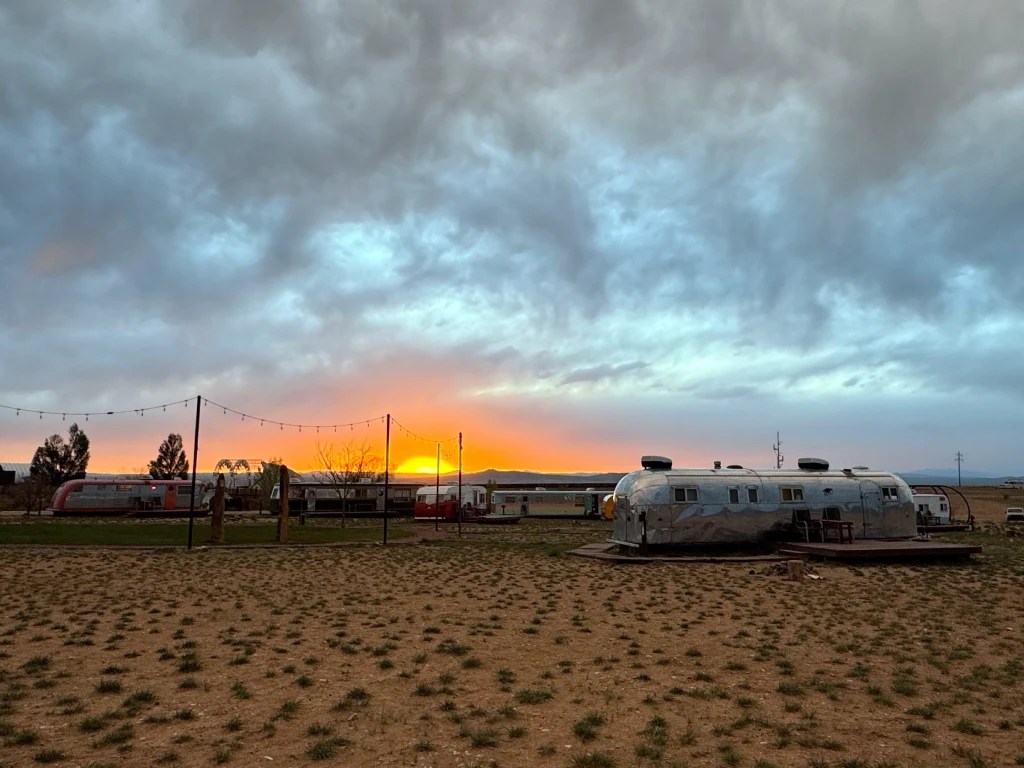
“Hotel” is a generous term, but Hotel Luna Mystica has its merits, especially if you’re excited by the idea of sleeping in a vintage Airstream with views of the Sangre de Cristo Mountains.
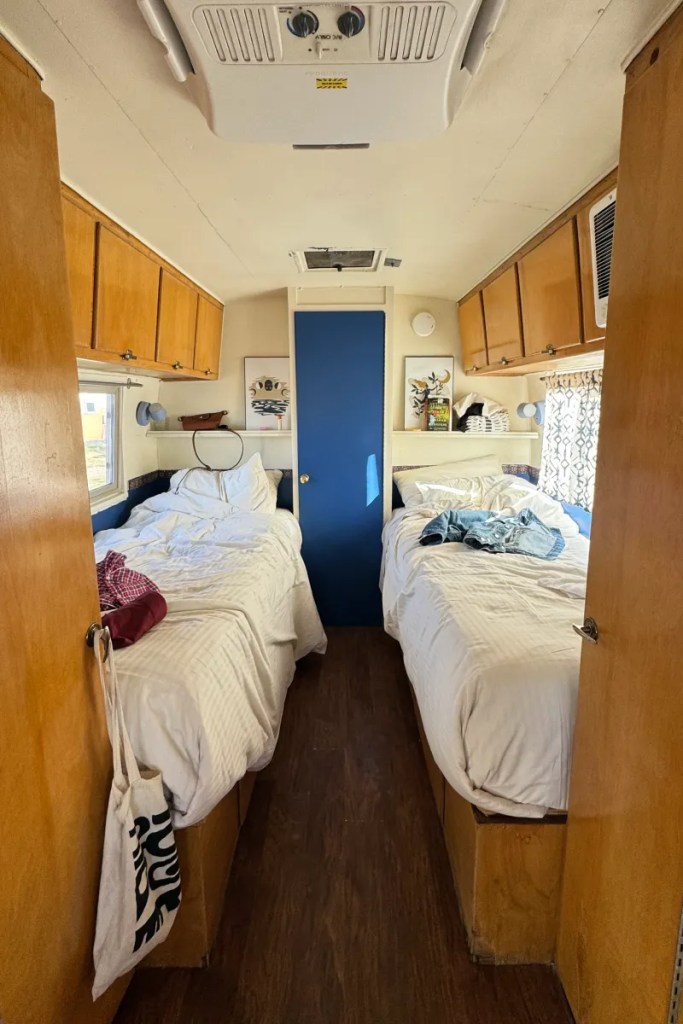
We stayed in Thelma, which had two twin beds and a half-bath (no shower). Spring winds made it too chilly to enjoy the deck at night. We kept the heat running most of the time (the unit was more than a little dusty, heads up if you have allergies). There was no housekeeping (perhaps because it was early in the season). Storage is tight, so pack light if you’re sharing the space.
Not all trailers at Hotel Luna Mystica have in-room showers. If this is a priority, be sure to review the details of your trailer before booking.
The trailers are closer to one another than we expected them to be. As we were admiring the sunset, we could see straight into our neighbor’s.
In its favor, the Denver Mattresses were comfy and the views at sunset were beautiful. The sink water is potable, and the trailer was stocked with Stash tea bags and coffee.
Note: Not all trailers have showers. Ours didn’t, and luckily the outdoor shower shack was close by. If you’re particular, double-check your trailer’s amenities when booking. Hospitality at check-in was minimal, and the service could have been more proactive given the price point and setting.
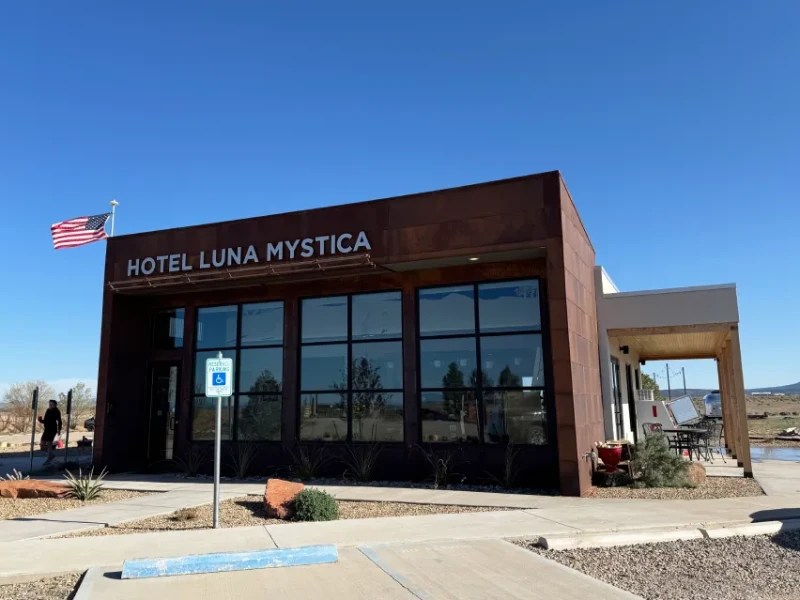
The modern reception makes Luna Mystica easy to spot from the road (though feels incongruous with the trailer setup). It has additional beverages, snacks, and an abundance of trendy swag for sale if you’re in need.
I recommend bringing a sleep mask (there are no blackout shades), warm pajamas, and moderate expectations (don’t expect hotel-level service). Hotel Luna Mystica seems a better fit for flexible travelers than fussy ones.
Where To Eat
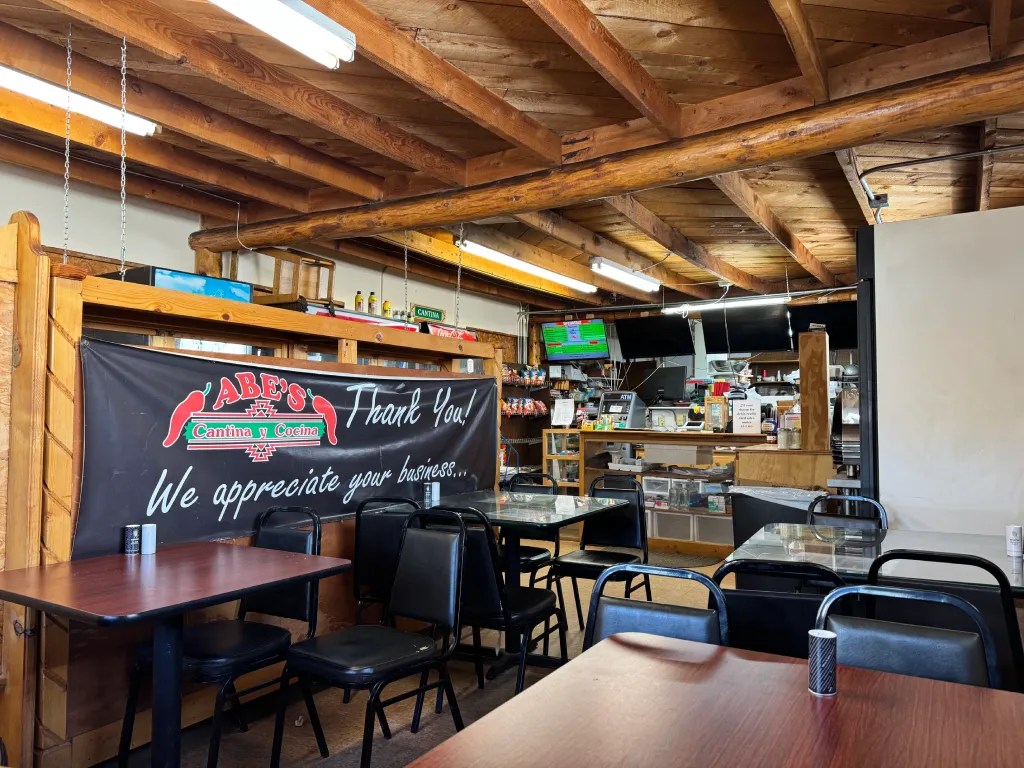
Abe’s Cantina (Arroyo Seco). This casual restaurant with adjoining bar was closed the first time we tried to go (a Monday morning), although the sign out front declared it open. We returned the next morning to try the famous breakfast burrito. IMO, it needed a hit of Tabasco and salt, and a tighter wrap.
If Abe’s is closed and you’re looking for a grab and go breakfast, nearby Sol Food Market, though a little pricey, serves a variety of breakfast entrees, pastries, and a very spicy chai tea.
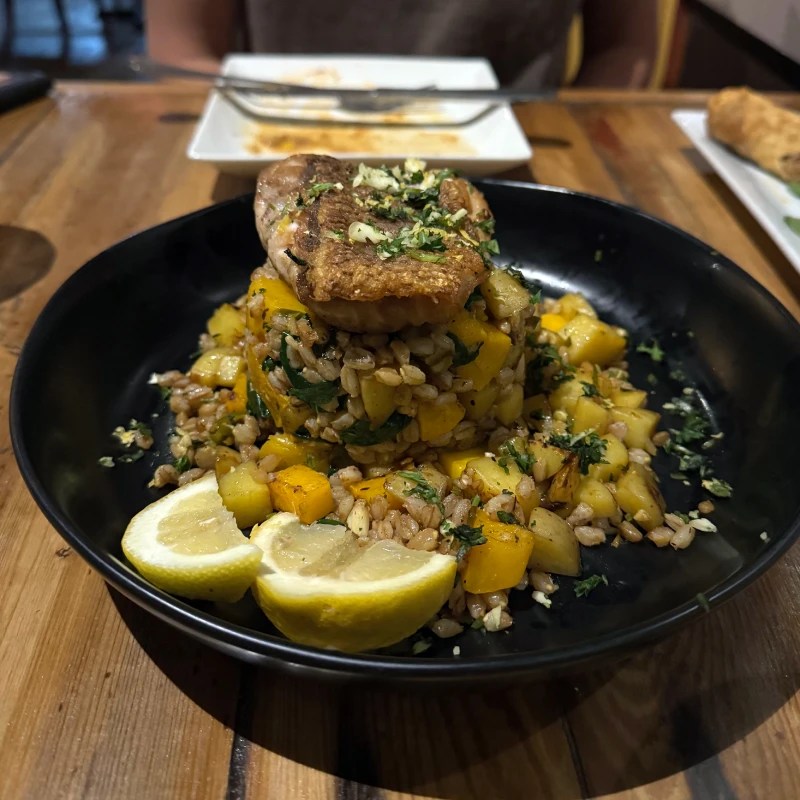
ACEQ (Arroyo Seco). Pronounced A-sekh, not Ace-Q. This cozy spot in Arroyo Seco came highly recommended online. We booked an 8:15 PM reservation (late enough that we could still enjoy the sunset at our “hotel” beforehand.
To start, we had the lion’s mane mushroom cakes (a clever crab cake dupe) served with sunflower sprouts and remoulade, plus the birria spring rolls. They even brought us an extra serving of spring rolls – a perk of “late night” dining. For our main entree, we split the seabass farro salad.
During dinner I sipped on The Figgy Bee cocktail which featured Los Poblanos botanical gin, fig jam, honey simple syrup, and fresh-squeezed lemon juice.
Manzanita Market (Taos). If you need a break from chiles and enchiladas, this bright and welcoming café in Taos proper serves wholesome salads, soups and sandwiches. I had the curried chicken salad sandwich (with apples, almonds and salt-cured lemon aioli) with a side of microgreens. You can even grab a scoop of house-made piñon vanilla ice cream.
The piñon nut is a variety of pine nut native to the Southwest, larger and more rich and buttery in flavor.
Where To Drink
Taos Mesa Brewing. There are two locations of this local brewery – the one right next door to Hotel Luna Mystica (“the Mothership”) and the tap room proper in Santa Fe. The Mothership is a seasonal location that hadn’t yet opened for the season when we visited, which also hosts live music shows.
We visited Taos Mesa (proper) on a quiet Sunday night when we needed a night off from Southwestern cuisine. I had a pint of the Koenig German lager and a small Caesar salad with grilled chicken. The chicken was a little dry but just the palate cleanser I’d hoped for. Leah had the golden beet and avocado salad made with shaved fennel, arugula, and feta – fancier fare than your typical brewery.
Things To Do In & Around Taos
Drive The Enchanted Circle
The Enchanted Circle Drive offers a beautiful cross-section of northern New Mexico landscapes, spanning pine forest, high desert mesa, and a sprinkling of small towns. We drove counterclockwise, starting from the Devisadero Loop Trailhead and passing through Eagle Nest, Angel Fire, Red River, and Questa before looping back to Taos.
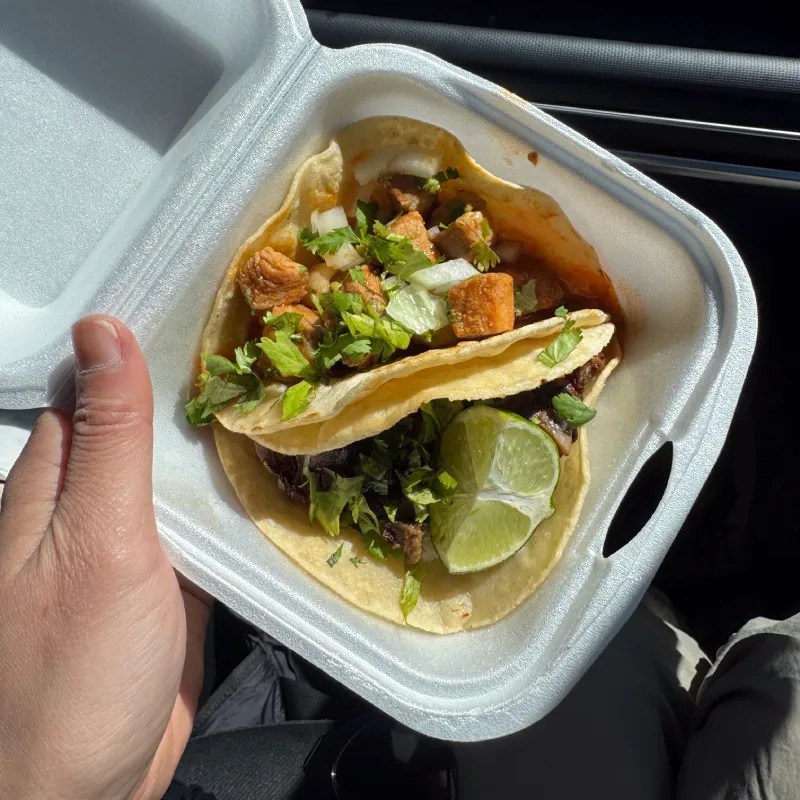
We learned the hard way that not everything is open in the shoulder season, so pack lunch, or roll the dice, like we ended up doing. The well-rated Thai restaurant in Angel Fire I had earmarked for lunch was closed the day of our drive. I spotted a taco truck outside an Ace Hardware, which saved us from hunger – especially considering we’d just completed a challenging hike.
Though we didn’t stop and walk around, Red River looked straight out of a vintage postcard with its log cabins and ski town vibe and we may have stopped to linger more during high season. Regardless, the circle is worth driving for the dramatic scenery changes alone, and the whole thing can easily be done in under two hours without stops.
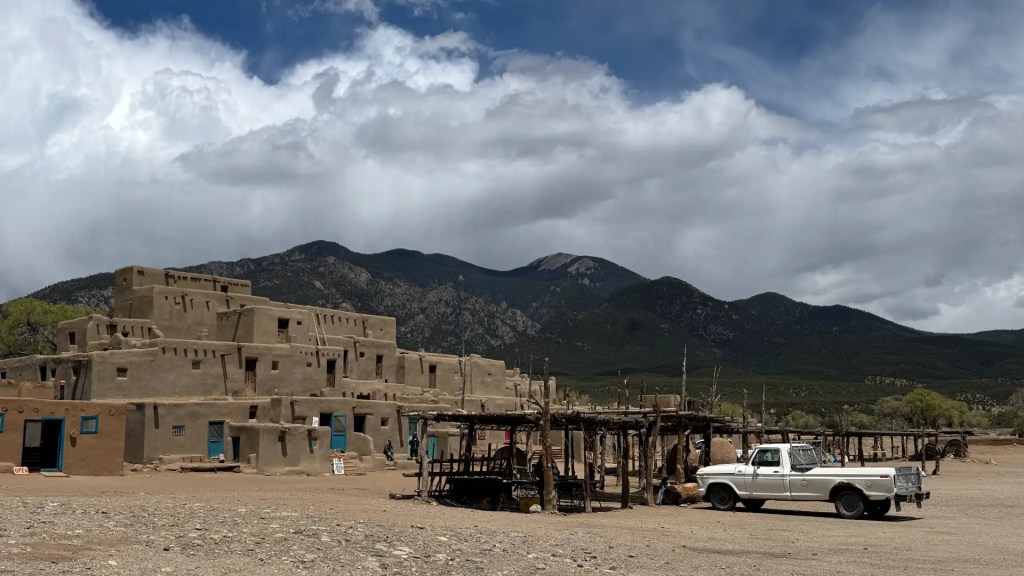
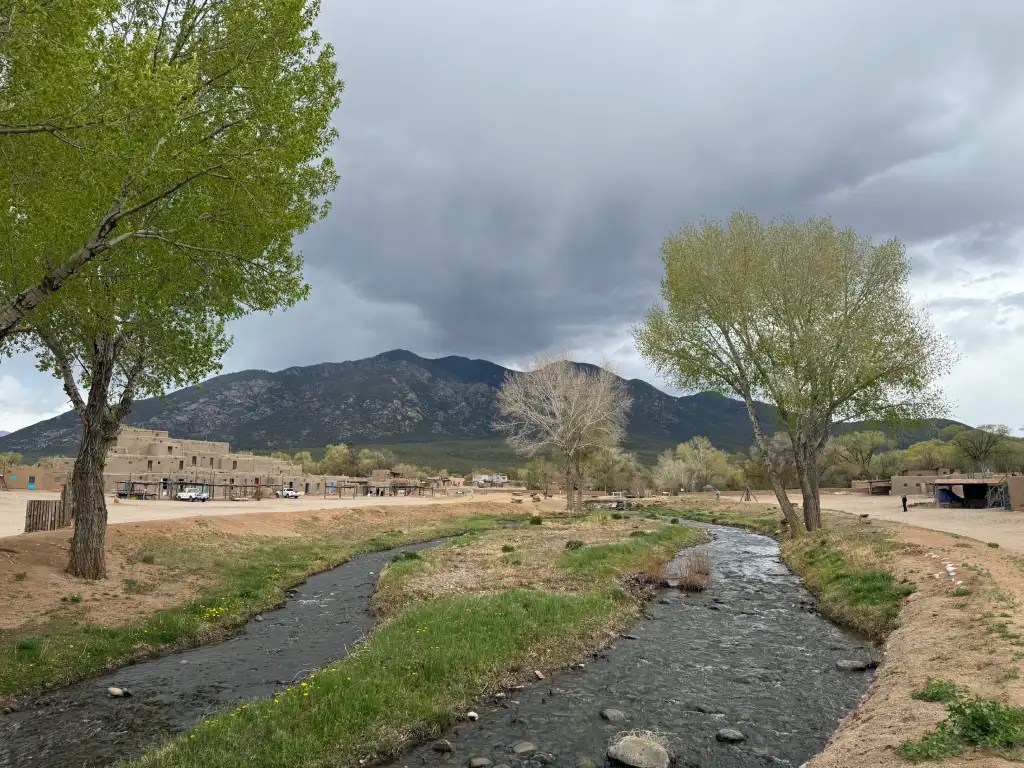
Observe Traditional Life in Taos Pueblo
A living community and UNESCO World Heritage Site, Taos Pueblo is both sacred and storied. You’ll need to pay an admission fee even just to enter and browse the shops, but it feels less like a ticket to an attraction, and more like a contribution to preserving a native community and way of life.
Inside, we found a mix of handcrafted goods, among them, peace pipes carved from quartzite, drums made of stretched hides painted with bear or other animal motifs, hand-beaded jewelry, and more. I lingered over a pair of tiny quill-shaped spiny oyster shell sterling studs priced at under $20 USD. Prices felt very reasonable.
Shops open and close at the discretion of the artisans, since this is their home as well as their workplace. You might find yourself browsing one moment and watching a closed sign go up the next. There are also food vendors roasting cobs of corn and selling traditional breads and cookies.
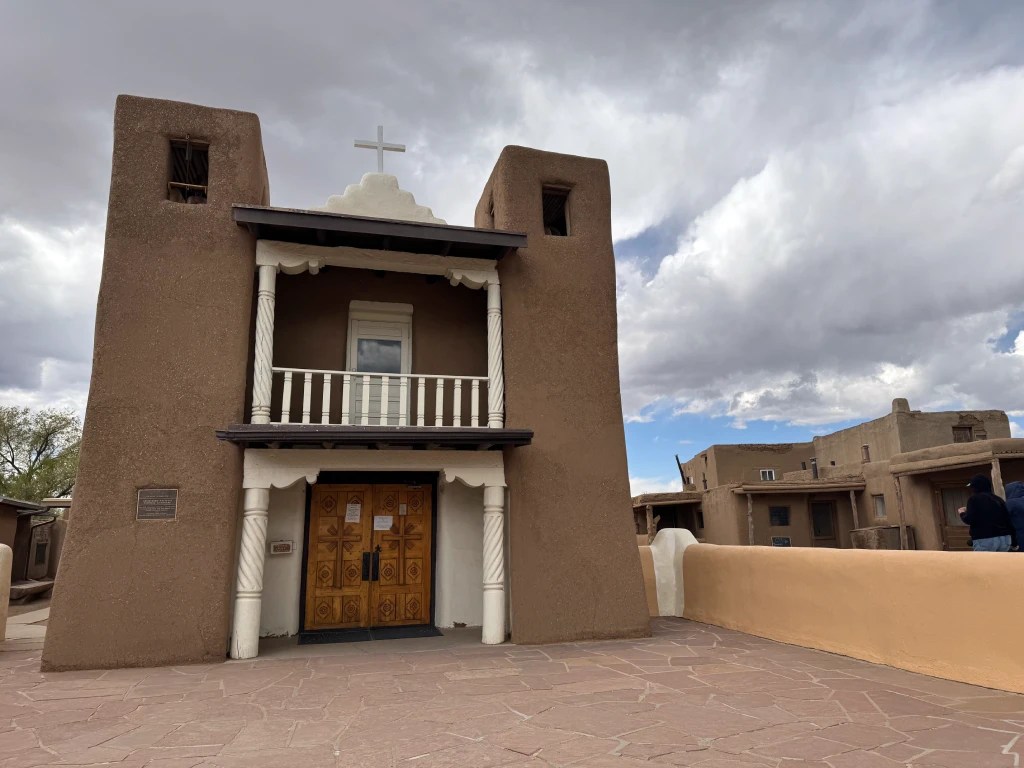
We joined a free walking tour led by student volunteers, which run every 30 minutes from the courtyard of San Geronimo Church. Of all the insights shared, what stayed with me most was how families who belong to the pueblo navigate life within its boundaries and modern life outside it.
One note: Google Maps was not our friend here. Several service roads shown as accessible were actually closed to commercial traffic, which almost frustrated us enough to skip our visit altogether. If you’re planning a visit, follow the directions on the official Taos Pueblo website instead.
To get to Taos Pueblo, follow the directions provided on the official Taos Pueblo website. Google Maps may direct you to service roads which are off-limits to commercial traffic.
Visit Arroyo Seco
This arty, tiny town lies just inside the Enchanted Circle, and is where we spent our time when we weren’t at Luna Mystica or in Taos proper. We ogled the vibrant selection of hand-dyed yarns at Taos Wools (and bravely resisted adding to our respective stashes). Wannamaker Pottery is another small shop with affordable pottery, including ergonomically dimpled ceramic wine cups, in various shades of glaze for just $20 USD (I was particularly fond of the blue ones).
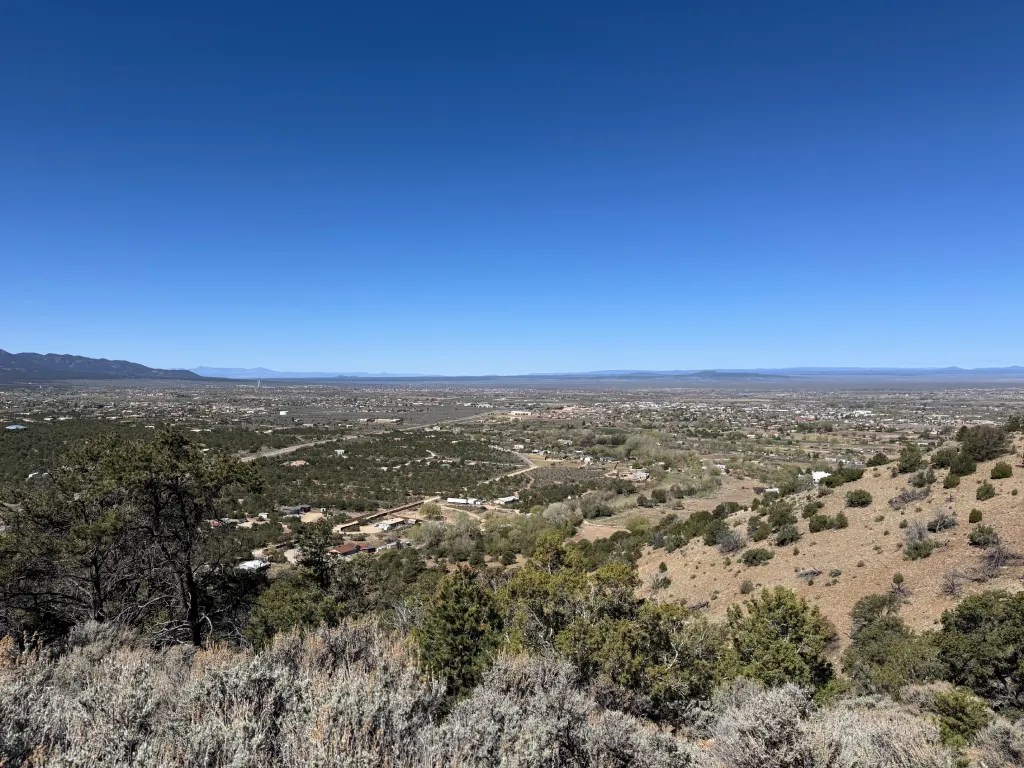
Hike the Devisadero Loop Trail
This is a strenuous, beautiful 3-hour hike (for us, with stops for photos) just outside Taos. Prepare yourself for steep ascents and descents, and sweeping views. We did this hike in the morning before the Enchanted Circle Drive. Our ankles were very excited to be headed to the hot springs afterward.
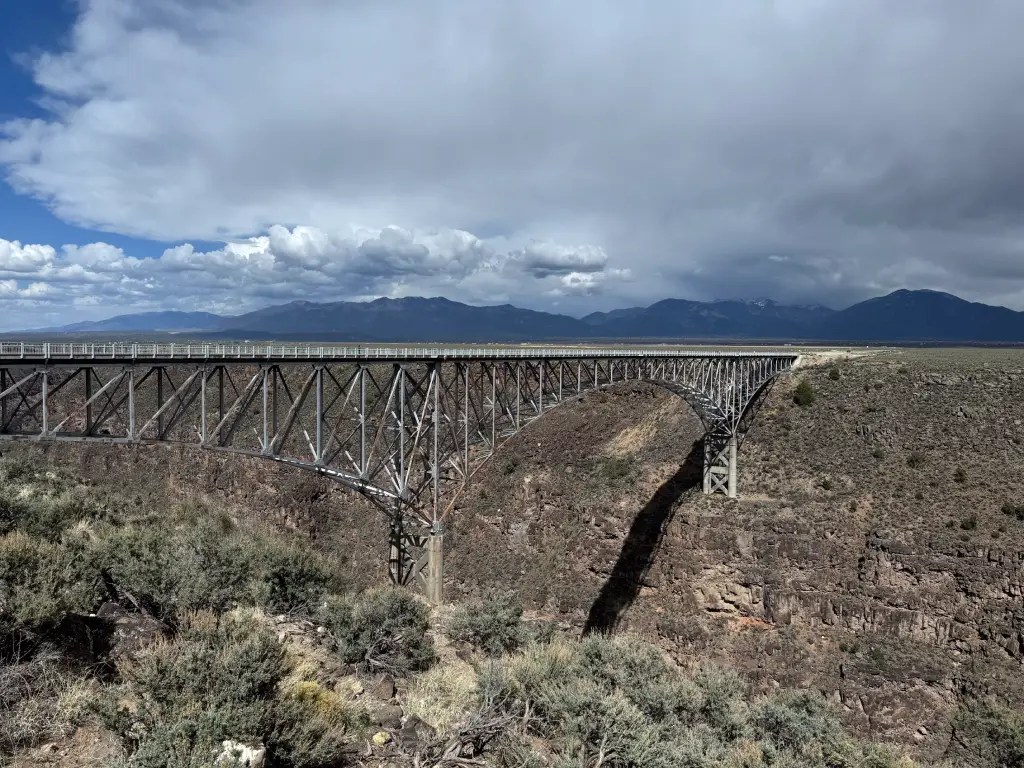
Visit The Rio Grande Gorge Bridge
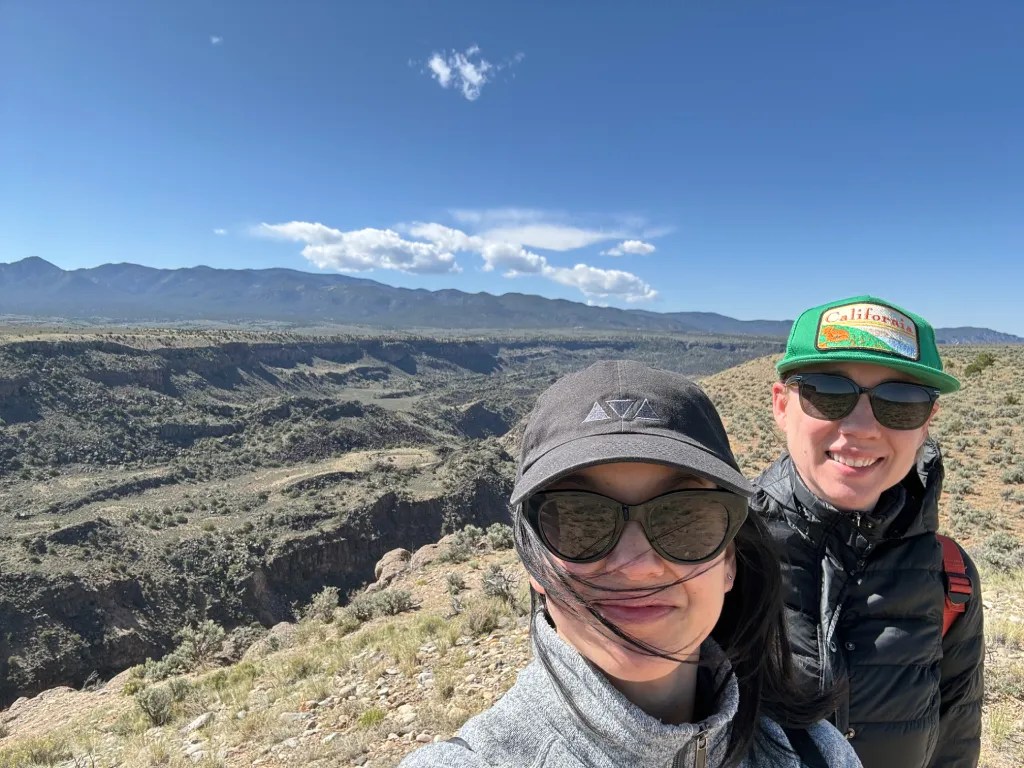
Getting out on the trail was a welcome way to stretch our legs and take in the landscape. The path is flat and hugs the edge of the Gorge, offering sweeping views without much effort.
We drove to the South Rim trailhead and spent about an hour before driving back to the Rio Grande Overlook. While the Overlook gets you directly onto the bridge and offers the most dramatic perspective, it’s incredibly windy and can feel a little unnerving!
For a less windblown photo op, I recommend getting somewhere on the trail. (Note: the North Trailhead is closer to the Overlook than the South Trailhead.)
Seek out the trailheads on the West Rim Trail for a quieter, less aggressively windy experience of the Rio Grande Gorge Bridge.
Santa Fe gave us great food, art, and craftsmanship. Taos added layers of culture, history, and space to connect with nature. It expanded our experience of northern New Mexico, encouraging us to go quieter, slower, more remote.
We were often surprised by how our surroundings could change dramatically within such a short distance. Winding canyon roads gave way to stretches of the Carson National Forest, every turn an unexpected transition.
The rhythm to our days in and around Taos was: hike, drive, pause for an incredible sunset, eat, repeat. The landscape and high desert horizon invited us to settle into our bodies, prepping us for a few days of desert hot springs R&R.

Leave a Reply